Key takeaways
- Sand and gravel are dense (about 1.4–1.8 t/m³), so a 1-ton bulk bag is small: roughly 0.55–0.7 m³ (about 0.7–0.85 cubic yard).
- A US "1 ton" is 2,000 lb (907 kg); a metric tonne is 1,000 kg (2,205 lb) — specify which.
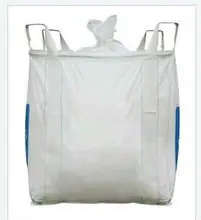
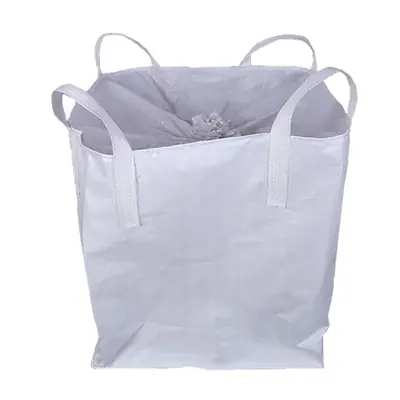
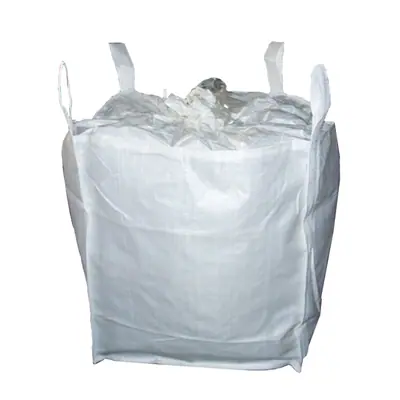
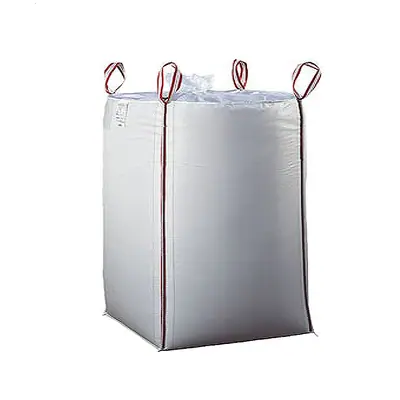
- Typical spec: open top, flat bottom, four cross-corner loops, 5:1, UV-stabilized; uncoated fabric drains wet sand, coated fabric holds fine sand.
- Fertilizer needs coated fabric, a liner and a discharge spout; soil and mulch need large, breathable bags.
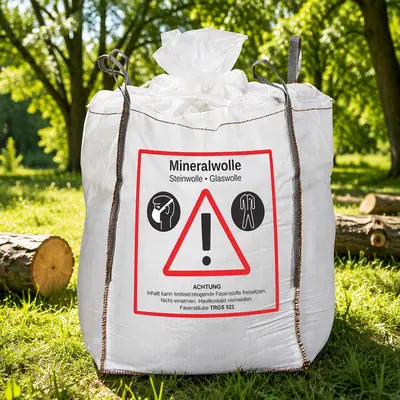
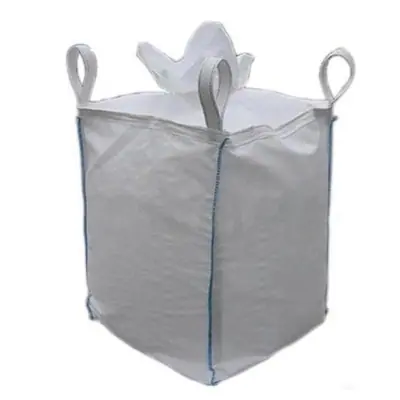
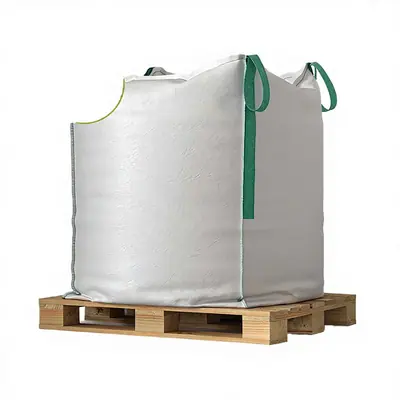
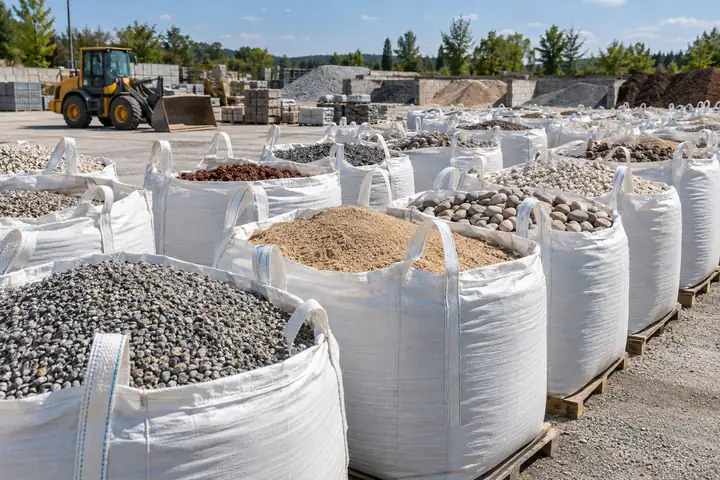
A bulk bag for sand is usually a 1-ton or 1-tonne FIBC with an open top, flat bottom and four lifting loops, sized much smaller than a bag for light products because sand is dense. One US ton (2,000 lb) of dry sand fills only about 0.74–0.82 cubic yard (0.57–0.63 m³), so a typical sand bag is around 35 × 35 × 30–35 in (90 × 90 × 75–90 cm). Gravel, crushed stone and other aggregates follow the same logic, with heavier fabric and reinforced seams for sharp stone.
This guide covers sizing, fabric choices and handling for sand, gravel, aggregates, soil and fertilizer. For the basics of bag construction, see how to choose an FIBC bulk bag.
How much sand or gravel fits in a bulk bag?
Start with bulk density — weight per unit volume as loaded, not the density of the solid stone. Typical values:
| Material | Bulk density (t/m³) | lb per cubic yard | Volume of 1 US ton (2,000 lb) | Volume of 1 tonne (1,000 kg) |
|---|---|---|---|---|
| Dry sand | 1.45–1.6 | ~2,450–2,700 | ~0.74–0.82 yd³ (0.57–0.63 m³) | 0.63–0.69 m³ |
| Damp / wet sand | 1.7–1.9 | ~2,850–3,200 | ~0.62–0.70 yd³ | 0.53–0.59 m³ |
| Pea gravel / round gravel | 1.5–1.7 | ~2,500–2,850 | ~0.70–0.80 yd³ | 0.59–0.67 m³ |
| Crushed stone (#57-type) | 1.4–1.6 | ~2,350–2,700 | ~0.74–0.85 yd³ | 0.63–0.71 m³ |
| Topsoil (dry, screened) | 1.1–1.3 | ~1,850–2,200 | ~0.91–1.08 yd³ | 0.77–0.91 m³ |
| Granular fertilizer | 0.9–1.1 | ~1,500–1,850 | ~1.08–1.32 yd³ | 0.91–1.11 m³ |
| Bark mulch / compost | 0.3–0.6 | ~500–1,000 | ~2–4 yd³ | 1.7–3.3 m³ |
These are typical ranges; moisture, grading and compaction change them. Weigh a known volume of your own material to be sure.
Worked example: sizing a 1 ton sand bag
Volume needed = fill weight ÷ bulk density
- Fill weight: 1 US ton = 907 kg = 0.907 t
- Bulk density of dry sand: 1.55 t/m³
- Volume = 0.907 ÷ 1.55 = 0.585 m³ (about 0.77 yd³)
A filled bag bulges, so its usable volume is less than the geometric box. On a 90 × 90 cm (35 × 35 in) base, 0.81 m² × height ≥ 0.585 m³ × ~1.15 → height of about 83 cm (33 in). A 90 × 90 × 90 cm bag gives comfortable headroom. For more detail, see our bulk bag dimensions calculator.
"1 cubic yard" bags
Landscape suppliers often sell sand and gravel "by the yard." A full cubic yard of sand or gravel weighs roughly 2,500–3,000 lb (1,130–1,360 kg) — more than a 1-ton bag is rated for. If you sell by the cubic yard, specify a bag with a safe working load of at least 1,500 kg (3,300 lb) and the right volume, rather than overfilling a 1,000 kg bag.
What bag specification works for sand and gravel?
Recommended construction
| Feature | Sand | Gravel / crushed stone | Why |
|---|---|---|---|
| Top | Open top or duffle | Open top | Fast loader or hopper filling |
| Bottom | Flat bottom (spout optional) | Flat bottom | Emptied by cutting, tipping or a spout over a site |
| Loops | 4 cross-corner | 4 cross-corner, reinforced | Forklift and loader handling |
| Safety factor | 5:1 single trip | 5:1 single trip | See FIBC safety factor |
| Fabric | Uncoated to drain, or coated for fine/dry sand | Heavier fabric, uncoated | Sharp stone abrades and punctures |
| UV | Stabilized | Stabilized | Yards store bags outdoors |
| Seams | Standard; dust-proof for fine silica sand | Reinforced | Seams fail before fabric under abrasion |
Coated or uncoated? Uncoated fabric lets rain and moisture drain out of washed sand and gravel, so bags do not hold water and become heavier than their rating. Fine, dry sand (play sand, kiln-dried or silica sand) can sift through uncoated fabric, so use coated fabric or dust-proof seams for those.
UV stabilization is the most overlooked feature. Aggregate bags often sit in a yard or on a jobsite for weeks; unprotected polypropylene loses strength in sunlight, and a weakened bag is a lifting hazard. Our Outdoor UV Stabilized FIBC Bag Weather Resistant is built for this kind of outdoor storage.
Abrasion. Crushed stone, slag and recycled concrete have sharp edges. Specify heavier body fabric and reinforced seams, such as the Reinforced Seam Jumbo Big Bag High Breaking Strength.
Bulk bags for aggregates in construction
Contractors use aggregate bags to deliver sand, gravel and stone to tight urban sites, rooftops and garden projects where a dump truck cannot tip. Common uses:
- Concrete gravel bags — sand and stone delivered in separate bulk bags for on-site mixing, or dry pre-mixed concrete in bulk bags. Pre-mix is moisture-sensitive, so use coated fabric with a liner. For bagged concrete quantities, see how many bags of concrete do I need.
- Crane lifts — bags lifted to roofs or over fences. Use bags rated for the lift, never exceed SWL, and keep people out from under suspended loads.
- Waste and rubble — for debris, see contractor bags vs woven rubble bags.
For smaller quantities, 25–50 lb woven sandbags are often more practical; see our empty sandbags buying guide.
Bulk bags for fertilizer
Fertilizer bulk bags (also written fertiliser bulk bags) need more protection than aggregate bags because most fertilizers absorb moisture and cake:
- Coated fabric plus a PE liner to keep moisture out.
- Discharge spout for controlled emptying into spreaders and blenders.
- UV stabilization for farm storage.
- Typical size for 1,000 kg of granular product at about 1.0 t/m³: roughly 90 × 90 × 120–130 cm.
Some fertilizers, such as certain ammonium nitrate grades, are classified as dangerous goods for transport and require UN-certified bulk bags. Check the safety data sheet and transport classification; our guide to types of FIBC bags covers UN-rated bags.
Bags for soil, mulch and landscape materials
Topsoil, compost and mulch are lighter than sand, so the bag is larger for the same weight:
- Bulk bags for soil — typically 1–1.5 yd³ volume, open top, flat bottom, uncoated or breathable so compost and soil do not sweat.
- Mulch and bark — large, light bags; a vented or uncoated design helps prevent heating and mold.
- Soil packaging bags for retail — 25–50 lb (or 20–40 L) printed woven PP or BOPP laminated sacks rather than FIBCs. See PP Woven Sacks and our seed and fertilizer bags guide.
Safe filling, handling and stacking
- Never fill above the SWL printed on the label — wet sand can push a bag over its rating even at the same volume.
- Support the bag during filling with a frame or by hanging the loops on forks, so it fills evenly and stands square.
- Lift by all loops (four-loop bags) with fork tines rounded and spread to suit; do not drag bags.
- Stack only on firm, level ground and only as high as the bag and site rules allow; dense aggregate bags are commonly kept to one or two high.
- Inspect outdoor-stored bags for UV damage, cuts and loop wear before lifting.
- Do not reuse single-trip bags for lifting heavy aggregates; see FIBC recycling and reuse for what to do with used bags.
Where to buy 1 ton sand bags
If you need a few 1 ton sand bags for sale — filled with sand — local landscape and building supply yards and some home-improvement stores sell them, often with delivery by truck. For empty bulk bags and gravel bags for sale in volume — for quarries, landscape yards, distributors, municipalities and contractors packing their own material — a manufacturer is the more economical source.
EGP (Yantai Evergreen Packaging) makes FIBC bulk bags in Yantai, China, factory-direct with custom sizes, UV levels and printing, supplied by MOQ. Options include the FIBC Bulk Jumbo Big Bag 1 Ton PP Woven Food Grade Super and the Durable PP Woven Jumbo Bags 1000kg Bulk Big Bags FIBC. Browse the FIBC Bulk Bags range or request a quote with your material, fill weight and outdoor storage time.
Frequently asked questions
How much does a bulk bag of sand weigh?
Most bulk bags of sand are filled to about 1 US ton (2,000 lb) or 1 tonne (2,205 lb), though some suppliers fill closer to a cubic yard, around 2,500–3,000 lb. Always check the bag's safe working load and never fill above it.
How many cubic yards are in a 1 ton bulk bag of gravel?
One US ton of gravel is typically about 0.7–0.85 cubic yard, depending on stone size and moisture. Lighter crushed stone gives slightly more volume per ton than wet or rounded gravel.
What size bulk bag do I need for 1 ton of sand?
A bag with a 90 × 90 cm (35 × 35 in) base and 85–90 cm (33–35 in) height usually holds 1 US ton of dry sand. Wet sand is denser and needs slightly less height; confirm with a trial fill.
Can aggregate bags be stored outdoors?
Yes, if they are UV-stabilized. Specify the expected outdoor storage period when ordering, and inspect bags for fading, brittleness or cuts before lifting them after long exposure.
Should fertilizer bulk bags have a liner?
Most fertilizers are hygroscopic, so a coated bag with a polyethylene liner is recommended to prevent caking. A discharge spout makes it easier to feed spreaders and blenders.
What bags are used for packaging soil for retail?
Retail soil and potting mix are usually packed in 25–50 lb woven polypropylene or laminated sacks rather than bulk bags. Bulk bags of 1–1.5 cubic yards are used for trade and landscape customers.