Key takeaways
- Plants are the permanent fix for erosion: leaves break rain impact and roots bind the soil.
- Use a dense, fibrous-rooted grass or ground cover for surface protection and deep-rooted shrubs and native grasses for depth.
- Slopes over 3:1 are hard to mow; plant low-maintenance ground covers or meadow grasses instead of lawn.
- Protect new plantings with a biodegradable blanket until roots establish, usually one or two growing seasons.
- Check local lists and avoid invasive species sold for slopes.
The best erosion control plants combine dense top growth that shields the soil from rain with fibrous, spreading roots that bind it. On gentle slopes, a deep-rooted grass such as tall fescue or a native grass mix does the job. On steeper banks that cannot be mowed, low spreading shrubs and ground covers such as creeping juniper, bearberry, fragrant sumac or native sedges, combined with deep-rooted native grasses, protect the soil long-term. While plants establish, a biodegradable erosion control blanket holds soil and seed in place.
This guide explains how to choose plants by slope and climate, and how to combine them with blankets, fabric and bags so they survive their first seasons.
Can plants stop soil erosion?
Yes. Plants are the most durable form of erosion control, and most engineered products are designed to hold soil only until vegetation takes over. Plants work in four ways:
- Canopy and leaf litter absorb raindrop impact, the first step in erosion.
- Stems slow runoff so it soaks in instead of rushing downhill.
- Fibrous roots knit the top 6–12 in (15–30 cm) of soil into a mat.
- Deep roots of shrubs, trees and prairie grasses anchor deeper layers.
Plants cannot stop deep landslides or failures caused by groundwater, undercutting at the toe, or poor drainage. If a slope is slumping, cracking or seeping, get a geotechnical assessment before planting.
How steep is your slope?
Slopes are described as horizontal to vertical (H:V):
| Slope | Percent | Angle | What works |
|---|---|---|---|
| 4:1 | 25% | 14° | Lawn grass, mowable; seed with straw mulch or a blanket |
| 3:1 | 33% | 18° | Practical mowing limit; lawn or meadow grasses, ground covers |
| 2:1 | 50% | 27° | Ground covers, shrubs, native grasses; blankets needed |
| 1.5:1 | 67% | 34° | Shrubs and ground covers through coir; terraces, bags or geocells help |
| 1:1 | 100% | 45° | Engineered support plus planting; consult a professional |
To measure: hold a level board horizontally from the slope at a known length (say 4 ft), measure the vertical drop to the ground at its end. A 4 ft board with a 2 ft drop is 2:1.
Grass for erosion control
Grasses form a continuous fibrous root mat and establish quickly from seed, which makes them the backbone of hillside erosion control on gentle and moderate slopes.
Lawn and turf grasses (mowable slopes)
| Grass | Climate | Root habit | Notes |
|---|---|---|---|
| Tall fescue | Cool, transition zone | Deep, fibrous | Drought tolerant, one of the best lawn grasses for slopes |
| Creeping red fescue | Cool, shade | Fibrous, rhizomes | Good in shade and poor soil; low mowing |
| Kentucky bluegrass | Cool | Rhizomes, shallower | Forms sod; needs water |
| Perennial ryegrass | Cool | Fibrous | Germinates in 5–10 days; good in mixes as a quick cover |
| Bermudagrass | Warm | Rhizomes, stolons | Very tough; can invade beds |
| Zoysia | Warm, transition | Dense rhizomes | Slow to establish, dense once in |
| Buffalograss | Warm, dry plains | Stolons, deep | Native to North American plains; low water |
Native grasses for erosion control
On unmowed slopes, native bunch and sod-forming grasses root far deeper than lawn grass. Several North American prairie species, such as switchgrass, are commonly reported to root 6–10 ft (2–3 m) deep in good conditions.
| Native grass (North America) | Height | Best conditions |
|---|---|---|
| Switchgrass (Panicum virgatum) | 3–6 ft | Sun, wet to dry; very deep roots |
| Little bluestem (Schizachyrium scoparium) | 2–3 ft | Sun, dry, poor soils |
| Big bluestem (Andropogon gerardii) | 4–7 ft | Sun, moderate moisture |
| Sideoats grama (Bouteloua curtipendula) | 1–3 ft | Dry, alkaline soils |
| Blue grama (Bouteloua gracilis) | 1–2 ft | Dry plains, low maintenance |
| Virginia wildrye (Elymus virginicus) | 2–4 ft | Part shade, streambanks |
| Prairie dropseed (Sporobolus heterolepis) | 2–3 ft | Sun, slopes, ornamental |
Outside North America, use grasses native to your region; local agricultural extension services and soil conservation agencies publish recommended erosion mixes. In tropical and subtropical regions, sterile vetiver grass is widely used for slope stabilization.
Nurse crops
Native grasses can take one or two seasons to establish. Seed mixes for slopes often include a fast nurse crop such as oats, cereal rye or annual ryegrass that sprouts within a week, protects the soil and dies off as the perennials take over. Use a sterile or annual nurse crop that will not compete long-term.
Best ground cover for hillside erosion control
On slopes too steep to mow, woody and perennial ground covers are easier to maintain than lawn. Choose plants that root where their stems touch the soil (layering) or spread by rhizomes, so they form a continuous cover.
| Ground cover for slopes | Type | Sun / shade | Notes |
|---|---|---|---|
| Creeping juniper (Juniperus horizontalis) | Evergreen shrub | Sun | Drought tolerant; dense mats on dry banks |
| Bearberry / kinnikinnick (Arctostaphylos uva-ursi) | Evergreen shrub | Sun, part shade | Sandy, acid, poor soils |
| Fragrant sumac, low cultivars (Rhus aromatica) | Deciduous shrub | Sun, part shade | Suckers into dense, deep-rooted thickets |
| Creeping phlox (Phlox subulata) | Perennial | Sun | Good on small, dry banks |
| Wild strawberry (Fragaria spp.) | Perennial | Sun, part shade | Spreads by runners |
| Sedges (Carex spp.) | Grass-like perennial | Shade to sun | Many native species for slopes |
| Ornamental and native ferns | Perennial | Shade | For shaded, moist banks |
| Low shrub roses and native shrubs | Shrub | Sun | Deep roots; combine with ground covers |
| Creeping thyme, stonecrop (sedum) | Perennial | Sun | Small dry areas; roots are shallow, so pair with deeper rooting plants |
Ground cover for steep slopes: combine a layer of low ground covers with shrubs spaced 3–5 ft (1–1.5 m) apart. The shrubs anchor deeper soil; the ground cover protects the surface between them.
Avoid invasive "slope" plants
Several plants sold for banks are invasive in many regions, including crown vetch, English ivy, kudzu, Japanese honeysuckle and, in parts of North America, periwinkle (Vinca minor) and some cotoneasters. They hold soil but spread into natural areas. Check your state or regional invasive species list before buying.
How many plants do you need?
Plants needed = area (ft²) ÷ (spacing in ft)² for square spacing.
Worked example: a bank 40 ft long and 12 ft from top to bottom = 480 ft² (about 45 m²).
- Ground cover plugs at 12 in spacing: 480 ÷ 1² = 480 plugs
- Creeping juniper at 4 ft spacing: 480 ÷ 4² = 30 plants
- Mixed: shrubs at 5 ft (480 ÷ 25 ≈ 19) plus plugs at 18 in between them (480 ÷ 2.25 ≈ 213)
Use triangular (offset) spacing on slopes; it gives about 15% more plants per area and leaves no straight downhill channels for water.
Steep slope erosion control: combining plants with products
New plantings are most vulnerable in the first year, before roots spread. Combine them with temporary protection:
Seed under a blanket
On grass or meadow slopes, seed and fertilize first, then cover with a straw, straw-coconut or coir erosion control blanket staked down firmly. The blanket holds seed and moisture and breaks down as grass grows through. Product choice and staple densities are covered in our erosion control fabric, blankets and bags guide.
Plant through a coir blanket
For shrubs and ground covers on 2:1 or steeper slopes, lay a coir blanket first, cut an X at each planting position, plant, and fold the flaps back around the stem. Coir lasts two to three years, long enough for most ground covers to knit together.
Should you use landscape fabric on a slope?
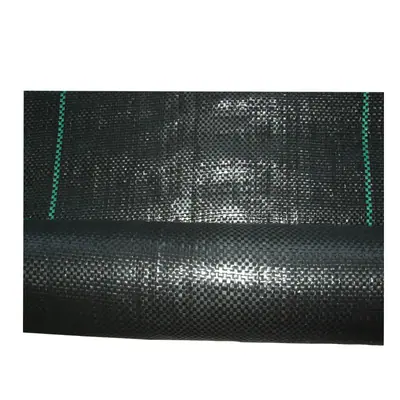
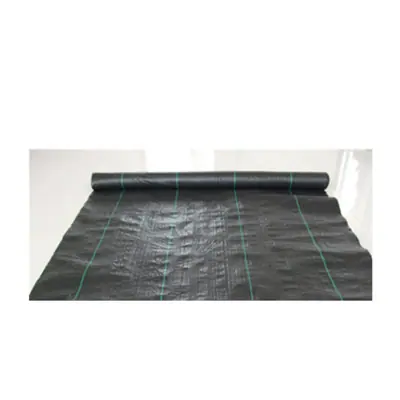
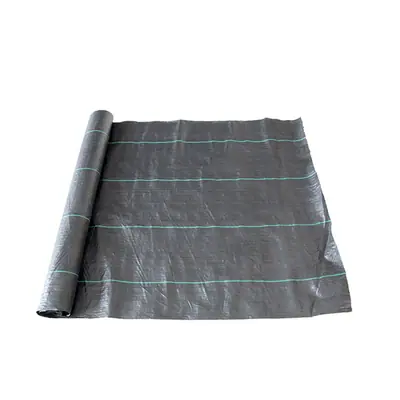
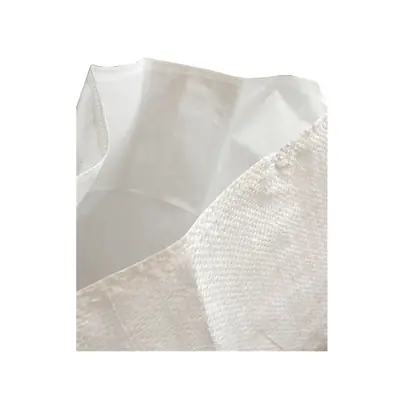
Permanent plastic landscape fabric is usually a poor choice under slope plantings: it stops ground covers rooting as they spread, and mulch slides off it. It does make sense on a slope finished with coarse gravel or rock instead of plants. If you do use woven fabric, such as Heavy Weight PP Weed Control Fabric with Enhanced, anchor it in a trench at the top and pin it closely, as described in how to lay landscape fabric. For the broader trade-offs, see landscape fabric pros and cons.
Terraces and planted bags
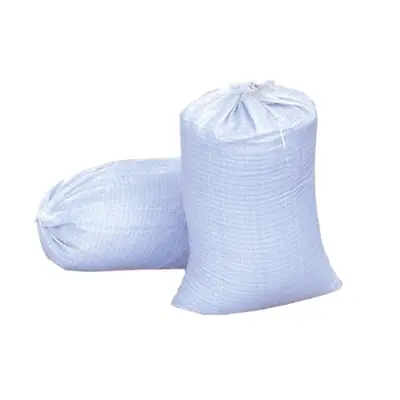
On steep banks, short terraces made with timber, rock or stacked soil-filled bags break the slope into flatter planting steps. Vegetated slope bags, such as our Commercial PP Woven Bag for Slope Stabilization, are filled with soil and seed so roots grow through and lock the structure together. UV-stabilized sandbags like UV Stabilized PP Woven Bag with Top Drawstring for Sand protect the toe of a slope or form small check dams in gullies while plants establish.
Backyard erosion control: practical ideas
Most backyard erosion comes from concentrated water: roof downspouts, a neighbor's runoff, or a bare path. Fix the water first, then plant.
- Redirect downspouts away from slopes using extensions or buried pipe to a safe outlet.
- Build a swale along the contour to catch and spread runoff; plant it with grasses and sedges.
- Add a rain garden in a low spot to soak up roof water.
- Make a dry creek bed of river rock over woven fabric for a channel that carries water in storms.
- Mulch bare soil 2–3 in (5–8 cm) deep between plants; shredded bark grips slopes better than chips or nuggets.
- Use stepping stones or a path where foot traffic wears the bank.
- Do not leave soil bare over winter; sow a cover crop or lay a blanket.
Erosion control landscaping ideas for slopes
| Idea | Slope | Effect |
|---|---|---|
| Meadow of native grasses and wildflowers | Up to 2:1 | Deep roots, low maintenance, pollinator habitat |
| Ground cover tapestry with shrubs | Up to 1.5:1 | Evergreen cover, no mowing |
| Terraced beds | Any | Flat planting areas, slows water |
| Rock garden with drought-tolerant plants | Up to 2:1 | Stones armor the surface, plants bind soil |
| Woodland planting with ferns and sedges | Shaded slopes | Leaf litter and roots protect soil |
| Planted swale and rain garden at the base | Base of slope | Catches runoff and sediment |
Planting and maintenance tips
- Plant in the right season: early fall for cool-season grasses, late spring for warm-season and native grasses, spring or fall for shrubs.
- Water deeply and less often in the first season to encourage deep roots.
- Avoid tilling the whole slope; it loosens soil before plants can hold it. Plant into pockets instead.
- Spot weed for the first two years until cover closes.
- Check after heavy rain for rills and fill them before they become gullies.
For contractors and suppliers
EGP manufactures woven polypropylene bags and fabrics in Yantai, China, for distributors and contractors working on slope, landscape and erosion projects. We supply UV-stabilized sandbags, slope stabilization bags and woven fabric to specification. See the Woven Rolls & Weed Mat range or request a quote.
Frequently asked questions
What is the best ground cover for a steep slope?
Low, spreading shrubs and perennials that root as they spread, such as creeping juniper, bearberry, low fragrant sumac and native sedges, combined with deep-rooted native grasses. Plant them through a coir blanket so the soil is protected while they establish.
What grass is best for erosion control?
Tall fescue is one of the best lawn grasses for cool-climate slopes because of its deep, fibrous roots. On unmowed slopes, native prairie grasses such as switchgrass and little bluestem root much deeper.
How long do erosion control plants take to work?
Grass from seed gives meaningful cover within one growing season. Ground covers and shrubs usually need one to three seasons to knit together, which is why a temporary blanket or mulch is used in the meantime.
Are native grasses better for erosion control than lawn grass?
On slopes that will not be mowed, usually yes: many native grasses root several feet deep and need little water or fertilizer once established. Lawn grass is better where you need a mowable, walkable surface.
How do I stop erosion on a hillside in my backyard?
First control the water source, such as downspouts or runoff from above. Then cover bare soil with mulch or a blanket and plant dense ground covers or grasses, adding terraces or swales on steeper sections.