Key takeaways
- For 5–50 kg food sacks, the main options are plain PP woven, BOPP laminated woven, paper or paper-poly and, above 500 kg, food grade bulk bags.
- Food grade means virgin, food-contact-compliant materials and hygienic production — ask for the supplier's compliance documents for your market.
- Match the bag to the food: liners for sugar, sift-proof construction for flour, windows and handles for retail rice, grease and moisture barriers for pet food.
- For recyclable packaging bags, choose mono-material PP structures where PP collection exists.
Food packaging bags for industrial and wholesale use — sacks of flour, rice, sugar, grain, beans and pet food from about 5 to 50 kg — are mainly made from woven polypropylene (plain or BOPP-laminated), multiwall paper or paper-poly composites, often with a polyethylene liner. Food grade packaging bags use virgin, food-contact-compliant resins, inks and adhesives and are produced under hygienic conditions; the right construction depends on how sensitive the food is to moisture, sifting, grease and handling.
This guide is for mills, packers, importers and distributors buying food packaging bags wholesale. It does not cover small consumer pouches; it focuses on the sacks that move staple foods through supply chains.
What makes packaging bags "food grade"?
"Food grade" is not a single certificate; it is a combination of material, process and paperwork:
- Materials suitable for food contact. Virgin polypropylene and polyethylene, with additives, inks and adhesives that comply with the food-contact rules of the destination market. In the US the reference is FDA regulations for food-contact polymers (for example 21 CFR 177.1520 for olefin polymers); in the EU it is the framework Regulation (EC) No 1935/2004 and, for plastics, Regulation (EU) No 10/2011.
- No recycled content in direct food contact unless the recycled material is specifically approved for it.
- Hygienic manufacture — clean production areas, pest control, foreign-body control and traceable lots, often audited to a food packaging hygiene scheme.
- Documentation such as declarations of compliance and migration test reports from accredited labs.
As a buyer, ask any packaging bags manufacturer for the documents that apply to your market and product, and confirm whether the food touches the woven fabric directly or only a liner. Product names that mention "food grade" are not a substitute for paperwork.
Plastic packaging bags for food: which construction for which product?
| Food | Typical pack | Recommended bag | Key requirement |
|---|---|---|---|
| Flour (wheat, corn, cassava) | 10–50 kg | Coated woven PP or paper valve / pinch bottom | Sift-proof seams and fabric; breathable but clean |
| Rice | 5–50 kg | BOPP laminated woven, often with window and handle | Retail print, abrasion resistance, insect protection |
| Sugar | 25–50 kg | Woven PP with PE liner | Moisture barrier — sugar cakes and lumps when damp |
| Beans, pulses, corn | 25–50 kg | Plain woven PP, laminated if branded | Strength, breathability for dry grain |
| Salt | 25–50 kg | Woven PP with liner or coated fabric | Moisture barrier; corrosion-free handling |
| Dry pet food | 2–20 kg | BOPP laminated side gusset, matte or metallized | Grease resistance, shelf appeal, reclosure |
| Starch, milk powder, bulk ingredients | 25 kg; 500–1,000 kg | Paper-poly or lined woven; food grade FIBC for bulk | High hygiene, fine-powder containment |
Flour
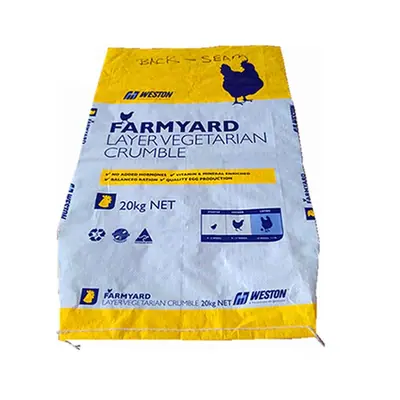
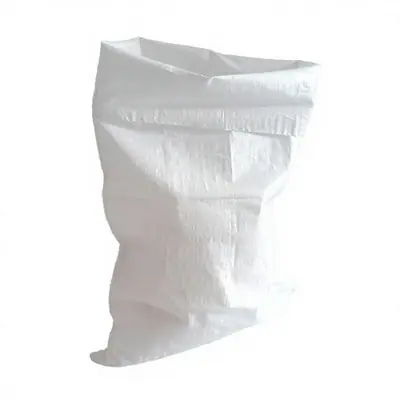
Flour is fine and cohesive, so it escapes through needle holes and loose weaves. Use coated woven fabric or multiwall paper with sift-proof bottoms, and tape or heat-seal closures. Packers using valve fillers should read our valve bag filling machine guide; paper options are in our multiwall paper bags guide. Plain white woven sacks such as the White PP Woven Bag Sack 50 kg for Corn Flour Bean remain the workhorse for corn flour and beans in many markets.
Rice
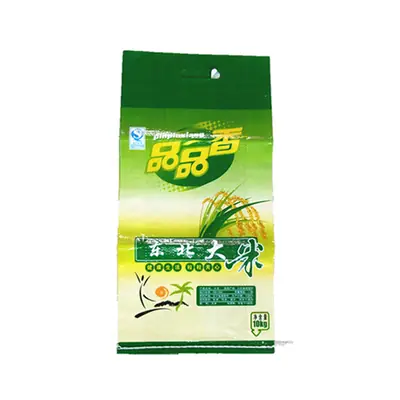
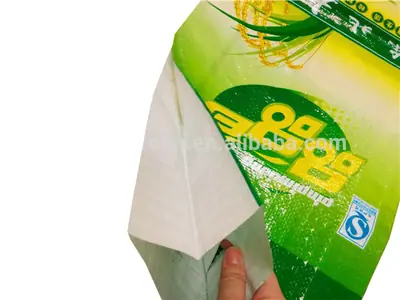
Retail rice in 5–25 kg sizes is a branding product. BOPP laminated woven bags give photographic print, and a transparent window or fully clear film such as our Transparent Moisture Proof BOPP Bag with Anti-Fog Coating lets buyers see grain quality. Handles help 10–25 kg packs. Export rice in 25–50 kg often uses plain woven PP.
Sugar
Sugar is hygroscopic; in humid storage it absorbs moisture and forms hard lumps. A woven PP sack with a PE liner (loose or heat-sealed) is the common solution, with the liner providing the moisture barrier and the woven outer providing strength.
Pet food
Pet food contains fat that stains paper and attracts pests. BOPP laminated side gusset bags with grease-resistant structures, reclosable tops and anti-slip finishes dominate the 5–20 kg segment. The technical details are in our BOPP bags guide.
Worked example: sizing a 25 kg rice bag
Bag volume follows from bulk density:
Required volume (L) = fill weight (kg) ÷ bulk density (kg/L)
Milled rice has a bulk density of roughly 0.75–0.85 kg/L. Taking 0.8 kg/L:
- 25 kg ÷ 0.8 kg/L = 31.3 L of rice
- Add about 15% headroom for closing and settling: 31.3 × 1.15 ≈ 36 L
- Your supplier converts about 36 L into width, length and gusset for the chosen style; confirm the result with a trial fill on your line before approving the size.
The same 25 kg of flour at about 0.55 kg/L needs around 45 L before headroom — a noticeably bigger bag. Never copy a bag size from one food to another.
Custom food packaging bags: printing and features
Custom food packaging bags typically combine:
- Printing: 1–4 color flexo on plain woven bags; up to around 8–10 color rotogravure on BOPP film; offset or flexo on paper.
- Windows to display rice, beans or kibble.
- Handles for 5–25 kg retail packs.
- Liners — loose, tubular or heat-sealed PE.
- Easy-open strips and reclosable closures for pet food.
- Micro-perforation for filling speed with breathable products, omitted where barrier matters.
- Labeling space for nutritional, origin, lot and date information required by food law in your market.
Recyclable and eco friendly packaging bags
Food companies are under pressure to show recyclable packaging bags and reduce plastic weight. Practical options:
- Mono-material PP. Plain woven PP and BOPP-on-woven-PP bags are essentially all polypropylene (code 5), which simplifies recycling where PP is collected. Our Recyclable Moisture Proof BOPP Side Gusset Bag follows this approach.
- Downgauging. Use the lightest fabric that passes your drop and stacking tests; a 10% reduction in fabric g/m² is a 10% reduction in fabric weight.
- All-paper where barrier allows. Multiwall paper is widely recycled, but needs a film ply for moisture-sensitive foods, which complicates recycling.
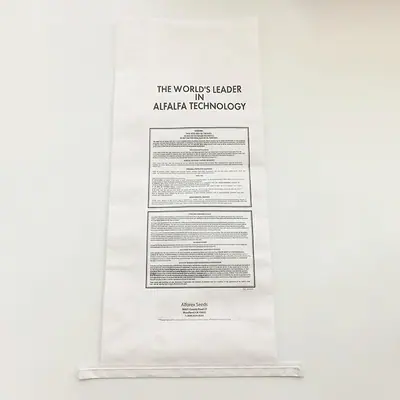
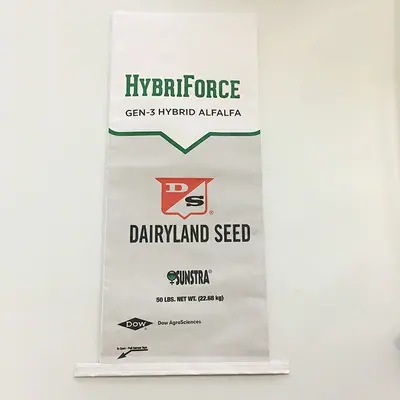
- Avoid mixed laminates where you can. Paper-poly composites like the Food Grade Paper Plastic Compound Bags with FDA Approved offer a premium look and strength, but paper bonded to plastic is harder to recycle — weigh presentation against end-of-life.
- Reuse. Strong woven sacks are widely reused for storage and transport, extending their life.
"Eco friendly" claims on packaging are regulated in many markets; base any on-pack claim on the actual material and local recycling availability. See our polypropylene vs polyethylene guide for the material background.
Bulk packaging bags for food ingredients
Above a few hundred kilograms, bulk packaging bags are more efficient than sacks: food grade FIBC bulk bags of 500–1,000 kg carry sugar, flour, starch, rice and grains between mills and processors. They need food-grade production, often a fitted liner and spouts suited to your filling and discharge equipment. See our food grade bulk bags guide and the FIBC Bulk Bags range.
Buying food packaging bags wholesale
When sourcing wholesale packaging bags, compare suppliers on more than unit price:
| Check | What to ask for |
|---|---|
| Material | Virgin PP/PE confirmation; fabric g/m², film and liner thickness |
| Compliance | Declarations and test reports for your market's food-contact rules |
| Hygiene | Production area controls, foreign-body and pest control, lot traceability |
| Performance | Drop test, seam strength, stacking trial with your product |
| Physical proof against approved artwork and color references | |
| Logistics | Bale or pallet packing, container loading, lead time, MOQ |
Our importing checklist covers samples, inspection and shipping in more detail.
Food packaging bags from our factory
EGP is a packaging bags manufacturer in Yantai, Shandong, producing woven PP, BOPP laminated and paper-poly bags with custom sizes and printing for millers, rice packers, sugar distributors and pet food brands. We have 24 years as an Alibaba.com supplier, about 110 staff and a 90.9% on-time dispatch rate. Browse the Laminated & BOPP Bags range and send your product, fill weight, target market and artwork through our contact page — we will confirm which documents are available for your application.
Frequently asked questions
What are food grade packaging bags made of?
Most industrial food sacks are made of virgin woven polypropylene, often laminated with BOPP film or lined with polyethylene, or of multiwall kraft paper. Food grade means the materials, inks and adhesives comply with food-contact rules for the destination market and are produced hygienically.
Which bag is best for packing 50 kg of sugar?
A woven PP sack with a polyethylene liner is the most common choice, because the liner keeps out moisture while the woven outer carries the weight. Seal or tie the liner well and store bags off the floor in a dry area.
Are plastic packaging bags for food recyclable?
Mono-material polypropylene bags, including standard BOPP-on-woven-PP sacks, are recyclable as code 5 where PP collection exists. Bags combining paper and plastic, or with dissimilar liners, are harder to recycle.
What is the minimum order for custom food packaging bags?
Minimums depend on construction and printing: plain flexo-printed woven sacks usually have lower minimums than rotogravure-printed BOPP bags, which need a cylinder per color. Ask for MOQ by style when requesting a quote.
Can rice bags have a transparent window?
Yes. BOPP laminated rice bags can include a clear window, or be made from transparent film, so buyers can see the grain. Windows are usually combined with handles and full-color printing for retail packs.