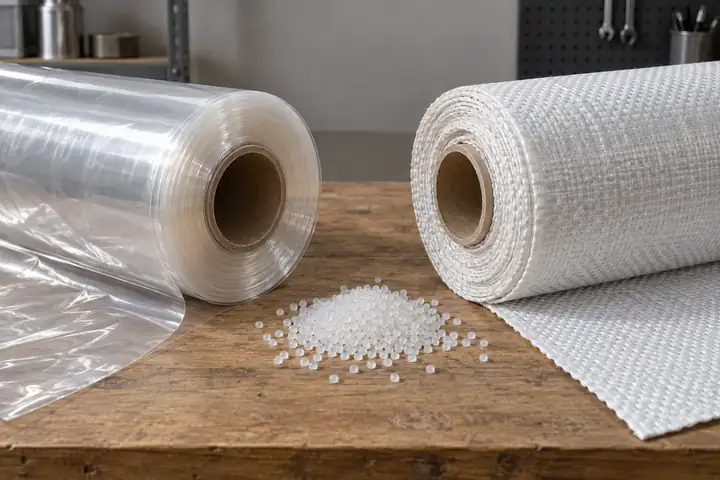
Key takeaways
- Polypropylene (PP) is stiffer, more heat-resistant and makes the strongest woven tape; it is the standard for woven sacks and bulk bags.
- Polyethylene (PE) is softer, tougher in the cold and makes the best flexible, heat-sealable film; it is the standard for liners and film sacks.
- HDPE vs PP: HDPE wins for shade nets, tarps and cold-weather toughness; PP wins for woven sacks, heat and stiffness.
- Many bags are PP + PE: a PP woven outer for strength with an LDPE liner or PE coating for moisture.
Polypropylene (PP) and polyethylene (PE) are both polyolefin plastics, but they suit different jobs. PP is stiffer, lighter, more heat-resistant and makes stronger woven tape, so it is the standard for woven sacks and bulk bags. PE is softer, tougher in cold and makes better flexible, heat-sealable film, so it is the standard for liners, film bags and moisture barriers.
For many heavy-duty applications, the answer to "PE vs PP bags" is both: a PP woven outer bag for strength with an LDPE liner or PE coating for moisture protection. This guide compares the two polymers and explains when to choose each.
Polypropylene vs polyethylene at a glance
| Property | Polypropylene (PP) | LDPE | HDPE |
|---|---|---|---|
| Density (g/cm³) | 0.90–0.91 | 0.91–0.93 | 0.94–0.97 |
| Melting point | 160–165 °C (320–330 °F) | 105–115 °C (220–240 °F) | 130–135 °C (265–275 °F) |
| Stiffness | High | Low (soft, flexible) | Medium-high |
| Cold impact | Becomes brittle near 0 °C (homopolymer) | Excellent, to about −50 °C | Excellent, to about −40 °C |
| Moisture barrier (as film) | Good | Good | Very good |
| Clarity of film | Good (especially BOPP) | Translucent | Milky |
| Heat sealing | Possible but narrower window | Easy, wide window | Good |
| Fatigue resistance | Excellent ("living hinge") | Moderate | Moderate |
| Recycling code | 5 | 4 | 2 |
Values are typical ranges. For a fuller profile of PP, see what is polypropylene.
How to tell PP and PE apart
Both are white-to-translucent, waxy plastics, and both float in water. Practical clues:
- Feel: PE film feels soft and waxy and stretches before tearing. PP film is crisper, rustles more and is clearer.
- Recycling mark: 5 for PP; 2 (HDPE) or 4 (LDPE) for PE.
- Woven bags: almost all woven sacks are PP. Woven PE exists mainly as tarpaulins and shade nets.
- Liners: almost all loose liners in sacks and bulk bags are PE (LDPE or LLDPE).
Polyethylene vs polypropylene bags: which is stronger?
It depends on the form:
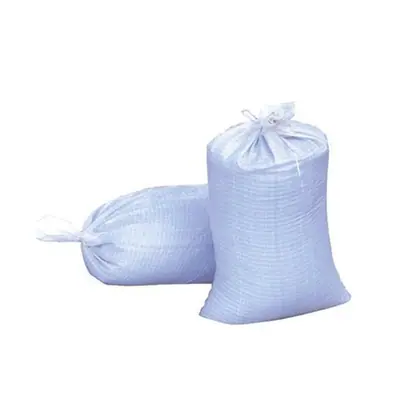
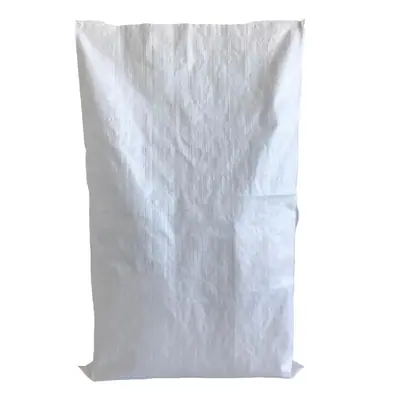
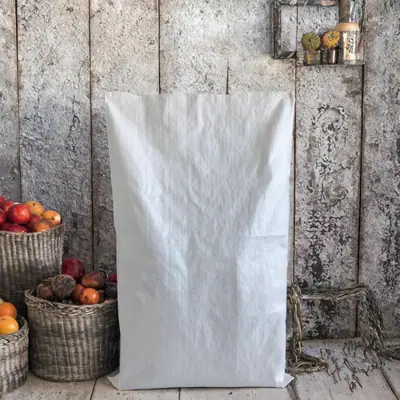
- As woven fabric, PP is stronger for its weight. Drawn PP tapes have high tensile strength and low stretch, so a 70–100 g/m² PP fabric carries 25–50 kg (55–110 lb) of grain, feed or fertilizer, and heavier fabrics make 1-ton bulk bags.
- As film, PE is tougher. LDPE and LLDPE stretch and absorb impact before tearing, which is why heavy-duty film sacks (FFS sacks) for polymer pellets and fertilizer are usually PE, at film thicknesses around 100–200 microns.
| Bag type | Usual polymer | Why |
|---|---|---|
| Woven sacks 10–50 kg | PP | High strength per gram, stiff and stackable |
| FIBC bulk bags 500–2,000 kg | PP | Woven tapes carry heavy loads safely |
| BOPP laminated bags | PP fabric + BOPP film | Print quality and moisture resistance |
| Film sacks (FFS, heavy-duty) | PE | Puncture-tough, heat-sealable, waterproof |
| Loose sack and bulk bag liners | LDPE / LLDPE | Flexible, sealable moisture barrier |
| Tarpaulins | HDPE woven + LDPE coating | Waterproof, cold-tolerant |
| Shade nets, insect nets | HDPE (often), PP | Flexibility and UV life outdoors |
HDPE vs PP: the closest comparison
HDPE and PP are the two polyolefins most often compared for woven and molded goods.
- Choose PP for woven sacks and bulk bags, hot-filled or heat-exposed products, and stiff molded parts. PP's higher melting point and stiffness help bags hold shape on a pallet and survive hot-filling of powders.
- Choose HDPE for outdoor nets and tarps exposed to cold, and where low-temperature impact matters. That is why knitted HDPE dominates greenhouse shade cloth (see the greenhouse shade cloth guide) and anti-hail and insect nets.
Both need UV stabilizers for outdoor use.
What does "PP PE plastic" mean on a bag?
"PP PE" or "PP+PE" means the bag combines both polymers, usually in one of three ways:
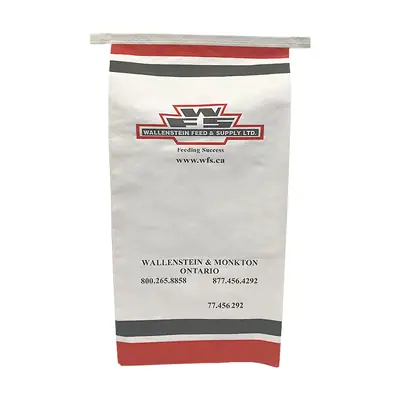
- PE-coated (laminated) PP woven fabric. A thin extrusion coating, typically 15–30 g/m², seals the weave. Common on cement, fertilizer, chemical and salt sacks.
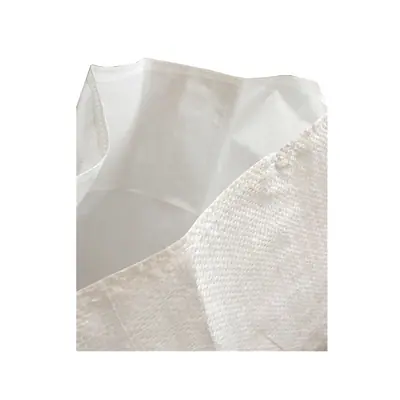
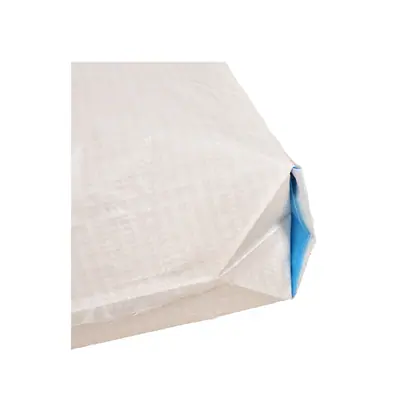
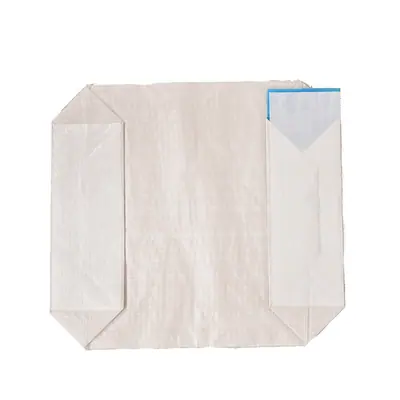
- PP woven sack with a loose or stitched LDPE liner. The liner gives a full moisture barrier and keeps fine powders in, while the woven outer carries the load. See our PP Woven Bag with Inner Liner 25kg Capacity Moisture and Waterproof Lined PP Woven Bag with Bottom Gusset.
- Two-layer film bags such as our Custom-made Durable Two Layer LDPE Valve Bags Custom Logo, which use PE layers for sealing and barrier.
When do you need LDPE liners?
LDPE liners add a near-complete moisture and dust barrier. Use them when the product is:
- Hygroscopic: sugar, salt, urea and many fertilizers, cement, some chemicals.
- A fine powder that would sift through woven fabric: flour, starch, pigments, fillers.
- Food or feed that needs hygiene protection from the woven outer.
- Shipped through humid climates or stored outdoors under cover.
Typical liner specifications
| Bag | Liner thickness (typical) | Liner style |
|---|---|---|
| 25 kg woven sack | 30–60 microns (1.2–2.4 mil) | Loose, or stitched into the bottom seam |
| 50 kg woven sack | 40–80 microns (1.6–3.2 mil) | Loose or stitched |
| FIBC bulk bag | 60–100 microns (2.4–4 mil) | Tubular, form-fit or baffle liner |
1 mil = 25.4 microns. For bulk bags, see the bulk bag liners guide.
Do not line a bag that needs to breathe. Fresh produce, firewood, seed potatoes and some grains are better in uncoated or mesh fabric (see our leno mesh bags guide).
Polypropylene vs polyethylene for recycling
- PP is code 5, HDPE code 2, LDPE code 4.
- Mono-material bags recycle best. A PP woven sack with PP coating and no PE liner is simplest to recycle; a PP sack with a PE liner should have the liner removed and recycled separately.
- PP and PE are hard to separate once melted together; mixed PP/PE regrind is usually downcycled into lower-grade products.
If recyclability is a priority, ask for PP-on-PP construction (PP fabric with PP coating or BOPP lamination). Our Recyclable PP Woven Bag 50kg Heavy Duty Eco-Friendly follows this approach.
How to choose: a quick decision guide
- Load over 10 kg and needs to stack? Start with a PP woven bag.
- Product absorbs moisture or is a fine powder? Add a PE coating or LDPE liner.
- Needs to be fully sealed, waterproof film and puncture-tough? Consider a PE film sack.
- Needs to breathe? Uncoated PP woven or mesh, no liner.
- High-quality retail print? PP woven with BOPP lamination (see PP woven vs BOPP vs paper-poly).
- Outdoor net or tarp in cold climates? HDPE.
Get the right combination
EGP manufactures PP woven sacks with and without PE coatings and liners at our factory in Yantai, Shandong, for importers, distributors and processors. Browse PP Woven Sacks and Valve Bags, or send your product details and we will suggest a construction.
Frequently asked questions
Is polypropylene or polyethylene better for bags?
Polypropylene is better for woven sacks and bulk bags that carry heavy loads, because drawn PP tapes are very strong and stiff for their weight. Polyethylene is better for film bags and liners because it is soft, puncture-tough, waterproof and easy to heat-seal.
What is the difference between PE and PP bags?
PP bags are usually woven from flat polypropylene tapes, making them strong, breathable and stackable. PE bags are usually made from continuous film, making them waterproof and flexible but less stiff. Many industrial sacks combine a PP woven outer with a PE liner or coating.
Is HDPE stronger than PP?
HDPE is tougher in the cold and more impact-resistant at low temperatures, while PP is stiffer, more heat-resistant and stronger as oriented woven tape. For woven sacks PP is generally preferred; for outdoor nets and tarps HDPE is often preferred.
Can PP and PE be recycled together?
They are both polyolefins but do not mix well when melted, so they are best recycled separately. Remove PE liners from PP woven sacks before recycling, or choose mono-material PP constructions where recyclability matters.
Why do woven bags have plastic liners?
The woven PP outer carries the weight, but the gaps between tapes let moisture and fine powder through. An LDPE liner provides a sealed barrier for hygroscopic products such as sugar, salt, fertilizer and cement, and for fine powders like flour or pigments.
Which is more heat resistant, PP or PE?
Polypropylene is more heat resistant. It melts at about 160–165 °C, compared with around 130–135 °C for HDPE and 105–115 °C for LDPE, so PP bags and containers tolerate hot filling and warm storage better.