Key takeaways
- A food grade bulk bag is defined by three things: food-contact compliant materials, a hygienic production environment and documented contamination controls — not by the word "food" on a quote.
- Use 100% virgin polypropylene and PE liners whose resins meet the food-contact rules of your market (for example FDA 21 CFR 177.1520 in the US, EU 10/2011 in Europe).
- Ask for evidence: declarations of compliance, migration test reports, current food-safety certificates and a description of foreign-matter controls.
- Sugar, flour and starch are combustible dusts, so food grade FIBCs often also need an anti-static (Type B/C/D) construction.
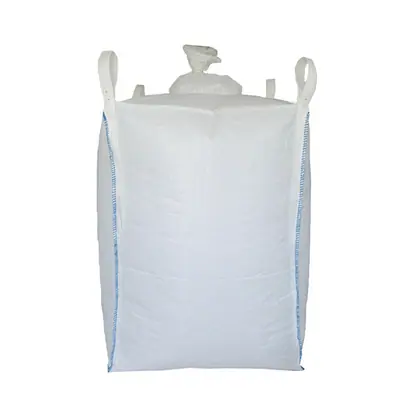
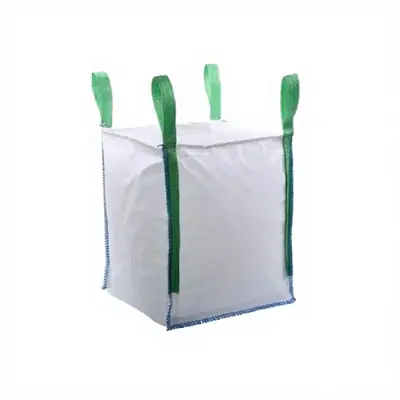
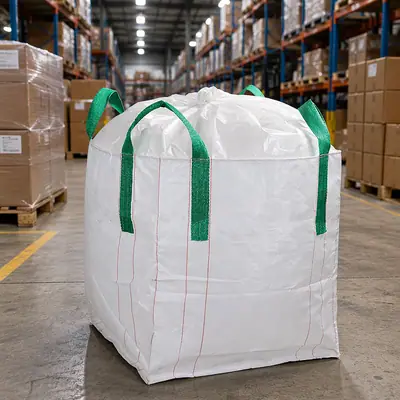
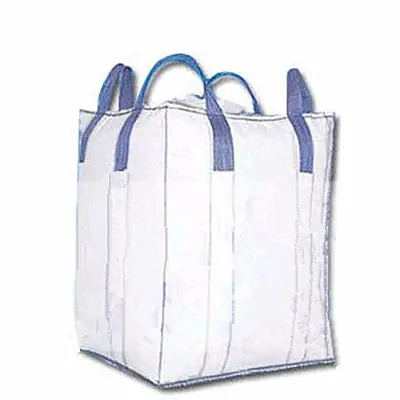
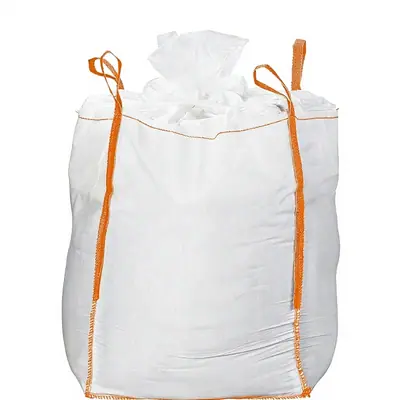
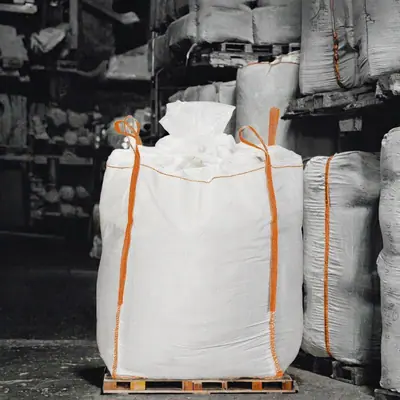
A food grade bulk bag is an FIBC made from materials approved for direct food contact, produced in a controlled hygienic environment, and backed by documented checks for foreign matter, pests and cross-contamination. In practice that means 100% virgin polypropylene fabric, food-contact compliant liners and threads, cleanroom-style or segregated production, and paperwork that proves all of it.
The term is not a legal grade on its own. A bag is "food grade" when the materials meet the food-contact regulations of the market it is sold into and the supplier's process meets the hygiene expectations of your food-safety plan. This guide explains what to ask for and how to specify food grade FIBC bags for common ingredients. For general sizing and construction, start with how to choose an FIBC bulk bag.
What makes an FIBC food grade?
1. Food-contact compliant materials
Everything that can touch the product must be suitable for food contact:
- Fabric: 100% virgin polypropylene. No recycled resin, no regrind of unknown origin, and calcium carbonate filler kept within what the resin compliance allows.
- Coating: if the fabric is coated, the PP/PE coating resin must also be food-contact compliant.
- Liner: polyethylene (LDPE, LLDPE or blends) made from food-contact grade resin.
- Threads, tie cords and labels inside the bag: compliant materials, securely fixed so they cannot shed.
- Additives and color masterbatch: only those cleared for food contact.
The usual references are FDA 21 CFR 177.1520 (olefin polymers) for the US and EU Regulation 10/2011 (plastic materials in contact with food) together with Regulation 1935/2004 for Europe. A supplier should be able to give you a declaration of compliance and, where relevant, migration test reports from the resin producer or a test lab.
2. Hygienic production
The fabric may be compliant, but a bag sewn on a dusty floor is not food grade. Look for:
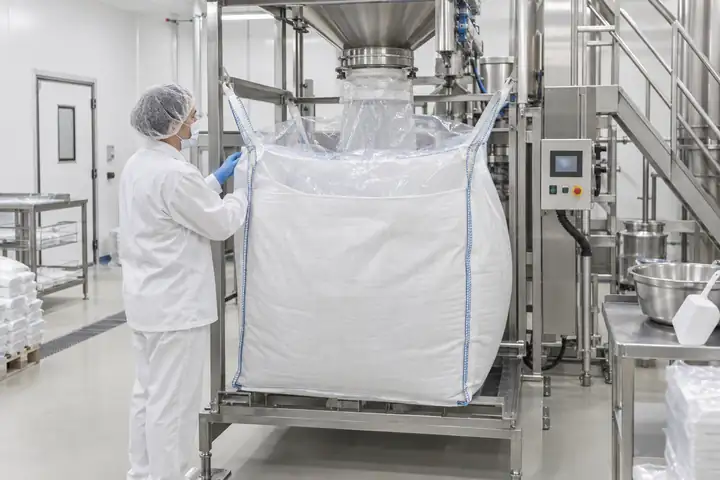
- A segregated or cleanroom production area for cutting, sewing and finishing food grade bags, often with positive air pressure and filtered air.
- Hygiene rules for staff: clean clothing, hair and beard nets, no jewelry, hand washing, no food or drink in the area.
- Pest control with documented monitoring.
- No glass or brittle plastic in production areas, and a policy for broken items.
- Clean, enclosed storage of finished bags, off the floor and away from chemicals.
3. Contamination controls on every bag
- Loose thread trimming and bag cleaning — air blowing or vacuuming the inside of each bag to remove fibers and dust.
- Light-table inspection to spot holes, contamination and stains.
- Metal detection of finished bags, commonly used for food and pharmaceutical grades.
- Sealed packing — bags bundled and wrapped in PE film so they stay clean in transit.
- Lot traceability from resin batch to finished bale, so a complaint can be traced.
4. Food-safety certification
Many food manufacturers require their packaging suppliers to hold a recognized food-safety packaging certificate, such as BRCGS Packaging Materials, FSSC 22000 or ISO 22000, or to pass a hygiene audit. Requirements vary by buyer, so check your own supplier-approval policy and ask any supplier for its current certificates and scope before ordering. A certificate that does not list FIBC production in its scope does not cover your bags.
Food grade liners: do you need one?
Not every food grade FIBC needs a liner, but most fine food powders benefit from one.
| Situation | Liner recommendation |
|---|---|
| Granulated sugar, salt, rice (free-flowing, low fines) | Coated fabric may be enough; liner if humidity or odor is a concern |
| Flour, starch, milk and whey powder (fine, dusty) | Liner recommended to stop sifting and moisture pickup |
| Hygroscopic products (powdered sugar, some starches, dextrose) | Liner strongly recommended; consider heavier gauge or barrier film |
| Products with strict microbial limits | Liner plus sealed filling and discharge spouts |
Liner styles:
- Loose tubular liner — inserted separately; lowest cost, but can bunch or pull into the discharge spout.
- Sewn-in or tabbed liner — attached to the bag at the seams or by tabs so it stays in place.
- Form-fit liner — shaped to the bag including spouts; best discharge behavior and the usual choice for baffle bags.
Typical liner thickness for food powders is in the range of roughly 50–100 microns (2–4 mil). Our bulk bag liners guide compares form-fit vs tubular liners in detail.
Specifying FIBCs for sugar, flour and starch
The table below gives typical starting specifications. Always confirm with your own bulk density and a trial fill.
| Product | Typical bulk density | Common fill | Suggested construction |
|---|---|---|---|
| Granulated sugar | 0.8–0.9 t/m³ | 1,000 kg (2,205 lb) | Coated U-panel or tubular, filling spout, discharge spout, liner optional |
| Wheat flour | 0.5–0.6 t/m³ | 500–800 kg | Tubular or baffle, coated, PE liner, spout top and bottom |
| Corn / potato starch | 0.5–0.7 t/m³ | 500–1,000 kg | Tubular, coated, form-fit liner, anti-static construction |
| Rice | 0.75–0.85 t/m³ | 1,000 kg | Coated or uncoated, duffle or spout top, spout bottom |
| Salt | 1.1–1.3 t/m³ | 1,000–1,250 kg | Coated U-panel, liner for fine salt, spout bottom |
| Milk / whey powder | 0.4–0.6 t/m³ | 500–750 kg | Tubular or baffle, form-fit liner, spout top and bottom, anti-static |
Low-density powders like flour often fit only 500–800 kg in a bag that still sits on a standard pallet. A baffle bag squares the shape and recovers much of that lost space — see baffle bags and Q-bags.
Static and dust safety for food powders
Sugar, flour, starch and milk powder are combustible dusts. Pouring them in or out of a bag generates static charge, and a spark in a dust cloud can ignite it. Depending on your hazard assessment, a food grade FIBC may also need to be a Type B, Type C (groundable) or Type D (static-dissipative) bag, with a compatible liner. Do not assume a standard Type A bag is acceptable. Our guide to types of FIBC bags explains each class; check your site's explosion-protection assessment and the relevant standard (IEC 61340-4-4) before choosing.
Filling and discharge for hygiene
- Filling spouts seal around the filling head, so the product is never exposed to the room.
- Discharge spouts with closure flaps let you empty the bag into a hopper without cutting the fabric — cutting creates loose fibers, which are a foreign-matter risk.
- Tie-off cords should be compliant material and either attached to the bag or detectable.
Our bulk bag filling and discharging equipment guide covers fillers, unloaders and spout closures.
Single-trip or reusable for food?
Most food grade bulk bags are single-trip (5:1). Cleaning a used bag to a food-contact standard is difficult to validate, and residues can harbor microbes or allergens. Some closed-loop systems reuse 6:1 bags for the same product between two dedicated sites, with documented inspection and a fresh liner each trip — see the FIBC safety factor guide and FIBC recycling and reuse. Discuss this with your food-safety team before adopting it.
Checklist: questions to ask a food grade FIBC supplier
- Is the fabric 100% virgin PP? Can you provide a resin declaration of compliance for my market (FDA, EU)?
- Are liners, coatings, threads and cords also food-contact compliant?
- Where are food grade bags sewn — a separate room, a cleanroom, or the general floor?
- What contamination controls are applied to each bag (cleaning, light table, metal detection)?
- Which food-safety certificate do you hold, and does its scope include FIBC production?
- How are finished bags packed and stored?
- Can you trace a bag to its production lot and resin batch?
- Can you supply a sample and a test report for SWL and safety factor?
Sourcing food grade jumbo bags from EGP
EGP (Yantai Evergreen Packaging) is a Yantai, China manufacturer that has supplied woven polypropylene packaging through Alibaba.com for 24 years. Our food grade range includes the Durable Polypropylene Flat Bottom Food Grade Jumbo Bags for granular products and the PP Food Grade Tubular Woven Bulk Bag 1 Ton Antistatic for powders that need spouts and static control. Send us your product, bulk density and documentation requirements via our contact page and we will tell you exactly which documents we can provide for your specification, or browse the FIBC Bulk Bags range.
Frequently asked questions
What is the difference between a food grade FIBC and a standard FIBC?
A food grade FIBC uses food-contact compliant virgin polypropylene and liners, is made in a hygienic, segregated area and goes through extra contamination controls such as bag cleaning and inspection. A standard industrial bag may use the same construction but without those material and hygiene guarantees.
Are food grade bulk bags FDA approved?
The FDA does not approve individual bags. Instead, the resins and additives must comply with FDA food-contact regulations such as 21 CFR 177.1520 for polypropylene and polyethylene. Ask your supplier for a declaration of compliance covering the fabric, coating and liner.
Do food grade fibc bags need a liner?
Not always. Free-flowing granules such as sugar or rice can ship in coated food grade bags without a liner, while fine or moisture-sensitive powders like flour and starch usually need a PE liner to stop sifting and moisture pickup.
What are food grade liners made of?
Most food grade liners are polyethylene film (LDPE, LLDPE or blends) made from food-contact compliant resin, typically around 50–100 microns thick. Barrier films are used where oxygen or moisture protection is critical.
Can food grade bulk bags be reused?
Most are single-trip because cleaning a used bag to food-contact standards is hard to verify. Some dedicated closed-loop systems reuse 6:1 bags with a new liner each trip, but only with documented inspection and approval from your food-safety team.
Do bulk bags for flour need to be anti-static?
Flour is a combustible dust, so static control must be considered. Depending on your hazard assessment, a Type B, C or D bag may be required instead of a standard Type A bag.