Key takeaways
- SWL (safe working load) is the maximum weight a bulk bag is designed to carry in normal use.
- 5:1 means the bag withstood at least five times its SWL in a top-lift test; it is a single-trip bag.
- 6:1 bags are tested to six times SWL and can be reused when inspected and reconditioned.
- The safety factor protects people under a suspended load — never fill above SWL to "use up" the margin.
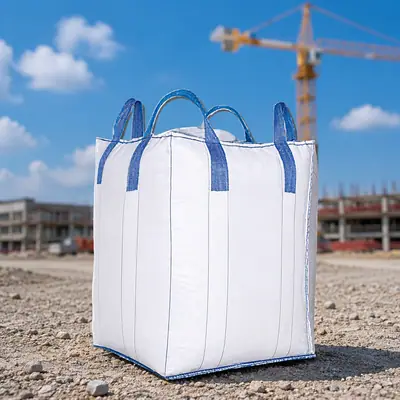
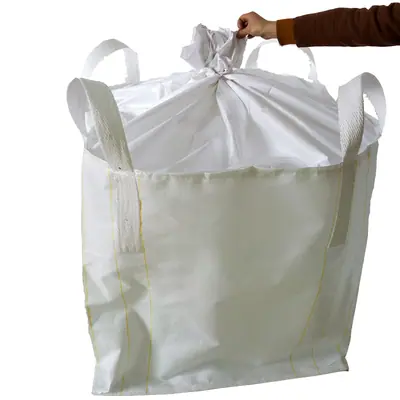
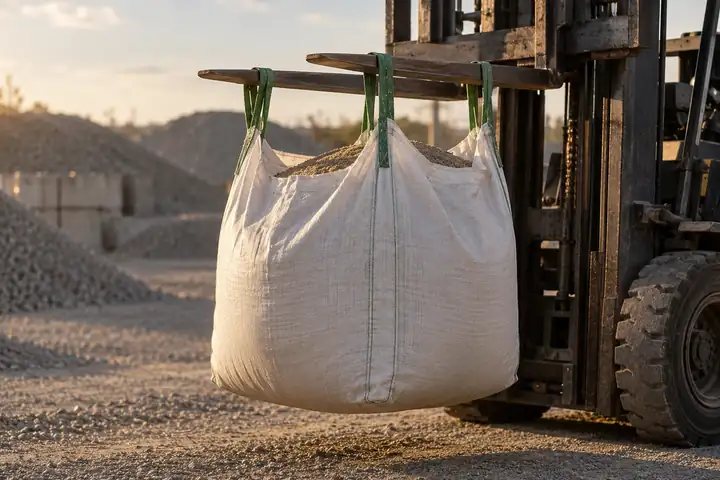
Every FIBC (flexible intermediate bulk container, also called a jumbo bag, ton bag or big bag) carries two numbers on its label: the safe working load and the safety factor. Together they tell you how much the bag may carry and how much reserve strength sits behind that rating. Getting them right is the single most important part of specifying a bulk bag, because a failed lift drops a tonne of product on whatever — or whoever — is underneath.
What is safe working load (SWL)?
Safe working load is the maximum mass of product the bag is designed to hold and lift during normal handling. Common ratings are 500 kg, 1,000 kg, 1,500 kg and 2,000 kg, and heavy-duty constructions go to 3,000 kg.
SWL is a design rating, not a volume. A bag sized for 1 m³ of a light product such as wood chips might hold only 250 kg; the same bag filled with sand could exceed its SWL long before it looks full. So the bag's dimensions must be matched to your product's bulk density and the SWL to the resulting weight.
What does a 5:1 or 6:1 safety factor mean?
The safety factor (SF) is the ratio between the load a bag survived in testing and its rated SWL.
| Safety factor | Test load for a 1,000 kg SWL bag | Intended use |
|---|---|---|
| 5:1 | 5,000 kg | Single trip (standard) |
| 6:1 | 6,000 kg | Multi-trip, with inspection and reconditioning |
| 8:1 | 8,000 kg | Heavy-duty multi-trip (specialist, less common) |
A 5:1 bag is the global default for single-use packaging of minerals, chemicals, feed, grain and building materials. A 6:1 bag uses stronger fabric, webbing and seams so that it can be emptied, inspected and refilled safely. It costs more, but in closed-loop systems — for example between a plant and its own warehouse — it can cost less per trip.
How is the safety factor tested?
The international reference is ISO 21898 (Packaging — Flexible intermediate bulk containers for non-dangerous goods). The key test is the top-lift test: a sample bag is filled, hung by its loops in a test rig and loaded cyclically before being pulled to its rated multiple of SWL. To pass, the bag must hold the product without loss, and its lifting loops and body must not break.
Other tests in the standard include drop, topple, righting, stacking and tear-propagation checks. Reputable manufacturers top-lift test samples from production batches, not just from a one-off prototype.
At Evergreen Packaging we produce FIBCs to 5:1 as standard and 6:1 on request, with options listed as 3:1/5:1/6:1 on several of our bulk-bag listings so that the rating can be matched to the application.
Single-trip or multi-trip: which do you need?
Choose 5:1 single-trip when:
- bags leave your site and are not returned (export shipments, retail aggregates, firewood);
- the product contaminates fabric (oily, sticky or hazardous residues);
- you have no inspection and reconditioning process.
Choose 6:1 multi-trip when:
- bags circulate in a closed loop and come back to you;
- you can clean, inspect and record each bag between uses;
- the total cost per trip matters more than the purchase price.
Never reuse a 5:1 bag for lifting, even if it looks undamaged. UV exposure, abrasion and hidden seam damage reduce strength invisibly.
What else affects real-world strength?
The safety factor is measured in a lab under controlled conditions. In the field, strength also depends on:
- UV exposure. Polypropylene degrades in sunlight. Specify UV-stabilised fabric and avoid long outdoor storage; see our Outdoor UV Stabilized FIBC Bag Weather Resistant.
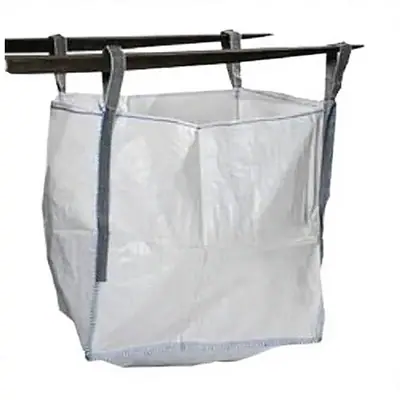
- Loop type. Cross-corner loops spread load into the body seams and suit forklift handling; side-seam loops are simpler; full-belt designs carry heavier loads.
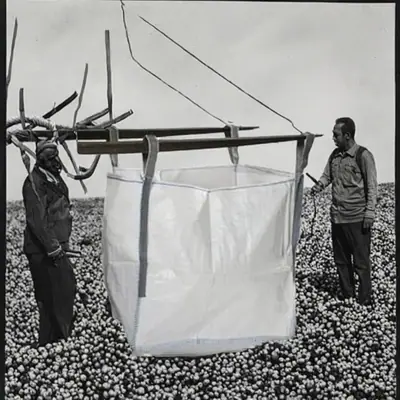
- Lifting practice. Use all loops, lift vertically, keep forks rounded and long enough, and never stand under a suspended bag.
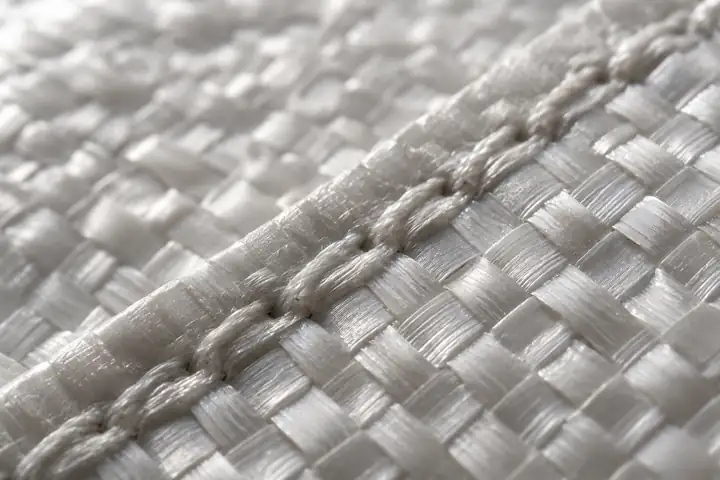
- Fabric weight. Higher SWL needs heavier fabric (often 160–220 g/m²) and wider webbing.
How to specify a bulk bag correctly
- State the product and bulk density (t/m³), plus particle size and any moisture or static risk.
- State the fill weight — this sets SWL.
- Choose the safety factor — 5:1 single trip or 6:1 multi-trip.
- Choose top and bottom — open top, duffle/skirt, filling spout; flat bottom or discharge spout.
- Choose loops and extras — cross-corner or side-seam loops, liner, UV, coating, print.
Send these five items with your inquiry and we can return a construction and price in one reply. Browse our FIBC Bulk Bags to compare standard designs.
Frequently asked questions
Can I put 1,200 kg in a 1,000 kg SWL bag if it has a 5:1 safety factor?
No. The safety factor is a reserve for dynamic loads, wear and handling errors, not extra capacity. Filling above SWL removes that margin and can cause a failure during lifting.
Is a 6:1 bag always better than 5:1?
Not always. A 6:1 bag is stronger and reusable but heavier and more expensive. For one-way export shipments a 5:1 bag is the correct and economical choice.
Which standard covers FIBC testing?
ISO 21898 covers FIBCs for non-dangerous goods, including the top-lift test. Bags for dangerous goods (UN-certified FIBCs) follow additional UN transport tests.
Does the safety factor change with UV exposure?
The rating applies to the bag as tested. Sunlight weakens polypropylene over time, so UV-stabilised fabric and covered storage are essential if bags are kept outdoors.