Key takeaways
- Polyethylene (PE) is the world's most widely produced plastic: a thermoplastic made by polymerizing ethylene, formula (C2H4)n.
- Main types: LDPE (0.910–0.925 g/cm³, soft film), LLDPE (tougher film), HDPE (0.941–0.965 g/cm³, stiffer, bottles, pipes and nets).
- Melting points run from about 105–115 °C (LDPE) to 130–137 °C (HDPE).
- In woven packaging PE appears as liners, coatings, film valve bags and HDPE nets; HDPE is code 2, LDPE code 4.
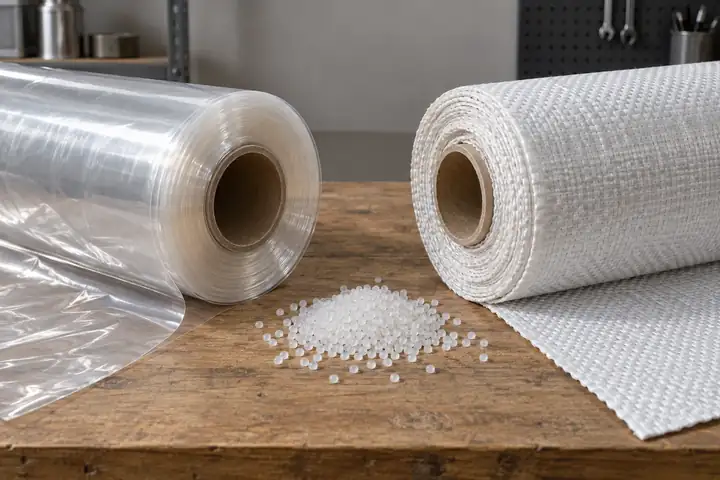
Polyethylene (PE) is a thermoplastic made by linking ethylene molecules into long chains, and it is the most widely produced plastic in the world. It is light, flexible to stiff depending on type, waterproof and chemically resistant, and is used for film bags, liners, bottles, pipes, nets and coatings. The main types are low-density (LDPE), linear low-density (LLDPE) and high-density (HDPE) polyethylene.
Quotable definition: polyethylene is a polyolefin plastic with the formula (C2H4)n, made from ethylene, whose density and branching determine whether it behaves like soft film (LDPE) or a stiff, strong solid (HDPE).
"Polythene" is simply the British name for the same material. "PE plastic" and "PE material" also mean polyethylene.
What is polyethylene made of?
Polyethylene is made from ethylene (CH2=CH2), a gas produced by cracking natural gas liquids or naphtha. In polymerization the double bond opens and thousands of ethylene units join into chains of carbon atoms, each carrying two hydrogens. Because it contains only carbon and hydrogen, PE belongs to the polyolefin family, like polypropylene.
Polyethylene was first made in a usable form by accident in a British laboratory in 1933 using very high pressure, which gave branched low-density PE. In the 1950s, catalysts developed by Karl Ziegler and others allowed lower-pressure production of linear, high-density PE.
How it is made determines its structure:
- High-pressure, free-radical process: long and short branches, chains pack loosely: LDPE.
- Low-pressure catalyst process (Ziegler-Natta, chromium or metallocene): straight chains with few branches pack tightly: HDPE.
- Low-pressure process with a comonomer (butene, hexene or octene): straight chains with short regular branches: LLDPE.
Types of polyethylene compared
| Type | Density (g/cm³) | Melting point | Character | Typical uses | Code |
|---|---|---|---|---|---|
| LDPE | 0.910–0.925 | 105–115 °C (220–240 °F) | Soft, clear-ish, easy to seal | Film, bags, liners, coatings, squeeze bottles | 4 |
| LLDPE | 0.915–0.925 | 120–125 °C (248–257 °F) | Tougher, better puncture and tear resistance | Stretch wrap, heavy-duty sacks, liners | 4 |
| MDPE | 0.926–0.940 | 120–130 °C | Between LDPE and HDPE | Gas pipe, some film | 2 or 4 |
| HDPE | 0.941–0.965 | 130–137 °C (266–279 °F) | Stiff, strong, good barrier, milky | Bottles, pipes, crates, nets, tarps | 2 |
| UHMWPE | ~0.93–0.94 | ~130–136 °C | Extremely high molecular weight, very wear-resistant | Liners, gears, high-strength fiber | 7 |
Values are typical published ranges; specific grades vary. All PE grades float in water, have a glass transition far below room temperature (well under −100 °C), and stay tough in freezing conditions.
HDPE density and why it matters
HDPE density of about 0.94–0.97 g/cm³ comes from its high crystallinity (often 60–80%, compared with roughly 40–55% for LDPE). Higher crystallinity gives more stiffness, higher melting point, better moisture barrier and better chemical resistance, but less clarity and flexibility.
HDPE vs LDPE: what is the difference?
| Feature | HDPE | LDPE |
|---|---|---|
| Structure | Linear, few branches | Highly branched |
| Feel | Stiff, slightly waxy, "crinkly" film | Soft, stretchy, smooth |
| Tensile strength (molded) | about 20–35 MPa | about 8–15 MPa |
| Heat resistance | Better (melts ~130–137 °C) | Lower (melts ~105–115 °C) |
| Moisture barrier | Very good | Good |
| Clarity | Translucent to milky | More transparent |
| Main packaging use | Bottles, nets, woven tarps, thin "crinkle" bags | Liners, film bags, coatings |
Neither is better overall. LDPE (and LLDPE) wins when you need flexible, sealable, tough film; HDPE wins for rigid containers, monofilament and products that need stiffness.
What is polyethylene used for?
Polyethylene uses are broad: films and bags, bottles and jerry cans, water and gas pipes, cable insulation, toys, crates, geomembranes, greenhouse film and agricultural nets. Roughly a quarter to a third of global plastic production is polyethylene, making it the most common plastic overall.
Where polyethylene appears in our products
Woven bag factories work mainly with polypropylene, but PE plays several important supporting roles:
- Liners. LDPE or LLDPE inner bags give moisture protection inside woven sacks and bulk bags, as in PP Woven Bag with Inner Liner 25kg Capacity Moisture. Typical sack liner thickness is about 30–80 microns.
- Coatings. A thin PE (or PP) extrusion coating of roughly 15–30 g/m² seals the gaps in woven fabric.
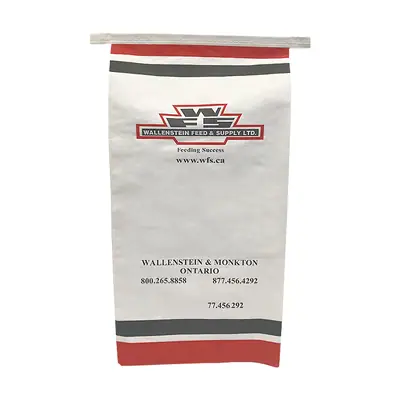
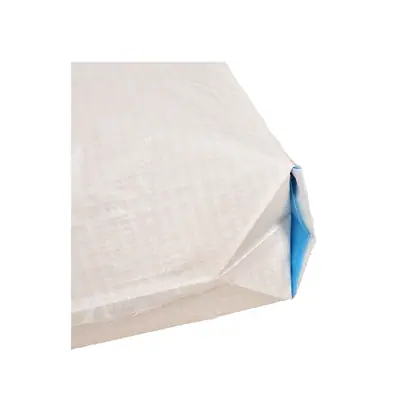
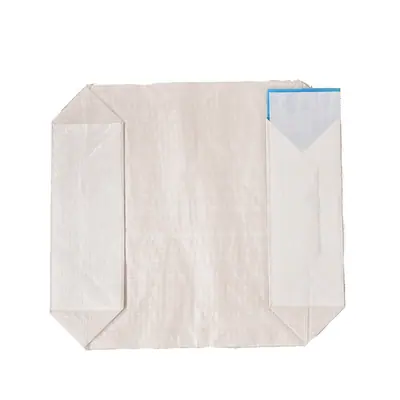
- Film valve bags. Heavy-duty LDPE film sacks such as Custom-made Durable Two Layer LDPE Valve Bags Custom Logo are used for powders and granules.
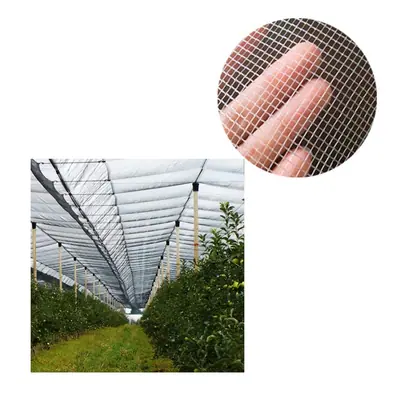
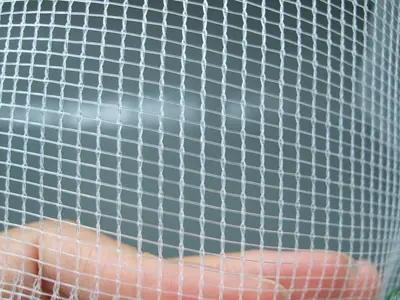
- Nets. UV-stabilized HDPE monofilament is the usual material for anti-hail and insect nets, for example HDPE White Large Hail protection Net Anti Hail for apple.
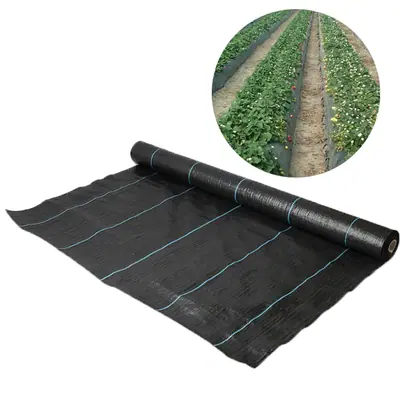
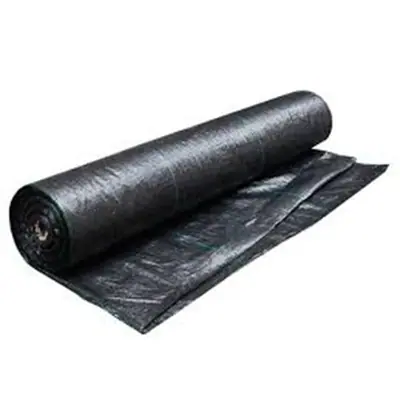
- Ground covers. Some weed mats are offered in PP or PE, such as PP or PE Material White Large Weed Mat Ground Cover.
What are polyethylene bags and LDPE bags?
Polyethylene bags are bags made from PE film rather than woven fabric. They range from thin produce and carrier bags to heavy-duty sacks 150–200 microns thick for 25 kg of resin or fertilizer. LDPE bags are soft, clear and easy to heat-seal; HDPE bags are thinner, stiffer and make a crinkly sound.
Compared with woven PP sacks, film bags offer a complete moisture barrier and a smooth print surface, but for the same weight they generally have lower tear and puncture resistance, and filled film sacks can slide on pallets. That is why many heavy-duty sacks combine a woven PP outer with a PE liner or coating. We cover this trade-off in detail in polypropylene vs polyethylene bags.
What is polyethylene fabric?
Polyethylene fabric is woven or knitted from HDPE tapes or monofilaments:
- Woven HDPE fabric is the base of many coated tarpaulins, often laminated with LDPE on both sides.
- Knitted HDPE shade cloth is widely used in horticulture because knitted monofilament resists fraying and can be cut without unravelling. HDPE shade cloth is typically sold by shade percentage (30–90%) and weight per square meter.
- HDPE netting covers hail, insect and bird protection.
Woven polypropylene dominates sacks and ground covers, while HDPE dominates knitted nets and shade fabric. See our greenhouse shade cloth guide and Hail, Shade & Insect Nets for examples.
Polyethylene vs polypropylene in brief
Both are polyolefins and both float. PE is softer, tougher in cold and seals easily; PP is stiffer, more heat-resistant (melting at about 160–165 °C) and makes stronger oriented tape. For a full comparison, read polypropylene vs polyethylene bags and what is polypropylene.
How are HDPE and LDPE recycled?
HDPE (code 2) recycling is well established for rigid items: milk and detergent bottles are accepted by most programs that collect plastic and are recycled into pipes, crates, bottles and plastic lumber.
LDPE (code 4) recycling is less consistent. Film tangles the screens in sorting facilities, so many curbside programs exclude bags and wrap. Some areas run separate film collection points or commercial film recycling for pallet wrap, liners and sacks. Clean, dry, single-polymer film is the most valuable.
Recycling availability varies by local program and region, so check what your area or waste contractor accepts. The overview in plastic recycling numbers shows where PE sits among the seven codes.
Sourcing PE liners, coatings and nets
EGP manufactures woven PP bags with LDPE liners or PE coating, LDPE valve bags and HDPE agricultural nets in Yantai, China, with custom sizes and printing. Browse PP Woven Sacks or contact us to discuss your specification.
Frequently asked questions
Is polyethylene the same as plastic?
Polyethylene is one type of plastic, and the most common one. Other plastics include polypropylene, PET, PVC and polystyrene. When people say "plastic bag" they usually mean a polyethylene film bag.
What is the melting point of polyethylene?
It depends on the type. LDPE melts at about 105–115 °C (220–240 °F), LLDPE at about 120–125 °C and HDPE at about 130–137 °C (266–279 °F). PE softens well below these temperatures, so practical use temperatures are lower.
Is polythene the same as polyethylene?
Yes. Polythene is the common British name for polyethylene. The material, properties and recycling codes are the same.
What is the density of HDPE?
HDPE typically has a density of about 0.941–0.965 g/cm³, compared with about 0.910–0.925 g/cm³ for LDPE. The higher density comes from straighter chains that pack more tightly into crystals.
Is polyethylene safe for food?
Food-grade polyethylene is widely used for food bags, liners and containers. Suitability depends on the specific grade, additives and inks, so request a declaration of compliance with the relevant food-contact rules, such as FDA 21 CFR 177.1520 in the US or EU Regulation 10/2011, from the supplier.
Can LDPE bags be recycled?
Technically yes, but LDPE film is often not accepted in curbside bins because it jams sorting equipment. Where available, use separate film collection or a commercial film recycler, and keep the film clean, dry and free of paper labels.