Key takeaways
- The percentage is the share of sunlight the cloth blocks: 30% shade cloth lets about 70% of light through.
- 30–40% suits most fruiting vegetables (tomatoes, peppers, strawberries) in hot summers.
- 40–50% suits leafy greens and cool-season crops such as spinach, lettuce and broccoli.
- 50–70% is for nurseries, orchids and shade plants; 70–90% is for people, livestock and patios, not food crops.
For most vegetable gardens and greenhouses, 30% to 50% shade cloth is the right choice: 30–40% for sun-loving fruiting crops such as tomatoes, peppers and strawberries, and 40–50% for leafy greens and cool-season crops in hot weather. Higher densities (60–90%) are for shade plants, nurseries, livestock and people, and will usually reduce yields if used over vegetables.
The number on a shade cloth label tells you how much light it blocks, not how much it lets through. The rest of this guide explains how to read that number, which percentage suits which crop, and how color and climate shift the choice.
What do shade cloth percentages mean?
A shade cloth's rating is its shade factor: the percentage of incoming sunlight intercepted by the fabric. Light transmission is the remainder.
Light reaching the plant = 100% − shade %
So 30% shade cloth passes roughly 70% of sunlight, 50% passes 50%, and 90% passes only 10%. Ratings are measured on new cloth under standard conditions; real-world shading varies with sun angle, dust on the fabric and how tightly the cloth is stretched.
Two things the percentage does not tell you:
- Temperature drop. Shade lowers leaf and air temperature under the cloth, but by how much depends on ventilation, color and height above the crop. A cloth mounted 1–2 m (3–6 ft) above plants with open sides cools far better than one laid on top of them.
- Durability. Lifespan depends on the polymer, UV stabilization and fabric weight (g/m²), covered in our greenhouse shade cloth guide.
Shade cloth percentage chart
| Shade % | Light transmitted | Typical fabric weight* | Best for |
|---|---|---|---|
| 30% | ~70% | 50–80 g/m² | Tomatoes, peppers, eggplant, melons, strawberries in hot summers |
| 40% | ~60% | 70–100 g/m² | Fruiting crops in very hot or high-altitude areas; transplants |
| 50% | ~50% | 90–120 g/m² | Lettuce, spinach, broccoli, herbs, seedlings, greenhouse cooling |
| 60% | ~40% | 110–140 g/m² | Nurseries, ornamentals, hydrangeas, begonias |
| 70% | ~30% | 130–170 g/m² | Ferns, orchids, hostas, patios, poultry and livestock shade |
| 80% | ~20% | 150–200 g/m² | Carports, kennels, pergolas, privacy screens |
| 90% | ~10% | 180–260 g/m² | People and animal shelters, windbreak/privacy fencing |
*Fabric weights are typical industry ranges for knitted HDPE or woven PP shade net; the same percentage can be reached with different constructions, so always compare the weight on the spec sheet.
What percentage shade cloth for vegetables?
Most vegetables evolved for full sun. Shade cloth is not meant to turn a sunny bed into a shady one; it trims the hottest, harshest part of summer light so plants keep photosynthesizing instead of shutting down. As a rule, use the lowest percentage that prevents scorch and wilting.
Shade cloth for tomatoes
30% to 40%. Tomatoes stop setting fruit well when daytime temperatures stay above about 32 °C (90 °F) and nights above about 24 °C (75 °F), and exposed fruit suffers sunscald. A 30% cloth is enough in most climates; move up to 40% in desert or very high-UV regions. Above 50%, plants grow leggy and yields drop.
Shade cloth for peppers
30% to 40%. Peppers, especially bell types, are prone to sunscald on fruit shoulders and blossom drop in heat waves. Many growers in hot regions report better fruit quality under 30–35% shade. Hot peppers tolerate more sun than sweet peppers, so lean toward 30% for chilies.
Shade cloth for strawberries
30% to 50%. Strawberries are cool-season plants; under strong summer sun they suffer leaf burn and soft fruit. 30% suits mild summers; 40–50% suits day-neutral and everbearing varieties fruiting through hot months.
Shade cloth for broccoli, spinach and leafy greens
40% to 50%. Broccoli, spinach, lettuce, cilantro and other cool-season crops bolt (run to seed) when heat and long days combine. A 40–50% cloth keeps soil and leaf temperatures down and can extend the harvest by weeks. Shade cloth for spinach is most valuable for late-spring and midsummer sowings: at 50% it also helps germination by keeping the seedbed moist.
Other common crops
| Crop | Recommended shade % | Why |
|---|---|---|
| Cucumbers, squash, melons | 30% | Reduce leaf scorch; keep pollinator access (raise cloth or open sides) |
| Beans | 30% | Reduce blossom drop in heat |
| Lettuce, kale, chard | 40–50% | Delay bolting, prevent tip burn |
| Herbs (basil, parsley, cilantro) | 30–50% | Basil at 30%, cilantro and parsley at 40–50% |
| Seedlings and transplants | 50% | Short-term protection while roots establish |
| Blueberries, raspberries | 30–40% | Reduce sunburn on fruit in hot climates |
What percentage shade cloth for a greenhouse?
For a vegetable greenhouse, 30–50%; for ornamentals and propagation, 50–60%; for orchids, ferns and shade-loving foliage plants, 60–75%.
Greenhouses trap heat, so the same crop often needs a little more shade inside a structure than in an open bed. A few guidelines:
- Mount shade cloth outside the glazing where possible. Exterior shade stops solar energy before it enters the house; interior cloth reduces light but some heat is already inside.
- Combine with ventilation. Shade alone rarely solves overheating. Pair it with roof or side vents, fans or evaporative cooling. If you also use insect screens on vents, remember they reduce airflow (see the insect netting guide).
- Think seasonally. Many growers use 30% in late spring, 40–50% at the peak of summer, and remove cloth entirely in autumn and winter to maximize light.
For material choices, colors and how knitted and woven cloth differ, see the full greenhouse shade cloth guide.
30, 40, 50, 70 or 90: choosing by use
30 shade cloth
The default for food crops in sunny climates. It cuts peak intensity without starving plants of light. If you are unsure, start at 30%.
40 percent shade cloth
A middle step for very hot regions, fruiting crops in high-altitude sun, and mixed beds where some plants are more sensitive than others.
50 shade cloth
The workhorse for leafy greens, seedlings, propagation benches and general greenhouse cooling. It is also a common choice for nursery stock that is being hardened off.
70 shade cloth
Too dense for vegetables. Use it for shade plants (ferns, hostas, orchids), outdoor seating, poultry runs and livestock shelters. Animals benefit from substantial shade during heat stress, and 70–80% is common for cattle, goat and poultry shade structures.
90 shade cloth
Essentially a screen. Use it for people, vehicles, kennels, privacy fences and windbreaks. It is not a growing cloth.
Does shade cloth color change the percentage?
Not the rated percentage, but color changes what happens to the energy that is not transmitted:
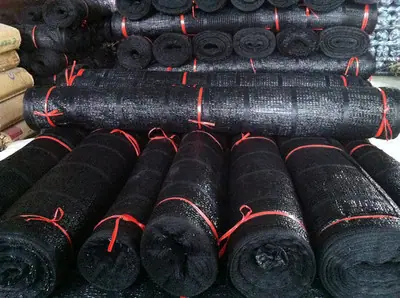
- Black absorbs heat and is the most UV-durable color. Mounted with good airflow above the crop, it works well and is the most common agricultural option.
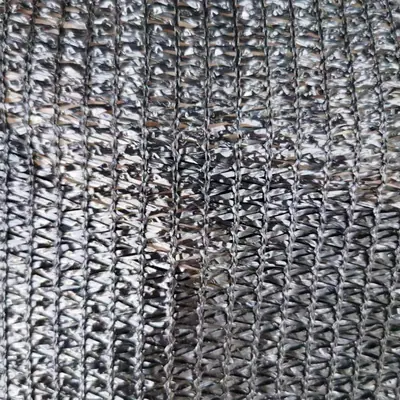
- White and aluminized/reflective cloth bounce more energy away and tend to run cooler underneath at the same rating, with softer, more diffuse light.
- Green and brown blend into gardens and are often chosen for appearance.
A practical takeaway: in very hot climates, a white or reflective 30–40% cloth can deliver cooling similar to a darker cloth of a higher rating, while letting more light reach the crop.
How to pick the best shade cloth for your garden
The best shade cloth for a garden is the one matched to the crop, the climate and the structure:
- Identify your crop group: fruiting (30–40%), leafy/cool-season (40–50%), shade plants (60–70%).
- Adjust for climate: add 10% in desert or high-UV regions; subtract 10% in mild, cloudy climates.
- Check the fabric weight and UV stabilization, not just the percentage, so the cloth lasts several seasons.
- Plan the mounting: a frame 1–2 m above the crop with open sides gives the best cooling. Our guide on how to secure shade cloth covers clips, grommets, frames and tensioning.
- Consider multi-purpose netting: in hail-prone areas, a hail net may give some shading and storm protection at once (see hail netting for gardens and greenhouses).
Buying shade cloth in bulk
If you are a distributor, garden center, nursery or farm buying by the roll, specify shade percentage, color, width, roll length, fabric weight (g/m²), UV stabilization, and edge finish (hemmed, reinforced, grommets). EGP manufactures agricultural netting in Yantai, China, including our Agricultural Sun Shade PP Polypropylene Black UV in 30%, 60% and 80% densities, alongside 100% Virgin Plastic Anti-Hail Mesh Net for Greenhouse and HDPE White Large Hail protection Net Anti Hail for apple. Browse the full Hail, Shade & Insect Nets range, or request a quote with your sizes and quantities; we usually respond within 8 hours.
Frequently asked questions
What percentage shade cloth is best for tomatoes?
30% shade cloth is the best starting point for tomatoes in most climates, rising to 40% in desert or very high-UV regions. It reduces sunscald and heat-related blossom drop while leaving enough light for fruit set. Going above 50% usually produces leggy plants and smaller yields.
Is 50% shade cloth too much for vegetables?
For fruiting crops such as tomatoes, peppers and squash, 50% is usually more than needed and can reduce yield. For leafy greens, broccoli, spinach and seedlings in hot weather, 50% is ideal because it slows bolting and keeps leaves tender.
What percentage shade cloth for a greenhouse in summer?
Most vegetable greenhouses do well with 30–50% shade in summer, ideally mounted outside the roof. Propagation and ornamental houses commonly use 50–60%, and orchids or ferns 60–75%. Always combine shading with ventilation, because shade alone does not remove heat.
Does higher percentage shade cloth keep plants cooler?
Generally yes, but color and mounting matter as much as the number. A white or reflective cloth runs cooler than black cloth of the same rating, and any cloth suspended well above the crop with open sides cools more than one draped directly on the plants.
What is 90% shade cloth used for?
90% shade cloth is used for people and animal shelters, carports, privacy fencing and windbreaks. It blocks so much light that it is not suitable for growing vegetables or most plants.
Can I use two layers of 30% shade cloth to make 60%?
Not exactly. Two layers of 30% cloth transmit about 0.7 × 0.7 = 49% of light, which works out to roughly 51% shade, not 60%. Layering also traps more heat between sheets, so a single cloth of the right rating is usually better.