Key takeaways
- Insect netting is a fine, UV-stabilized mesh (usually HDPE) that physically keeps pests off crops without spraying.
- Choose by hole size, not marketing names: ~1.3 mm stops butterflies and moths, ~0.8 mm flea beetles and leafminers, ~0.4 mm aphids and whitefly, ~0.2 mm thrips.
- Finer mesh cuts airflow, so greenhouse vents need more screen area.
- Netting only works if every edge is sealed and crops are rotated so pests are not trapped inside.
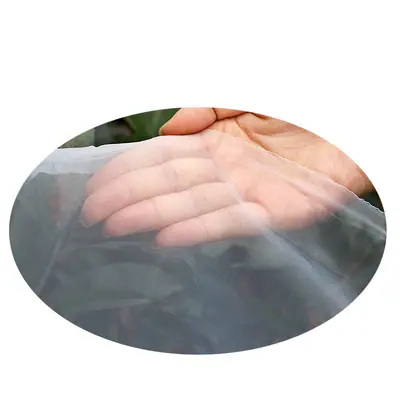
Insect netting is a fine, UV-stabilized mesh, usually woven from HDPE monofilament, that physically excludes pests from crops. The right netting depends on the smallest pest you need to stop: roughly 1.3 mm holes keep out cabbage butterflies and moths, about 0.8 mm stops flea beetles and leafminers, around 0.4 mm handles aphids and whitefly, and about 0.2 mm is needed for thrips.
Because insect netting reduces airflow as the mesh gets finer, the goal is always the coarsest mesh that stops your target pest. This guide explains mesh numbers, matches them to pests, and covers garden, greenhouse and farm installation.
What is insect netting and how does it work?
An anti insect net is a barrier. Unlike sprays, it does not kill pests; it stops adults from landing, feeding and laying eggs on the crop. Used properly, insect netting for plants can:
- cut or eliminate insecticide use on brassicas, carrots, leeks and leafy greens,
- reduce virus transmission by aphids, whitefly and thrips,
- keep out birds, rabbits and deer as a side benefit,
- moderate wind and add slight shading (typically 10–25% light reduction on clean white netting).
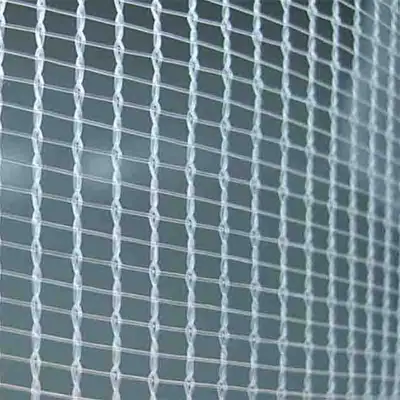
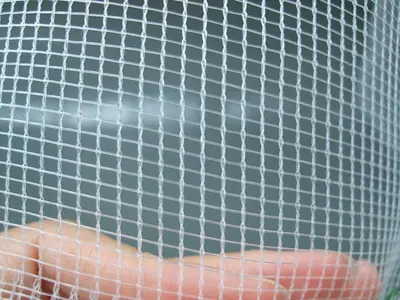
Most agricultural insect netting is made from HDPE (high-density polyethylene) monofilament, plain-woven or leno-woven so the threads do not slide and open up the holes. White or clear (crystal) netting is standard because it minimizes light loss.
Insect net mesh size explained
"Mesh" is the number of threads per inch (25.4 mm) of netting. A "50 mesh" net, for example, often has 50 threads per inch in one direction and around 25 in the other, giving a rectangular hole. Because thread thickness varies, two nets with the same mesh number can have different hole sizes. Always ask for the hole dimensions in millimeters.
Approximate hole size (mm) = 25.4 ÷ mesh count − thread diameter
For example, a 50-mesh direction with 0.23 mm threads: 25.4 ÷ 50 = 0.508 mm, minus 0.23 mm ≈ 0.28 mm clear opening.
Mesh size by pest
| Typical mesh | Approx. hole size | Excludes | Typical use |
|---|---|---|---|
| 16–20 mesh | 1.0–1.4 mm | Cabbage white butterflies, moths, carrot fly, birds | Brassicas and carrots outdoors |
| 25–32 mesh | 0.6–0.9 mm | Flea beetles, leafminers, cabbage root fly, most moths | Outdoor vegetables, organic farms |
| 40 mesh | ~0.4 mm | Aphids, leafminers | Tunnels and greenhouse vents |
| 50 mesh | ~0.27 × 0.8 mm | Whitefly, aphids | Greenhouses for tomatoes, peppers, cucumbers |
| 60–80 mesh | 0.15–0.2 mm | Thrips | High-value greenhouses, virus-sensitive crops |
These are typical industry values; insect size varies by species and life stage, so confirm with your local extension service for your target pest.
Insect netting for vegetable gardens
For garden insect netting, a 0.8–1.3 mm mesh is usually the sweet spot. It stops the pests that cause the most damage in home and market gardens while breathing well enough to use all summer.
| Crop | Main pests | Suggested mesh |
|---|---|---|
| Cabbage, broccoli, kale, cauliflower | Cabbage whites, diamondback moth, cabbage root fly | 1.0–1.3 mm |
| Radish, arugula, turnip, Asian greens | Flea beetles | 0.8 mm or finer |
| Carrots, parsnips | Carrot fly | 1.3 mm, sides to 60 cm high or full cover |
| Leeks, onions | Leek moth, allium leafminer | 0.8 mm |
| Spinach, beets, chard | Leafminers | 0.8 mm |
| Squash, cucumbers (early) | Squash vine borer, cucumber beetles | 1.0 mm until flowering |
Remember that insect-pollinated crops (squash, cucumbers, melons, many beans and fruit) need netting removed or opened once they flower, unless you hand-pollinate or introduce pollinators.
How to install insect netting over beds
- Rotate crops so you are not covering a bed where pests overwintered in the soil.
- Cover immediately after sowing or transplanting, before pests find the crop.
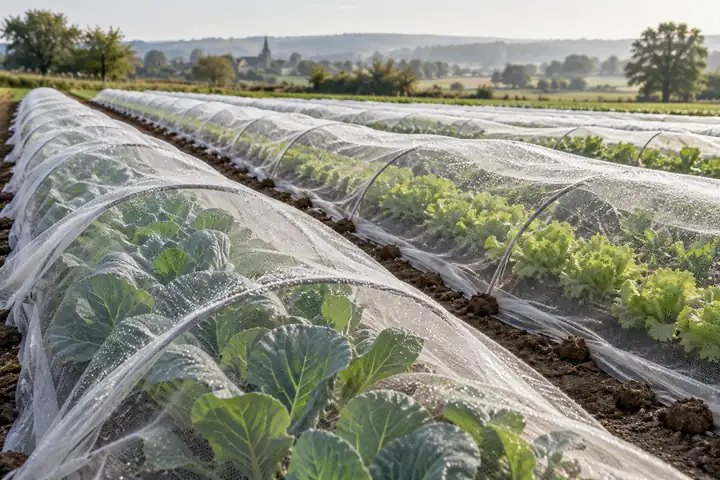
- Support the netting on hoops (PVC or wire every 0.9–1.2 m) so plants do not touch it; insects can lay eggs through mesh that rests on leaves.
- Allow slack for plants to grow.
- Seal the edges: bury them in soil, or weigh them down with sandbags, boards or ground pins. A single gap lets pests in, and then the net protects them from predators.
The same hoops can carry shade cloth later in the season; see how to secure shade cloth for frame details.
Greenhouse insect netting
Greenhouse insect netting is fitted over roof vents, side vents and doors. The challenge is ventilation: finer mesh restricts airflow, so a greenhouse that relies on natural ventilation can overheat once vents are screened.
| Mesh | Approx. airflow reduction vs open vent* |
|---|---|
| 1.3 mm (≈ 17–20 mesh) | 20–35% |
| 0.4 mm (≈ 40 mesh) | 40–55% |
| 0.27 mm (≈ 50 mesh) | 50–65% |
| 0.2 mm (≈ 64–80 mesh) | 60–75% |
*Indicative ranges; actual resistance depends on thread diameter, porosity and air speed.
Practical consequences:
- Increase screen area. Build the screen as a box or pleated frame over the vent so the net area is larger than the vent opening. Doubling the screen area roughly offsets the airflow loss of a 50-mesh net.
- Use double doors or vestibules so pests do not enter with staff.
- Combine with shading. Screened houses run warmer, so exterior shade cloth becomes more important (see our greenhouse shade cloth guide).
- Keep screens clean. Dust and algae further reduce airflow.
Our 100% Virgin Plastic Anti-Hail Mesh Net for Greenhouse is made from virgin HDPE with UV stabilization, for vents, tunnels and outdoor crop covers.
Outdoor and agricultural insect netting on farms
Outdoor insect netting is used on a field scale in two main ways:
- Floating or low-tunnel covers over vegetables, held down with sandbags or soil along the edges. Wide widths (up to 10–12 m) reduce the number of seams.
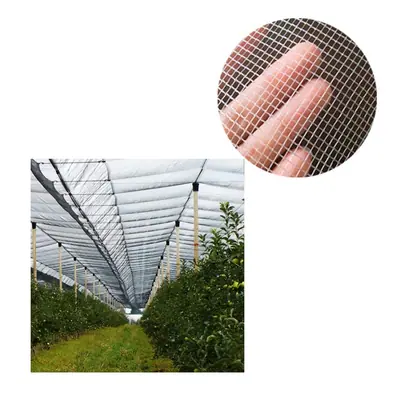
- Netting enclosures over orchards, vineyards and berries, often combined with anti-hail systems. Fully enclosed structures can exclude fruit flies, moths and birds. A white hail net such as HDPE White Large Hail protection Net Anti Hail for apple stops hail and birds, but its mesh is too coarse to exclude insects; growers needing both often use dedicated insect-proof side walls (see hail netting for gardens and greenhouses).
Specifications to request when buying bulk insect netting
Insect nets for sale vary widely in quality. For bulk insect netting orders, ask for:
| Spec | Typical range | Why it matters |
|---|---|---|
| Material | HDPE monofilament, virgin resin | Recycled resin can shorten outdoor life |
| Mesh / hole size | e.g. 0.27 × 0.8 mm | Determines which pests are excluded |
| Thread diameter | 0.18–0.28 mm | Thicker threads are stronger but block more air |
| Weight | 50–130 g/m² | Heavier nets resist tearing and wind |
| UV stabilization | Stated in kLy or years | Outdoor nets need high UV rating |
| Light transmission | Often 75–90% (white) | Lower values shade the crop |
| Width / roll length | 1–12 m wide; 50–100 m rolls | Fewer seams, less waste |
| Edge finish | Raw, hemmed, reinforced with eyelets | Faster and stronger installation |
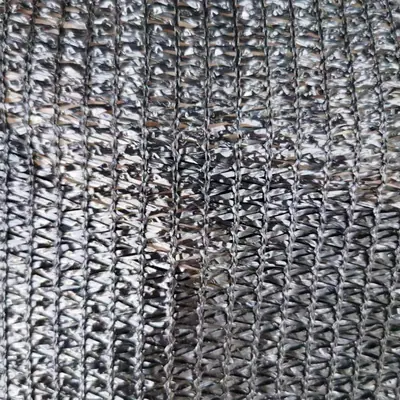
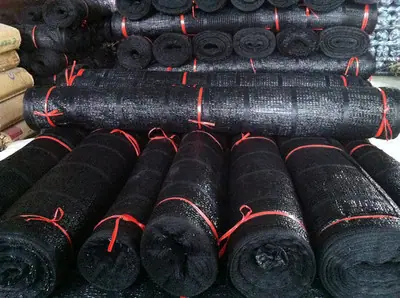
EGP manufactures agricultural netting in Yantai, Shandong, and supplies distributors, greenhouse builders and farms by the roll or cut to size. See the Hail, Shade & Insect Nets range, including shade nets such as Agricultural Sun Shade PP Polypropylene Black UV, or ask for a quote with your mesh, width and quantity.
Frequently asked questions
What mesh size insect netting do I need?
Choose the coarsest mesh that stops your target pest. About 1.3 mm holes stop cabbage butterflies, moths and carrot fly; 0.8 mm stops flea beetles and leafminers; around 0.4 mm handles aphids; 0.27 mm whitefly; and 0.2 mm or finer is needed for thrips.
Does insect netting reduce sunlight?
Yes, a little. Clean white or clear insect netting typically reduces light by about 10–25%, depending on mesh fineness and thread thickness. This mild shading can be helpful in summer but may slow growth in low-light seasons.
Can insect netting stay on all season?
On crops that do not need pollination, such as brassicas, carrots, leeks and leafy greens, insect netting can stay on from sowing to harvest. Fruiting crops pollinated by insects need netting removed or opened at flowering, or hand pollination.
Will insect netting keep out aphids?
Only fine mesh will. Aphids can pass through typical garden butterfly netting, so you need roughly 0.4 mm openings (about 40 mesh) or finer. Check for aphids on transplants before covering, because netting will also keep out their natural predators.
What is the difference between insect netting and shade cloth?
Insect netting is designed to exclude pests while passing as much light and air as possible, usually with white or clear threads. Shade cloth is designed to block a set percentage of sunlight and its holes are often large enough for insects to pass. They are often used together in greenhouses.
Where can I buy insect netting in bulk?
Garden centers sell small precut pieces, while farms, greenhouse builders and distributors buy rolls from agricultural net manufacturers. When buying bulk, compare hole size in millimeters, resin type, UV rating and weight per square meter rather than mesh number alone.
Is bug netting the same as insect netting?
Yes. Bug netting, plant netting and insect netting all describe fine mesh used to keep pests off crops. Laid over hoops along a row they work as garden row covers that let light, air and rain through while blocking insects.