Key takeaways
- Cubic yards of concrete = length (ft) × width (ft) × thickness (in) ÷ 324, plus 5–10% waste.
- One cubic yard covers 81 sq ft at 4 in, 64.8 sq ft at 5 in and 54 sq ft at 6 in.
- Normal concrete weighs about 145–150 lb per cu ft, so a yard is roughly 4,000 lb (about 1.8 tonnes).
- Typical thickness: 4 in for patios and walks, 5–6 in for driveways and heavier loads; follow local code.
- Full mixer trucks typically carry 8–10 cubic yards; below about 1 yard, bags are usually more practical.
To work out how much concrete you need, multiply the length by the width of the pour in feet, multiply by the thickness in inches, and divide by 324 to get cubic yards; then add 5–10% for waste. One cubic yard of concrete covers 81 sq ft at 4 in thick, so a 12 × 20 ft patio at 4 in needs 2.96 cubic yards (2.27 m³), or about 3.25 yards once you add 10%. In metric, multiply length × width × thickness in meters to get cubic meters directly.
Skip the maths: our free concrete bag calculator converts slab and post-hole sizes into cubic yards and the number of 40–90 lb bags.
Key formula: Concrete (cu yd) = length (ft) × width (ft) × thickness (in) ÷ 324. Concrete (m³) = length (m) × width (m) × thickness (m). 1 cu yd = 27 cu ft = 0.765 m³.
This guide is about volume, slab design and choosing ready-mix or bags. If you have already decided on bags, our article how many bags of concrete do I need has the bag-count tables for every bag size.
How do you calculate concrete yardage?
Every concrete calculator and concrete slab calculator follows the same steps.
- Measure length and width in feet. For metric, use meters.
- Convert thickness to feet (inches ÷ 12), or use the 324 shortcut.
- Multiply length × width × thickness = cubic feet.
- Divide by 27 = cubic yards.
- Add extras: thickened edges, footings, steps and a 5–10% waste allowance for uneven subgrade, form spread and spillage.
How do you measure yards in concrete? You measure the space to be filled, not the concrete: length, width and the true depth from the top of the forms to the compacted base. Check depth in several spots, because a base that is 0.5 in low across a 4 in slab adds 12.5% to the order.
Worked example 1: patio slab
12 × 20 ft patio (3.66 × 6.10 m), 4 in thick:
- 12 × 20 × 4 ÷ 324 = 2.96 cu yd (80 cu ft, 2.27 m³)
- With 10% waste: 3.26 cu yd → order 3.25–3.5 yd³, depending on your supplier's increments
Worked example 2: garage floor
24 × 24 ft garage (7.3 × 7.3 m), 6 in thick:
- 24 × 24 × 6 ÷ 324 = 10.67 cu yd (288 cu ft, 8.16 m³)
- With 5–10% waste: 11.2–11.7 cu yd — more than a typical single mixer load, so plan two trucks or confirm the truck size with the plant.
Worked example 3: metric pad
A 6 × 4 m pad, 120 mm thick: 6 × 4 × 0.12 = 2.88 m³ (3.77 cu yd). Add 5–10%: about 3.0–3.2 m³.
How many square feet are in a yard of concrete?
It depends on thickness. Square feet per cubic yard = 324 ÷ thickness in inches.
| Slab thickness | Sq ft per cubic yard | m² per m³ | Typical use |
|---|---|---|---|
| 3.5 in (89 mm) | 92.6 | 11.2 | Light-duty floor slabs (common code minimum) |
| 4 in (100 mm) | 81 | 9.8 (10 at 100 mm) | Patios, sidewalks, shed bases, small concrete pads |
| 5 in (125 mm) | 64.8 | 7.9 (8 at 125 mm) | Driveways for cars, hot tub pads |
| 6 in (150 mm) | 54 | 6.6 (6.7 at 150 mm) | Heavier driveways, garage floors with heavier vehicles |
| 8 in (200 mm) | 40.5 | 4.9 (5 at 200 mm) | Heavy equipment, some commercial slabs |
So how much is a yard of concrete in area? At the common 4 in thickness, one yard covers about 81 sq ft — roughly a 9 × 9 ft pad.
How thick should a concrete slab be?
Typical concrete slab thickness in residential work:
- Walkways, patios, shed bases: 4 in (100 mm)
- Driveways (cars and light trucks): 4–5 in; 5–6 in where heavier vehicles or poor soil are expected
- Garage floors: 4–6 in
- Hot tub or heavy equipment pads: often 5–6 in with reinforcement, per the equipment maker's instructions
- Concrete floor slab thickness in homes: US residential codes commonly set about 3.5 in as a minimum for slabs on ground
Thickness is only part of the design. A compacted gravel base, typically about 4 in (100 mm), drains water and gives uniform support; our gravel calculator sizes it. Control joints, reinforcement (mesh or rebar), and thickened edges where the slab carries loads also matter. These figures are typical; local code, soil conditions and an engineer's design take priority.
What does a yard of concrete weigh?
The unit weight of concrete for normal-weight structural mixes is typically about 145–150 lb per cubic foot (2,320–2,400 kg/m³). That gives:
| Quantity | Typical weight |
|---|---|
| 1 cu ft | 145–150 lb (66–68 kg) |
| 1 cu yd (27 cu ft) | 3,900–4,050 lb (about 1.8 tonnes) |
| 1 m³ | 2,300–2,400 kg (5,100–5,300 lb) |
| 4 in slab, per sq ft | about 48–50 lb (230–240 kg/m² at 100 mm) |
Reinforced concrete is a little heavier, and lightweight mixes can be well under 120 lb per cu ft. These numbers matter for trailers and small trucks: one cubic yard of wet concrete weighs about two short tons, far more than most pickup beds are rated to carry.
Ready-mix concrete vs bagged concrete
| Factor | Bagged concrete | Ready-mix (truck) |
|---|---|---|
| Best size range | Up to about 1 cu yd | Typically 1–2 cu yd and above |
| Volume per unit | About 0.60 cu ft per 80 lb bag (45 bags per yard) | Ordered by the cubic yard or m³ |
| Labor | Mixing by hand or small mixer, about 1.6 tonnes of dry mix per yard | Placing and finishing only |
| Consistency | Varies batch to batch | Uniform mix from the plant |
| Access | Anywhere you can carry a bag | Truck needs access, or a pump or buggies |
| Timing | Flexible, pour in sections | Must be ready to place and finish when the truck arrives |
The crossover is usually around one cubic yard. Below that, a bag concrete estimator and a stack of 60 or 80 lb bags (60 or 45 bags per yard respectively) is practical. Above it, mixing 45+ bags in a session becomes a race against setting time, and ready-mix concrete gives a more consistent slab. For dry mix weights, pallet counts and bag types, see concrete bag weights, sizes and pallets.
How many yards of concrete are in a truck?
A full-size ready-mix truck typically carries 8 to 10 cubic yards (about 6–7.5 m³), with some larger trucks rated for about 11–12 yards where road weight limits allow. Smaller trucks and volumetric mixers serve smaller pours.
- Short load: many plants charge an extra fee for orders below their minimum load. The threshold varies widely by supplier, so ask when you order.
- Ordering increments: suppliers commonly sell in quarter- or half-yard steps; round up rather than down, because running short mid-pour leaves a cold joint.
- Large pours: for the 11.7 yd³ garage in example 2, schedule two trucks with a short gap so the second load arrives before the first has set.
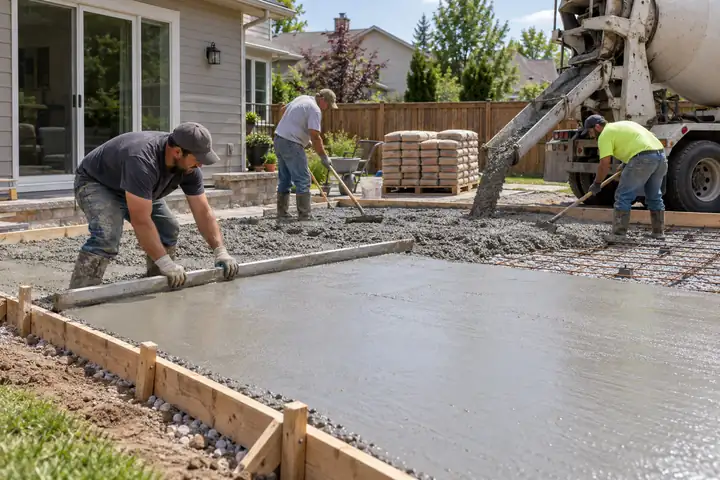
Tips for pouring a concrete pad
- Excavate and compact the subgrade, then place and compact the gravel base.
- Set forms level, with a slight fall (commonly about 1/8–1/4 in per foot) away from buildings.
- Add reinforcement on chairs so it sits within the slab, not on the ground.
- Order 5–10% extra and have tools, labor and finishing equipment ready before the truck or the first bag.
- Cure the slab: keep it moist or covered for several days; concrete typically reaches most of its design strength in about 28 days.
Packaging for cement and concrete producers
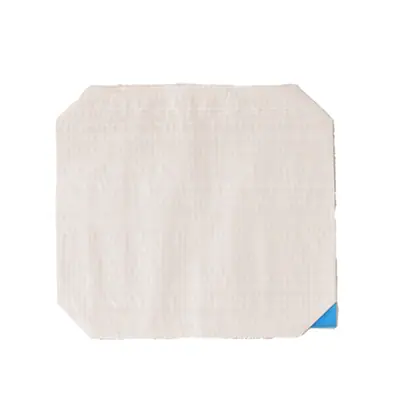
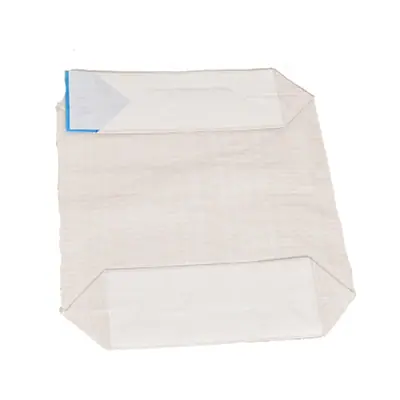
Every bag on a pallet of premix or cement has to hold 25–50 kg (55–110 lb) through filling, stacking and outdoor storage. EGP manufactures valve sacks and woven bags for this work, including the Custom Logo Square Bottom Laminated PP Woven Waterproof for waterproof brick-shaped stacking, the Handmade PP Laminated Kraft Paper Valve Bag 50kg for paper-look 50 kg packs, and the Super Sack PP Woven Flat Bottom Jumbo FIBC Bag Cement for cement moved by the tonne. Browse Valve Bags or read our Portland cement bags guide. We are based in Yantai, Shandong, with 24 years as an Alibaba.com supplier; send your bag specification via our contact page for a quote.
Frequently asked questions
How much concrete do I need for a 10x10 slab?
At 4 in thick, a 10 × 10 ft slab needs 10 × 10 × 4 ÷ 324 = 1.23 cubic yards (33.3 cu ft, 0.94 m³). Add 5–10% for waste, so plan on about 1.3–1.4 yards. At 6 in thick it rises to 1.85 yards before waste.
How many square feet does a yard of concrete cover?
One cubic yard covers 81 sq ft at 4 in thick, 64.8 sq ft at 5 in and 54 sq ft at 6 in. The rule is 324 divided by the thickness in inches.
How much does a yard of concrete weigh?
Typically about 3,900–4,050 lb (1.8 tonnes), because normal concrete weighs around 145–150 lb per cubic foot. A cubic meter weighs about 2,300–2,400 kg.
How do you estimate concrete yards for a slab with thickened edges?
Calculate the main slab first, then add each thickened edge as a separate strip: length × extra width × extra depth. For example, a 12 in wide edge that is 4 in deeper than the slab adds 1 × 0.333 = 0.33 cu ft per foot of edge, about 0.012 cubic yard per foot.
Should I use ready-mix or bagged concrete?
Below about one cubic yard, bagged concrete is usually simpler and cheaper to organize. Above that, ready-mix delivers a uniform mix and saves mixing 45 or more 80 lb bags, provided a truck can reach the site or you arrange a pump.
How much concrete does a truck hold?
A standard ready-mix truck typically holds 8–10 cubic yards, and some larger trucks up to about 11–12 yards. Ask your local plant about their truck sizes, minimum loads and any short-load fees.