Key takeaways
- Portland cement is the gray powder binder in concrete and mortar; on its own it is not concrete.
- A US bag of portland cement weighs 94 lb (42.6 kg), about 1 cu ft loose; most other markets use 25 kg or 50 kg bags.
- An "80 lb bag of cement" is almost always premixed concrete (cement + sand + gravel), not pure cement.
- Cement is packed in valve bags (multiwall paper or laminated woven PP) or shipped as bulk portland cement in tankers, silos and 1–1.5 t bulk bags.
Portland cement is the fine gray hydraulic binder that hardens when mixed with water; it is the "glue" in concrete, mortar and stucco, not a finished mix. In the United States a standard bag of portland cement weighs 94 lb (42.6 kg), which is about one cubic foot of loose powder, while most of the world sells cement in 25 kg (55 lb) or 50 kg (110 lb) bags. The common "80 lb bag" on a store shelf is almost always premixed concrete, not cement.
Definition: Portland cement is a hydraulic cement made by grinding clinker, produced by heating limestone and clay or shale in a kiln, together with a small amount of gypsum; it is specified in the US under ASTM C150 and in Europe under EN 197-1 (CEM I).
This guide explains bag weights, cement types, portland cement vs concrete mix, pallet counts, bulk supply and, from a packaging maker's view, why cement goes into valve bags.
How much does a bag of cement weigh?
The cement bag weight depends on the country and the product inside. This quick reference covers the sizes buyers see most often.
| Bag | Weight | Metric / imperial | What is inside |
|---|---|---|---|
| US portland cement | 94 lb | 42.6 kg | Pure portland cement; about 1 cu ft loose |
| US masonry or mortar cement | commonly 70–75 lb | about 32–34 kg | Portland cement blended with lime or plasticizers |
| 25 kg cement bag (Europe, much of Asia) | 25 kg | 55 lb | Portland or blended cement |
| 50 kg cement bag (India, Africa, Middle East) | 50 kg | 110 lb | Portland or blended cement |
| 40 kg cement bag (some Asian and other markets) | 40 kg | 88 lb | Portland or blended cement |
| 80 lb "bag of concrete" | 80 lb | 36.3 kg | Premixed concrete: cement, sand and gravel |
| 60 lb high-strength or fast-setting mix | 60 lb | 27.2 kg | Premixed specialty concrete |
So the weight of a sack of cement is 94 lb if you are reading a US specification ("six-sack concrete" means six 94 lb sacks per cubic yard), and usually 25 or 50 kg elsewhere. Our concrete bag weights guide has the full premix range and water per bag.
Is there an 80 lb bag of cement?
Not usually. When people search for an "80 lb bag of cement," they almost always mean an 80 lb bag of concrete mix, which yields about 0.60 cu ft (17 L) of concrete. A bag of pure portland cement in the US is 94 lb. Smaller retail packs of cement exist, but 80 lb is a concrete-mix size, not a cement size.
Portland cement vs concrete mix: what is the difference?
- Portland cement is only the binder. You must add sand, gravel and water to make concrete, or sand and lime to make mortar.
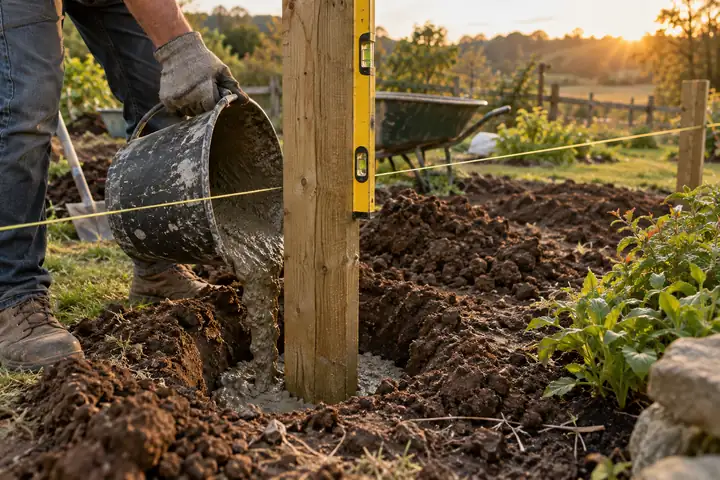
- Concrete mix (premix) is a dry blend of portland cement, sand and gravel. You add only water. It is convenient for fence posts, small slabs and repairs.
- Mortar mix is cement, lime and sand, without gravel, for laying block and brick.
A common site concrete cement mix ratio is about 1 part cement : 2 parts sand : 3 parts gravel by volume. For portland cement for mortar, the cement is combined with hydrated lime and sand in proportions set by ASTM C270; see our mortar and block calculator for Type N and Type S ratios.
High-strength and fast-setting concrete mixes
High-strength concrete mix is premix with a higher cement content, commonly labeled for around 5,000 psi (34 MPa) at 28 days; check the bag for the actual rating. Quick set concrete, also sold as fast-setting concrete mix or "quick cement," uses accelerating or rapid-hardening cements so it sets in minutes to an hour instead of several hours. Fast-setting post mixes are often poured dry into the hole and then soaked. Set and cure times vary a lot by product and temperature, so follow the label rather than a general rule.
What types of portland cement are there?
| Standard | Type or class | Typical use |
|---|---|---|
| ASTM C150 Type I | General purpose | Slabs, walls, general concrete |
| ASTM C150 Type II | Moderate sulfate resistance | Foundations, many ready-mix plants |
| ASTM C150 Type III | High early strength | Precast, cold weather, fast turnaround |
| ASTM C150 Type IV | Low heat of hydration | Massive pours such as dams |
| ASTM C150 Type V | High sulfate resistance | Sulfate-rich soils, seawater exposure |
| EN 197-1 CEM I | Portland cement | Equivalent role to general-purpose portland |
| EN 197-1 CEM II–V | Composite and blended cements | Most common bagged cements in Europe |
| EN 197-1 strength classes | 32.5, 42.5, 52.5 (N or R) | Minimum 28-day strength in MPa; R = rapid early strength |
Many US plants now ship portland-limestone cement (Type IL, under ASTM C595) alongside or instead of Type I/II. For most general-purpose portland cement uses, a bag marked Type I/II or CEM I/CEM II 42.5 is a safe default; for specified structural work, follow the engineer's specification.
How many bags of cement are on a pallet?
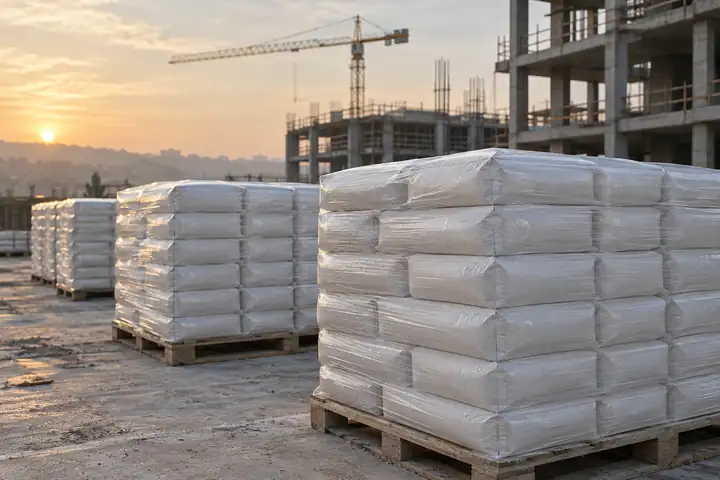
Cement pallets are limited by weight rather than space.
| Bag size | Bags per pallet (commonly) | Approx. pallet load |
|---|---|---|
| 94 lb (42.6 kg) | about 30–40 | about 2,800–3,800 lb (1.3–1.7 t) |
| 50 kg (110 lb) | about 30–40 | about 1.5–2.0 t (3,300–4,400 lb) |
| 25 kg (55 lb) | about 40–60 | about 1.0–1.5 t (2,200–3,300 lb) |
Counts depend on the plant's pallet pattern, bag dimensions and the weight limit of forklifts and floors, so confirm with the supplier. Pallet stability depends heavily on the bag: block-bottom valve bags stack as bricks, and anti-slip coatings keep layers from sliding.
Bulk portland cement and cement in bulk bags
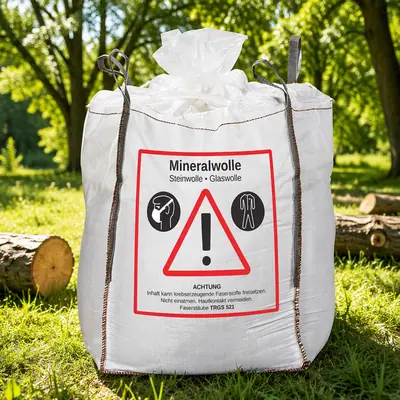
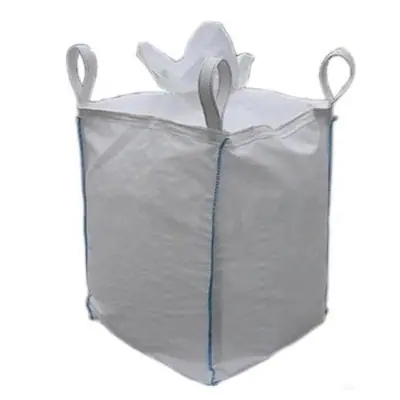
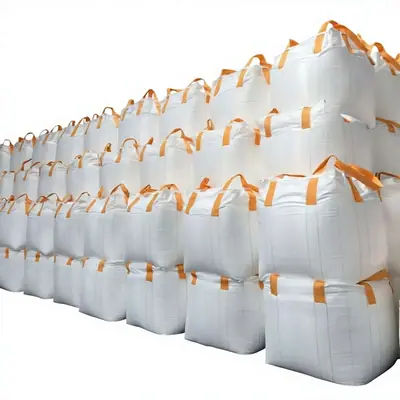
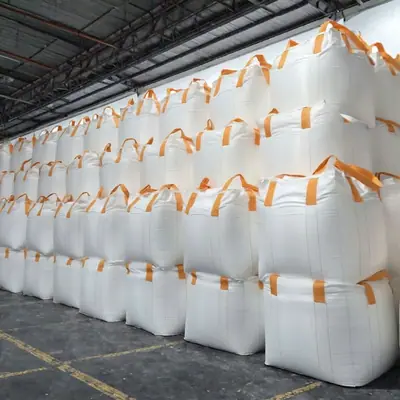
Large users buy bulk portland cement delivered by pneumatic tanker into a silo. Between a tanker and a 94 lb sack sits the bulk bag: a 1–1.5 t FIBC that suits precast yards, block plants, mortar producers and export markets without silos.
- Loose cement has a bulk density of roughly 1.2–1.5 t/m³, so 1,000 kg occupies about 0.7–0.8 m³ (25–28 ft³). A 90 × 90 cm base with about 100 cm height is a typical starting size.
- Cement bulk bags usually have a filling spout, a discharge spout, coated fabric and often a PE liner to keep out moisture and stop fine powder sifting through seams.
- Our Super Sack PP Woven Flat Bottom Jumbo FIBC Bag Cement and Durable PP Woven Jumbo Bags 1000kg Bulk Big Bags FIBC are built for this duty; the bulk bag size calculator helps with dimensions.
Bagged cement absorbs moisture from the air and slowly loses strength; it is commonly recommended to use it within about three months and to store it off the floor, covered and away from damp walls. Good packaging extends that window but does not remove it.
Why is cement packed in valve bags?
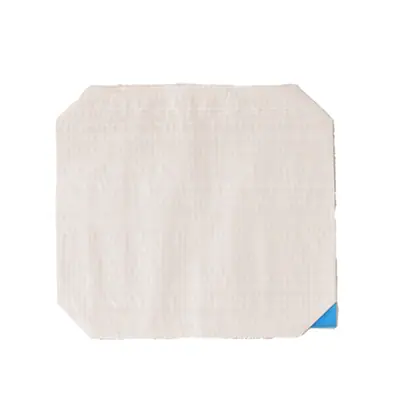
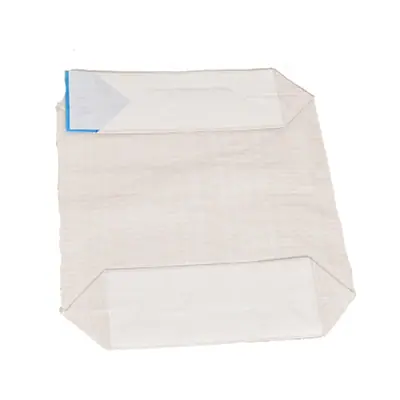
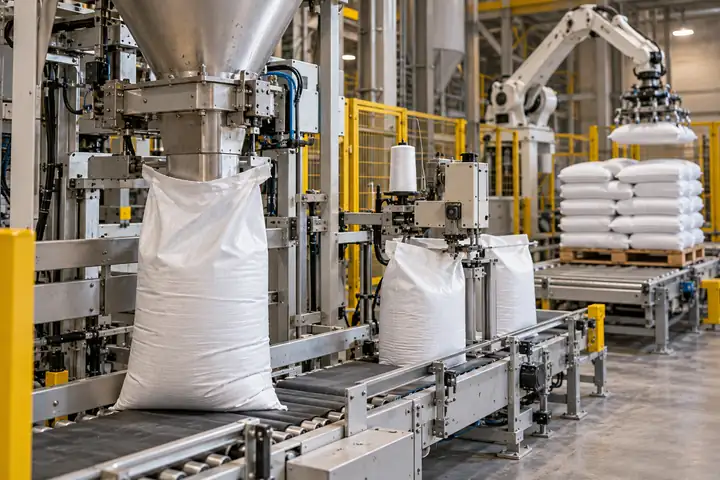
Cement is filled at high speed by rotary or inline packers that blow powder through a narrow sleeve. A valve bag is closed except for that sleeve; once full, the internal pressure folds the valve shut, so no sewing or sealing is needed (heat-seal valves add a tighter closure). The bag fills to a square, brick-like shape that stacks well. See our valve bags vs open-mouth bags guide and valve bag filling machines guide.
Paper vs PP woven cement bags
| Feature | Multiwall paper valve bag | Laminated woven PP valve bag |
|---|---|---|
| Air release during filling | Excellent, paper is porous | Needs micro-perforation |
| Tear and drop resistance | Moderate | High |
| Rain and moisture | Poor unless film ply added | Good |
| Breakage in transit | Higher | Lower |
| Outdoor jobsite storage | Short term | Longer, with UV stabilization |
| Print surface | Matte paper | Gloss or matte film, photo print possible |
Paper suits dry, short supply chains and high-speed plants tuned for paper. Laminated woven PP, such as our Custom Logo Square Bottom Laminated PP Woven Waterproof, suits long transport, humid climates, export and markets where breakage is costly. Paper-PP hybrids like the Handmade PP Laminated Kraft Paper Valve Bag 50kg sit in between. Our cement bag types guide compares all options in detail, and the full range is in Valve Bags.
Sourcing cement bags from the factory
Yantai Evergreen Packaging, in Yantai, Shandong, manufactures valve bags, woven sacks and FIBC bulk bags for cement, mortar and building-materials producers. We work to your fill weight, packer type and artwork. Send your bag size, weight, valve style and annual volume via our contact page and we typically respond within 8 hours.
Frequently asked questions
How much does a bag of portland cement weigh?
In the US, a standard bag of portland cement weighs 94 lb (42.6 kg), about one cubic foot of loose cement. In most other countries cement is sold in 25 kg or 50 kg bags, with 40 kg common in some markets.
Is an 80 lb bag of cement the same as concrete?
An 80 lb bag sold for construction is almost always premixed concrete, containing cement, sand and gravel. Pure portland cement in the US comes in 94 lb bags. Check the bag: concrete mix lists a yield in cubic feet, while cement does not.
Can I use portland cement for mortar?
Yes. Portland cement is mixed with hydrated lime and sand to make mortar to ASTM C270, for example about 1 : 1 : 6 for Type N. Alternatively, buy masonry cement or a pre-blended mortar mix, which already contains the lime or plasticizers.
What is the difference between quick set concrete and regular concrete mix?
Quick set or fast-setting concrete mix uses rapid-hardening cement or accelerators, so it sets in minutes to about an hour, compared with several hours for standard mix. It is popular for fence and deck posts. Always follow the label for water, set and load times.
Can portland cement be stored in bulk bags?
Yes. Cement is commonly supplied in 1–1.5 t bulk bags with coated fabric, a PE liner and filling and discharge spouts. Keep the bags covered and off wet ground, because cement reacts with any moisture that reaches it.