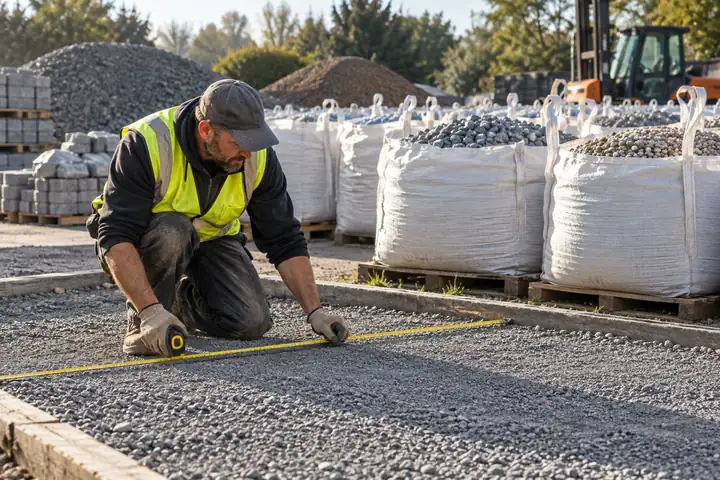
Key takeaways
- Cubic yards = length (ft) × width (ft) × depth (in) ÷ 324.
- Typical gravel weighs about 1.4 tons per cubic yard (2,800 lb, about 1.66 t/m³), so one ton is about 0.7 cubic yard.
- Typical depths: driveway 4–6 in in layers, path 2–3 in, pea gravel patio 2–3 in.
- A 50 lb bag of gravel is typically 0.5 cu ft, so a cubic yard is about 54 bags; above roughly one yard, bulk delivery is usually easier.
- Add 10–15% for compaction and uneven ground.
To work out how much gravel you need, multiply the length by the width of the area in feet, multiply by the depth in inches and divide by 324: the answer is cubic yards. Multiply cubic yards by about 1.4 to get short tons, because typical gravel weighs roughly 2,800 lb per cubic yard (about 1.66 tonnes per m³). A 10 × 12 ft pea gravel patio 3 in deep therefore needs 1.11 cubic yards, or about 1.6 tons, before a 10% compaction allowance.
Skip the maths: our free gravel, sand and topsoil calculator converts area and depth into cubic yards, cubic feet, m³, tons, 1-tonne bulk bags and 50 lb bags in one step.
Key formula: Gravel (cu yd) = length (ft) × width (ft) × depth (in) ÷ 324; gravel (tons) ≈ cu yd × 1.4. In metric: gravel (m³) = length (m) × width (m) × depth (m); tonnes ≈ m³ × 1.6–1.7.
Every stone calculator, rock calculator or aggregate calculator you find online uses this same arithmetic. The only things that change are the depth you choose and the density of the stone. The figures below are typical; your quarry or landscape yard can tell you the exact weight per yard of the product they load.
How do I calculate how much gravel I need?
There are three steps.
- Area. Length × width in feet gives square feet. For a circle, use 3.1416 × radius². For an irregular bed, split it into rectangles and add them up.
- Volume. Square feet × depth in inches ÷ 12 gives cubic feet; divide by 27 to get cubic yards. The shortcut is to divide square feet × inches by 324 (12 × 27).
- Weight. Cubic yards × weight per yard gives tons. Most gravel and crushed stone falls between about 1.2 and 1.5 short tons per cubic yard, so 1.4 is a sensible planning figure.
Then add an allowance. Loose stone settles and compacts by roughly 10–15% once it is rolled or driven on, and subgrades are rarely perfectly flat.
Cubic yards to tons of gravel: tons = cubic yards × 1.4. Tons to cubic yards: cubic yards = tons ÷ 1.4 (≈ tons × 0.71).
How deep should gravel be?
Depth drives the order more than anything else. Doubling the depth doubles the gravel.
| Project | Typical depth | Typical stone |
|---|---|---|
| Gravel driveway (new) | 4–6 in compacted, in layers (100–150 mm); 8–12 in total on soft ground | Larger crushed stone base, then a crushed-stone or #57 top layer |
| Driveway top-up | 1–2 in (25–50 mm) | Same as existing surface |
| Garden path or walkway | 2–3 in (50–75 mm) | 3/8 in pea gravel, crushed fines or small chippings |
| Pea gravel patio | 2–3 in (50–75 mm) over a compacted base | 3/8 in pea gravel |
| Decorative bed / landscape rock | 2–3 in (50–75 mm) | River rock, decorative stone |
| Paver base under a patio | 4–6 in compacted (100–150 mm) | Crushed aggregate base, plus about 1 in of bedding sand |
| Drainage around foundations or French drains | Per design, often 12 in or more | Washed #57 or similar clean stone |
These are common landscaping practice, not code requirements. Heavy vehicles, clay soils and frost-prone sites typically need a deeper, well-compacted base.
Quick reference: how much area does a yard or ton of gravel cover?
| Depth | Area covered by 1 cu yd | Area covered by 1 ton (at 1.4 t/yd³) | Metric: area covered by 1 m³ |
|---|---|---|---|
| 2 in (50 mm) | 162 sq ft (15.1 m²) | about 116 sq ft (10.8 m²) | 20 m² |
| 3 in (75 mm) | 108 sq ft (10.0 m²) | about 77 sq ft (7.2 m²) | 13.3 m² |
| 4 in (100 mm) | 81 sq ft (7.5 m²) | about 58 sq ft (5.4 m²) | 10 m² |
| 6 in (150 mm) | 54 sq ft (5.0 m²) | about 39 sq ft (3.6 m²) | 6.7 m² |
So "how much does a ton of gravel cover?" has a depth-dependent answer: roughly 116 sq ft at 2 in, 77 sq ft at 3 in and 58 sq ft at 4 in.
How much does a yard of gravel weigh?
A cubic yard of gravel typically weighs about 2,400–3,000 lb (1.2–1.5 short tons, or 1,090–1,360 kg). Weight depends on the stone and its moisture:
- Pea gravel and river rock (rounded): typically about 2,500–2,850 lb per cubic yard.
- Crushed stone such as #57 or 3/4 in stone: typically about 2,350–2,700 lb per cubic yard; angular pieces leave more voids.
- Crusher run / dense-graded base with fines: heavier, often around 2,700–3,000 lb per cubic yard once compacted.
- Wet stone carries water and weighs more per yard than the same stone dry.
That is why 1 ton of gravel is usually about 0.7–0.8 cubic yard and how many yards in a ton of gravel is not a fixed number. If your supplier sells by the ton, ask for their weight per yard and divide. A cubic yard is 27 cu ft, so a "yard of gravel" sounds small, but it fills a 3 × 3 × 3 ft cube and weighs well over a ton, more than many pickup trucks are rated to carry.
Pea gravel, river rock and 57 stone calculator notes
A pea gravel calculator and a river rock calculator work identically; only the depth changes. Pea gravel (about 3/8 in) is laid 2–3 in deep, because deeper layers shift underfoot. Larger 1–3 in river rock is usually laid at least twice as deep as the largest stone so the soil or fabric below is hidden, often 3–4 in.
For a 57 stone calculator or crushed stone calculator, #57 stone is a washed angular stone of roughly 3/4–1 in. It drains well, so it is popular for drainage layers and driveway surfaces, but it does not lock together as tightly as a graded base that contains fines.
Worked example: how much gravel for a driveway?
A 12 × 60 ft gravel driveway (3.66 × 18.3 m), built in two layers totalling 6 in:
- Area = 12 × 60 = 720 sq ft (66.9 m²)
- Base layer, 4 in: 720 × 4 ÷ 324 = 8.89 cu yd ≈ 12.4 tons
- Top layer, 2 in: 720 × 2 ÷ 324 = 4.44 cu yd ≈ 6.2 tons
- Total = 13.33 cu yd ≈ 18.7 short tons (10.2 m³ ≈ 16.9 tonnes)
- Add 10% for compaction: about 14.7 cu yd, or roughly 20.5 tons
That is typically about two loads on a tandem dump truck, or roughly 19 one-tonne bulk bags. Any gravel driveway calculator gives the same result. When figuring gravel for a driveway, lay a woven geotextile or stabilization fabric over soft subgrade first: it stops the base from pumping into the mud and reduces the stone you lose over time. Our guide to geotextile for driveways and French drains explains the fabric choice.
Worked example: pea gravel patio and path
Patio: 10 × 12 ft (3.05 × 3.66 m), 3 in deep.
- 10 × 12 × 3 ÷ 324 = 1.11 cu yd (0.85 m³)
- 1.11 × 1.4 = 1.56 short tons
- In 0.5 cu ft bags: 30 cu ft ÷ 0.5 = 60 bags (about 66 with 10% extra)
Path: 3 × 40 ft, 2 in deep: 3 × 40 × 2 ÷ 324 = 0.74 cu yd, about 1 ton, or 40 bags.
Bags of gravel or bulk delivery?
Bags of gravel are typically sold in 0.5 cu ft bags weighing about 50 lb (23 kg). That means:
- About 54 bags per cubic yard (27 ÷ 0.5)
- About 40 bags per short ton (2,000 ÷ 50)
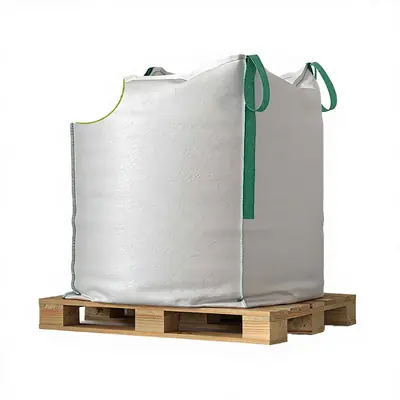
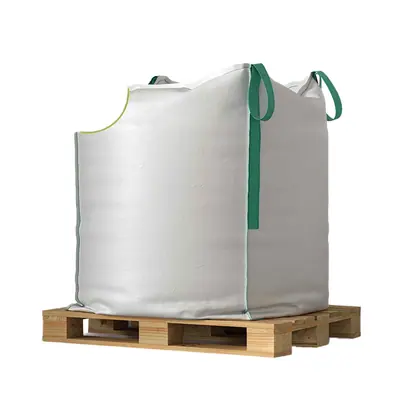
Bags make sense for small jobs, top-ups, raised-bed paths and places without vehicle access. Above about one cubic yard, carrying and opening 50+ bags becomes the bottleneck, and bulk delivery by truck or in 1-tonne bulk bags is usually easier. A 1-tonne bag of gravel typically holds about 0.6–0.7 m³ (0.78–0.92 cu yd), depending on the stone.
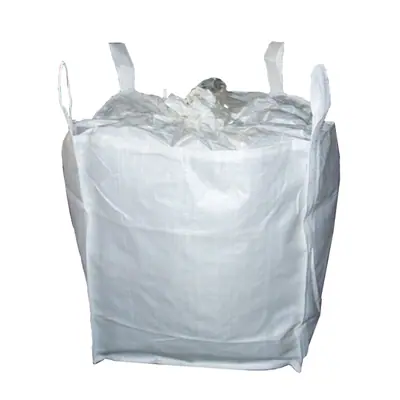
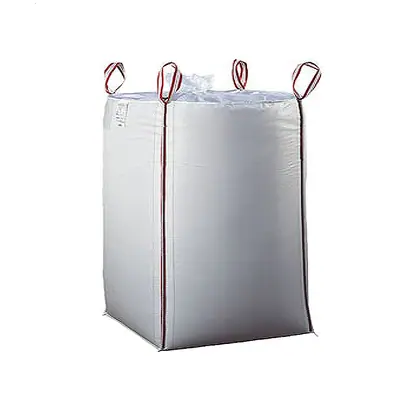
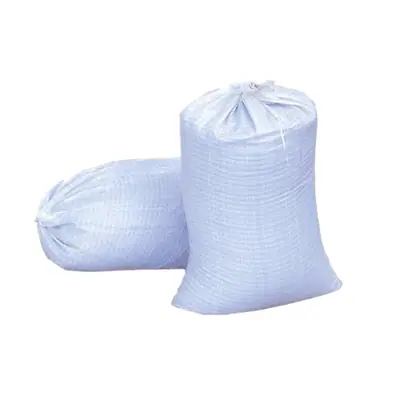
For landscape yards, quarries and distributors, the bag itself matters as much as the stone. Gravel bags often sit outdoors for weeks, so specify UV-stabilized fabric, an open top and a flat bottom, and a safe working load at or above the real fill weight. Our Outdoor UV Stabilized FIBC Bag Weather Resistant and FIBC Bulk Jumbo Big Bag 1 Ton PP Woven Food Grade Super are built for this, and the Reinforced Seam Jumbo Big Bag High Breaking Strength suits sharper, heavier aggregates. For retail-size gravel bags, a woven sack such as the UV Stabilized PP Woven Bag with Top Drawstring for Sand resists the abrasion that tears film bags. See the full FIBC Bulk Bags range and our guide to bulk bags for sand, gravel and aggregates for sizing by bulk density.
Paver base calculator and other uses
A paver base calculator is the same formula with two layers: a compacted crushed-aggregate base (typically 4–6 in for walkways and patios, more for driveways) plus about 1 in of bedding sand. For a 12 × 16 ft patio with a 4 in base: 192 × 4 ÷ 324 = 2.37 cu yd, about 3.3 tons, plus 10–15% because compaction reduces loose volume. The bedding sand is covered in our sand calculator guide.
Gravel for a raised garden bed: you do not normally need a gravel layer in the bottom of a raised bed; a layer of coarse stone under fine soil can actually hold water in the soil above it. Gravel is better used for the paths between beds, 2–3 in deep over landscape fabric.
How much chippings do I need? In the UK and Europe, decorative chippings are sold by the tonne or in bulk bags. At about 1.5–1.6 t/m³, one tonne of 20 mm chippings typically covers about 12–13 m² at 50 mm deep.
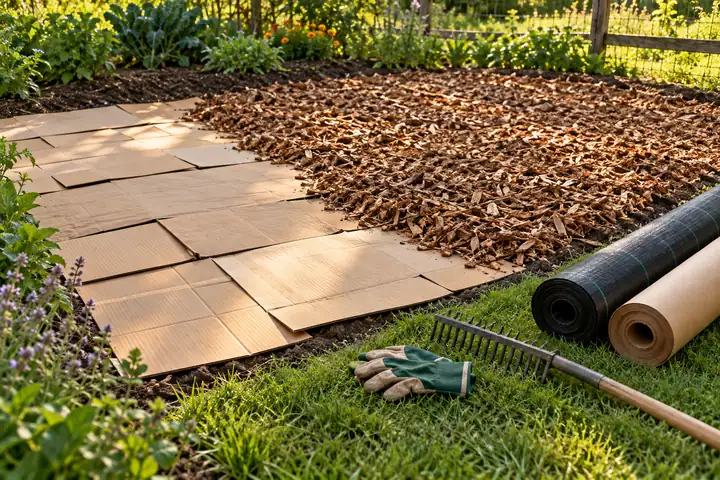
Under gravel, use fabric. A woven weed barrier under decorative stone keeps soil and stone apart and suppresses weeds. See landscape fabric under gravel, pavers and rock and our Woven Rolls & Weed Mat range.
For converting any other shape or material, our cubic yard calculator guide covers circles, cylinders and topsoil.
Supplying gravel bags in volume
EGP is a woven polypropylene packaging manufacturer in Yantai, Shandong, with 24 years as an Alibaba.com supplier. We make FIBC bulk bags and woven sacks for quarries, landscape suppliers, importers and contractors, in custom sizes and with custom printing. Send your fill weight, material and bag size via our contact page and we typically reply within 8 hours.
Frequently asked questions
How many yards in a ton of gravel?
Typically about 0.7 cubic yard. Gravel weighs roughly 1.4 short tons per cubic yard, so one ton ÷ 1.4 ≈ 0.71 yd³. Lighter crushed stone may give up to about 0.8 yd³ per ton; wet or dense-graded stone gives less.
How much gravel do I need for my driveway?
Multiply length × width in feet by the depth in inches and divide by 324. A 12 × 60 ft driveway at 6 in needs about 13.3 cubic yards, or roughly 18.7 tons, plus 10% for compaction. Build it in layers: a coarser base first, then a finer top course.
How much does 1 yard of gravel weigh?
Typically 2,400–3,000 lb (1,090–1,360 kg), with about 2,800 lb a common planning figure. Rounded pea gravel, angular crushed stone and stone with fines all differ, so ask your supplier for their figure.
How many bags of gravel make a cubic yard?
With the common 0.5 cu ft, 50 lb bag, you need about 54 bags per cubic yard and about 40 bags per short ton. Check the volume printed on the bag, since some products are sold in 0.4 or 0.75 cu ft bags.
How do I convert cubic yards to tons of gravel?
Multiply cubic yards by the weight per yard, typically about 1.4 tons. Ten cubic yards of gravel is therefore roughly 14 tons. In metric, multiply cubic meters by about 1.6–1.7 to get tonnes.
Is a stone calculator different from a gravel calculator?
No. A stone, rock, landscape rock or crushed stone calculator all use volume = area × depth and then multiply by the material's weight per yard. Only the density and the recommended depth change between products.