Key takeaways
- Cubic yards = length × width × height (all in feet) ÷ 27.
- From square feet and a depth in inches: cu yd = sq ft × inches ÷ 324.
- 1 cubic yard = 27 cu ft = 0.765 m³; 1 m³ = 1.31 cu yd = 35.3 cu ft.
- A square yard is area (9 sq ft); a cubic yard is volume (27 cu ft).
- For round shapes use π × radius² × height; add 10–20% for soil that settles.
To calculate cubic yards, measure length, width and height in feet, multiply them together to get cubic feet, and divide by 27, because one cubic yard is 3 × 3 × 3 ft = 27 cubic feet. If you have an area in square feet and a depth in inches, the shortcut is square feet × inches ÷ 324. For example, 400 sq ft of topsoil 3 in deep is 400 × 3 ÷ 324 = 3.7 cubic yards (2.83 m³).
Skip the maths: our free gravel, sand and topsoil calculator converts area and depth into cubic yards, cubic feet, m³ and tons for common landscape materials.
Key formula: Cubic yards = length (ft) × width (ft) × height (ft) ÷ 27 = square feet × depth (in) ÷ 324. One cubic yard = 27 cu ft = 0.7646 m³.
Every cubic yard calculator, cubic feet calculator, yardage calculator and dirt calculator is built on this one line. The rest of this guide covers the conversions people get wrong, round shapes, topsoil and raised beds, and how volume translates into tons and bulk bags.
How do you calculate cubic yards?
- Use one unit. Convert every dimension to feet. Inches ÷ 12 = feet; yards × 3 = feet.
- Multiply length × width × depth to get cubic feet. This is your cubic footage.
- Divide by 27 to get cubic yards.
- Round up and add an allowance: about 5–10% for gravel and concrete, 10–20% for soil and mulch that settle.
Worked example — garden bed 15 × 6 ft, 8 in deep
- 8 in ÷ 12 = 0.667 ft
- 15 × 6 × 0.667 = 60 cu ft
- 60 ÷ 27 = 2.22 cu yd (1.70 m³)
How many cubic feet are in a yard?
A cubic yard contains 27 cubic feet. Many people divide by 9 or by 3 by mistake, because there are 9 square feet in a square yard and 3 feet in a linear yard. The three different "yards" are:
| Unit | What it measures | Equals | Metric |
|---|---|---|---|
| Linear yard | Length | 3 ft | 0.9144 m |
| Square yard (sq yd) | Area | 9 sq ft | 0.836 m² |
| Cubic yard (cu yd, yd³) | Volume | 27 cu ft | 0.7646 m³ |
Cubic yard vs square yard
A square yard is a flat area 3 ft × 3 ft, used for carpet, turf and paving. A cubic yard adds depth: 3 ft × 3 ft × 3 ft. You cannot convert square yards to cubic yards without a depth. A square yard calculator (or sq yd calculator) simply divides square feet by 9: a 12 × 15 ft room is 180 sq ft = 20 sq yd (16.7 m²). A feet to yards calculator divides linear feet by 3.
Quick reference: square feet to cubic yards
Area covered by one cubic yard at different depths (sq ft = 324 ÷ depth in inches):
| Depth | Sq ft per cu yd | m² per cu yd | Cu yd per 100 sq ft | Typical use |
|---|---|---|---|---|
| 1 in (25 mm) | 324 | 30.1 | 0.31 | Topdressing, bedding sand |
| 2 in (50 mm) | 162 | 15.1 | 0.62 | Gravel path, mulch top-up |
| 3 in (75 mm) | 108 | 10.0 | 0.93 | Mulch, decorative rock, topsoil for seeding |
| 4 in (100 mm) | 81 | 7.5 | 1.23 | Concrete slab, new lawn topsoil |
| 6 in (150 mm) | 54 | 5.0 | 1.85 | Driveway gravel, planting beds |
| 12 in (300 mm) | 27 | 2.5 | 3.70 | Raised beds, fill |
To go from square feet to cubic yards, multiply square feet by depth in inches and divide by 324.
Cylinder volume calculator: round holes, tubes and beds
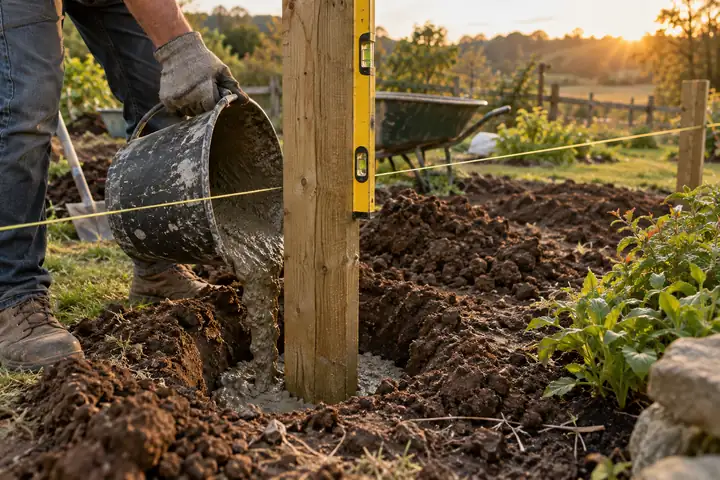
For anything round — a post hole, a tree ring, a round planter or a concrete form tube — use:
Volume = π × radius² × height (π ≈ 3.1416; radius = diameter ÷ 2)
- Round bed, 10 ft across, 6 in deep: 3.1416 × 5² × 0.5 = 39.3 cu ft = 1.45 cu yd
- Hole 12 in diameter, 4 ft deep: 3.1416 × 0.5² × 4 = 3.14 cu ft (0.12 cu yd)
A reverse cylinder calculation (finding the depth or diameter from a known volume) just rearranges the formula: height = volume ÷ (π × r²). For concrete tubes and footings, see our footing and form tube calculator guide.
Topsoil calculator: how much soil do I need?
A topsoil calculator, soil calculator or dirt calculator uses the same volume formula. The usual depths:
- New lawn: 4–6 in (100–150 mm) of topsoil over subsoil
- Overseeding or topdressing: 0.25–0.5 in
- Planting beds: 6–12 in
- Raised beds: the full bed height
Worked example — new lawn 40 × 30 ft, 4 in topsoil
- 40 × 30 × 4 ÷ 324 = 14.8 cu yd (11.3 m³)
- Add 10–15% for settling: order about 16.3–17 cu yd
Soil calculator for a raised bed
A 4 × 8 ft raised bed 12 in deep holds 4 × 8 × 1 = 32 cu ft = 1.19 cu yd (0.91 m³). Bagged soil comes in sizes such as 0.75, 1, 1.5 and 2 cu ft, so that bed takes about 22 bags of 1.5 cu ft or 32 bags of 1 cu ft. New beds typically settle by 10–20% in the first season, so fill a little above the rim.
How many bags of dirt in a cubic yard? 27 ÷ bag size: 36 bags of 0.75 cu ft, 27 bags of 1 cu ft, 18 bags of 1.5 cu ft, or 13.5 bags of 2 cu ft.
How to calculate dirt fill
To calculate cubic yards of dirt for fill, measure the average depth to be raised across the area (take several readings and average them), then multiply by the area. Fill dirt is usually compacted in lifts, and loose fill typically loses around 10–25% of its volume when compacted, depending on soil type and equipment. For excavation, the opposite happens: dug soil "swells" and occupies more room in a truck than it did in the ground.
Example: raising a 30 × 40 ft pad by 8 in: 1,200 × 8 ÷ 324 = 29.6 cu yd compacted. Ordering about 34–37 cu yd of loose fill covers the 15–25% compaction allowance.
Cubic yards to tons: how much does a cubic yard weigh?
Volume tells you how much space; weight tells you whether a truck, trailer or bag can carry it. Typical weights per cubic yard:
| Material | Typical weight per cu yd | Typical t/m³ |
|---|---|---|
| Bark mulch, wood chips | 400–1,000 lb | 0.25–0.6 |
| Topsoil (dry, screened) | 1,850–2,200 lb | 1.1–1.3 |
| Dry sand | 2,450–2,950 lb | 1.45–1.75 |
| Gravel, crushed stone | 2,400–3,000 lb | 1.4–1.8 |
| Fresh concrete | about 3,900–4,050 lb | 2.3–2.4 |
Multiply cubic yards by the weight per yard to get pounds; divide by 2,000 for short tons. Gravel and sand are covered in detail in our gravel calculator guide and sand calculator guide; concrete in how much concrete do I need.
How many bulk bags in a cubic yard?
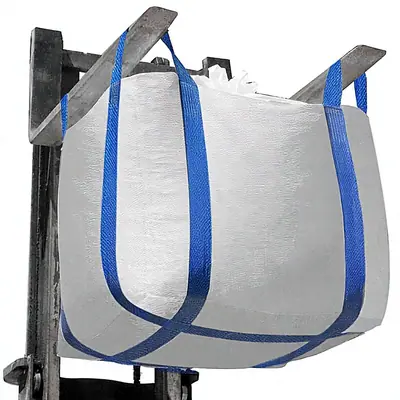
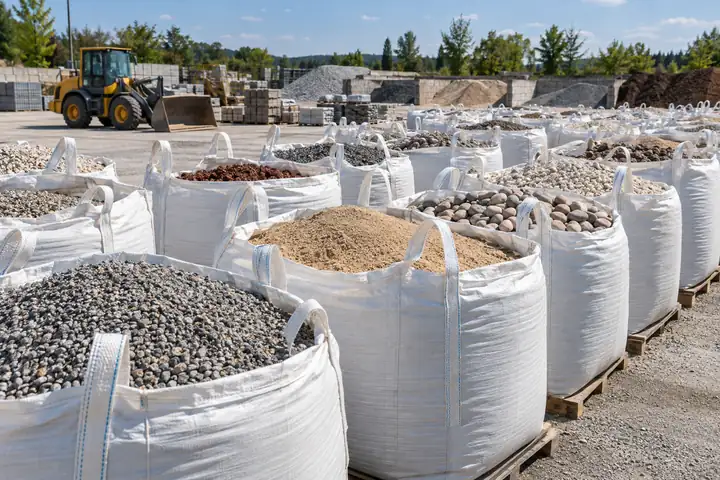
A bulk bag with a nominal volume of 1 m³ holds about 1.31 cubic yards when filled to the top, so one cubic yard is about three-quarters of such a bag. But for dense materials, weight, not volume, sets the limit. A cubic yard of topsoil typically weighs about 0.85–1 tonne and a cubic yard of sand about 1.1–1.35 tonnes, so a 1-tonne-rated bag of sand or gravel is typically only about 0.6–0.7 m³ (0.8–0.9 cu yd) full. Light materials such as mulch and wood chips can use the full volume of a large bag.
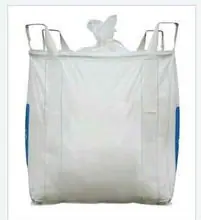
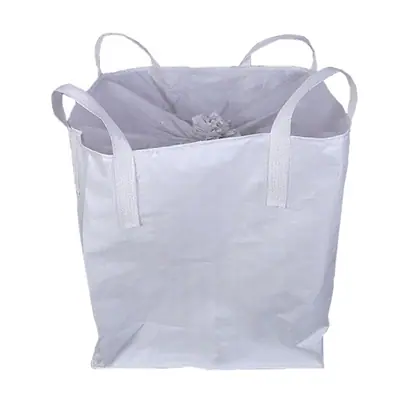
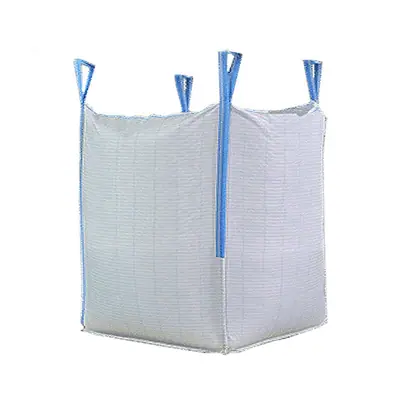
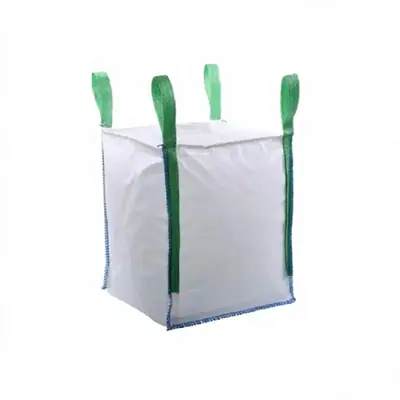
That is why landscape suppliers specify different bags per material: a large, breathable bag such as the Flexible Woven FIBC Bulk Bag Strong Lift Straps for Wood for chips and mulch; a UV-stabilized bag like the Outdoor UV Stabilized FIBC Bag Weather Resistant for stone stored outdoors; and higher-rated bags such as the FIBC Bulk Bags Holds 4400 Lbs Heavy Duty 210-Gallon Woven for heavier fills. Always fill to the safe working load on the label, not to the brim. Browse FIBC Bulk Bags, read how to choose an FIBC bulk bag, or try our bulk bag calculator to size a bag from weight and density.
Construction calculators and material calculator tips
- Measure in several places. Depth is the biggest source of error; a 1 in mistake on a 3 in layer is 33%.
- Keep units consistent. Mixing feet and inches is the most common error.
- Split odd shapes into rectangles, triangles (½ × base × height) and circles, then add.
- Use metric directly when your supplier does: m³ = m × m × m; × 1.308 = cu yd; × 35.31 = cu ft.
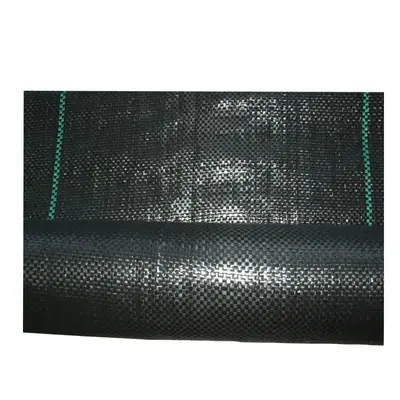
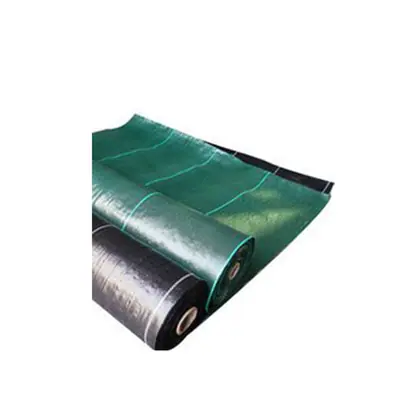
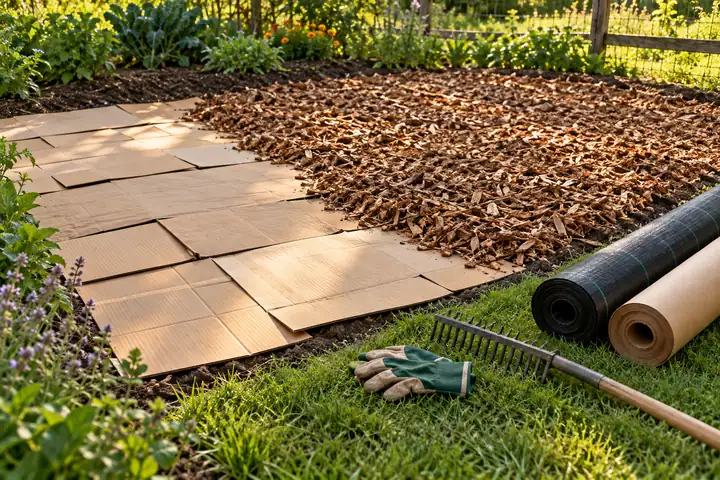
- Lay fabric first. Under gravel, mulch or stone, a woven ground cover such as our Heavy Duty Landscaping Weed Mat Ground Cover Bulk Bags keeps materials from mixing with the soil and reduces top-ups. See Woven Rolls & Weed Mat.
EGP manufactures FIBC bulk bags and woven fabrics in Yantai, China, for landscape suppliers, quarries and distributors that pack their own materials. Tell us the material, fill weight and bag size via our contact page.
Frequently asked questions
How do I convert square feet to cubic yards?
Multiply square feet by the depth in inches and divide by 324. For example, 500 sq ft at 3 in deep is 500 × 3 ÷ 324 = 4.63 cubic yards. Without a depth there is no conversion, because square feet measure area only.
How many cubic feet are in a cubic yard?
There are 27 cubic feet in one cubic yard (3 ft × 3 ft × 3 ft). In metric, a cubic yard is 0.7646 m³, and a cubic meter is 35.31 cubic feet or 1.308 cubic yards.
How do I calculate cubic yards of dirt for a raised bed?
Multiply length × width × depth in feet and divide by 27. A 4 × 8 ft bed 12 in deep is 32 cu ft, or 1.19 cubic yards. Add 10–20% because new soil settles.
What is the difference between a cubic yard and a square yard?
A square yard is an area of 9 sq ft (3 × 3 ft); a cubic yard is a volume of 27 cu ft (3 × 3 × 3 ft). Carpet and turf are sold by the square yard, while soil, gravel and concrete are sold by the cubic yard.
How do I calculate the volume of a cylinder in cubic yards?
Use π × radius² × height with all dimensions in feet, then divide by 27. A round hole 2 ft across and 3 ft deep is 3.1416 × 1² × 3 = 9.42 cu ft, or 0.35 cubic yard.
How many bulk bags make a cubic yard?
A full 1 m³ bulk bag holds about 1.31 cubic yards, so one cubic yard is about 0.76 of such a bag. For sand, gravel and soil, the bag's weight rating usually limits the fill first, so a 1-tonne bag typically carries only about 0.8–0.9 cubic yard of sand or gravel.