Key takeaways
- Most branded retail feed now ships in BOPP laminated woven bags; plain coated woven sacks suit farm-direct and ingredient feed.
- A 50 lb (22.7 kg) bag of pellets needs about 35 L of volume; the same weight of mash or crumbles needs 40–50 L, so size from bulk density.
- Specify fabric weight (g/m²), film thickness, gusset, closure and liner, not just "50 lb bag".
- For farms and mixers moving tonnes, bulk feed bags (FIBCs) of 500–1,000 kg cut packaging per tonne sharply.
The best feed bag for most commercial feed is a woven polypropylene sack: either BOPP laminated for branded retail feed, or plain PE-coated woven for farm-direct and ingredient feed. Paper feed bags still have a place for some mash and specialty products, and bulk feed bags (FIBCs) take over once you move feed by the half-tonne. The right choice depends on the feed form, how long it sits on a shelf and who handles the bag.
This guide focuses on feed specifically — sizes, chicken and corn feed formats, and how to write a spec a factory can quote. For a general material comparison, see PP woven vs BOPP vs paper-poly.
What are feed bags made of today?
Four constructions cover nearly all feed sacks in commercial use:
| Construction | Typical build | Strengths | Typical feed |
|---|---|---|---|
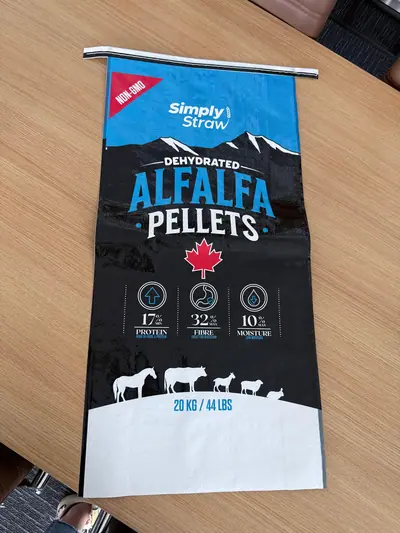
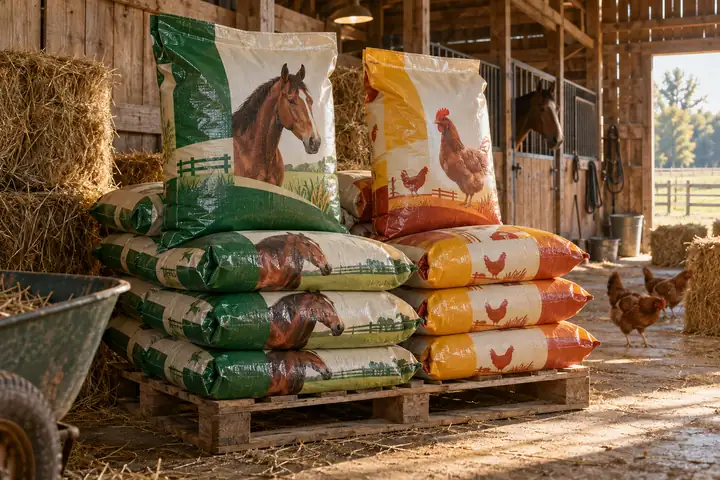
| BOPP laminated woven | 60–80 g/m² PP woven fabric + 15–25 µm reverse-printed BOPP film | Photo-quality print, scuff-proof graphics, good moisture and grease resistance | Branded poultry, horse, pet, rabbit and wild-bird feed |
| PE-coated woven | 70–100 g/m² PP woven fabric + 20–30 g/m² PE coating | Very tough, low cost, dust-tight | Farm feed, corn, soybean meal, premixes |
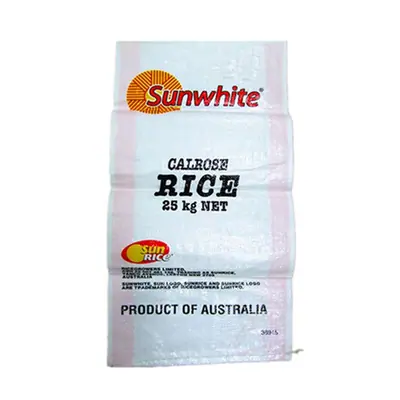
| Uncoated woven | 70–100 g/m² PP woven fabric | Breathable, cheapest | Whole corn, grains, feed ingredients that must breathe |
| Multiwall paper | 2–3 plies of kraft, often with a grease-resistant or PE ply | Printable, stacks squarely, easy to open | Some mash feeds, mineral and milk replacer |
All four are "feed sacks" in everyday speech; the differences show up in handling damage, moisture uptake and shelf presence. The BOPP option is covered in depth in our BOPP laminated bags guide, and paper options in our multiwall paper bags guide.
Why woven has largely replaced paper for feed
Paper feed bags tear when dropped, punctured by a pallet fork or exposed to rain. Woven polypropylene is many times stronger for the same weight, does not fail when damp and can be stored outdoors under cover for short periods if UV-stabilised. Fat-containing feeds (horse feeds with added oil, high-energy poultry rations) also stain paper; a laminated woven bag stays clean.
What size is a 50 lb feed bag?
50 lb is 22.68 kg. In North America, 50 lb feed bags (also called 50 pound feed bags) are the standard retail unit for poultry, livestock and horse feed. Elsewhere, 25 kg, 40 kg and 50 kg are common. The bag size you need depends on the feed's bulk density, not just its weight.
Worked example: volume from bulk density
Volume needed (litres) = fill weight (kg) ÷ bulk density (kg/L)
| Feed form | Typical bulk density | Volume for 50 lb (22.7 kg) | Volume for 25 kg |
|---|---|---|---|
| Pellets | 0.60–0.70 kg/L | 32–38 L | 36–42 L |
| Crumbles | 0.55–0.65 kg/L | 35–41 L | 38–45 L |
| Whole or cracked corn | 0.70–0.75 kg/L | 30–32 L | 33–36 L |
| Mash | 0.45–0.55 kg/L | 41–50 L | 45–56 L |
| Textured / sweet feed | 0.50–0.60 kg/L | 38–45 L | 42–50 L |
So a 50 lb bag of chicken pellets and a 50 lb bag of chicken mash do not fit the same bag comfortably. Mills that run both forms often use one bag width and two lengths, or one size with a different fill height.
Typical 50 lb feed bag dimensions
Common side-gusset formats for a 50 lb bag are roughly:
- 16 × 5 × 30 in (about 40 × 13 × 76 cm) for dense pellets and grain
- 17 × 5 × 32 in (about 43 × 13 × 81 cm) for crumbles and textured feed
- 18 × 6 × 34 in (about 46 × 15 × 86 cm) for light mash
These are starting points. Always confirm with a fill trial on your own line, leaving enough headspace to sew or pinch-seal the top.
Chicken feed bags: what to specify
A chicken feed bag is usually a 50 lb (or 25 kg) BOPP laminated side-gusset bag with a sewn or easy-open top. Points that matter for poultry feed in particular:
- Fat and moisture: layer and broiler feeds can contain added fat. BOPP lamination or a PE coating stops staining and slows moisture uptake that leads to caking and mould.
- Easy opening: small-flock buyers open the bag at home. A chain-stitch top with a pull-string or an easy-open tape avoids knives and spilled feed.
- Handling: a 50 lb bag of chicken feed gets carried from store to car to coop. Printed handling text and anti-slip lamination help on the pallet and in the store.
- Retail labelling: feed tags or printed panels must carry the guaranteed analysis, ingredients and directions required in your market. Leave space for these on the back panel.
- Smaller sizes: backyard flocks drive demand for 5, 10 and 25 lb bags; the same artwork can usually be scaled across sizes.
Our Custom Printed Side Gusset BOPP Bag with High Gloss is the typical format for branded chicken, horse and pet feed; the Heavy Duty Side Gusset BOPP Bag Cross Laminated Layer adds tear resistance for heavier fills and rough distribution.
Corn feed bags and corn sacks
Whole and cracked corn is dense, abrasive at the corners and often stored in barns where mice and moisture are the enemies. Corn feed bags are therefore usually:
- Plain or PE-coated woven PP, 80–100 g/m², because the product does not need retail graphics as often.
- Standard 50 kg corn sacks around 60 × 92 cm in many export markets, or 50 lb bags in North America.
- Black or UV-treated where sacks sit in the sun at farm gate or market, such as our Black PP Woven Corn Bags 50kg 60x92cm Recyclable UV.
Uncoated corn sacks breathe, which helps grain that is not perfectly dry, but they also let in humidity. For long storage, use dry grain and a coated sack or a liner. We cover grain and rice sacks separately in our grain bag guide.
BOPP feed bags vs coated woven: which do you need?
Choose BOPP feed bags when:
- The bag sits on a retail shelf or dealer floor and must sell the product.
- You have several SKUs (layer, grower, scratch, horse, rabbit) that need clear color coding.
- Annual volume per design is high enough to absorb gravure cylinder costs (commonly around 10,000 bags or more per design).
Choose coated woven feed sacks when:
- Feed is delivered direct to farms or other mills.
- Print needs are simple: logo, product name, batch box.
- Cost per tonne matters more than shelf appeal.
Paper feed bags make sense where existing packing lines are built for paper, or where buyers specifically ask for a paper-faced bag. For a natural paper look with woven strength, consider paper-poly composite bags instead; see our seed and fertilizer bags guide where that construction is most common.
When to switch to bulk feed bags
Bulk feed bags — FIBCs, also called big bags or super sacks — hold roughly 500–1,000 kg of feed and are filled from an overhead spout and emptied through a bottom spout. They suit:
- Mills supplying mid-size farms without bulk bins.
- Feed ingredients (soybean meal, premix carriers, fishmeal) moving between plants.
- Export feed that would otherwise need 20–40 individual sacks per tonne.
Per tonne, one FIBC replaces about forty 25 kg sacks, with far less handling. Feed contact typically calls for food-grade manufacturing and a liner for fine or fatty products. See our food-grade bulk bags guide and super sacks guide; always check the safe working load printed on the bag label.
How to write a wholesale feed bag specification
When requesting quotes for wholesale feed bags, send these details so every factory quotes the same bag:
- Fill weight and feed form (e.g., 50 lb pellets, 25 kg mash).
- Dimensions: width × gusset × length, in inches or cm.
- Fabric weight in g/m² and tape count (e.g., 10 × 10 or 12 × 12 tapes per inch).
- Lamination or coating: BOPP film thickness and finish (gloss or matte), or PE coating weight.
- Top and bottom: sewn, pinch-bottom, heat-sealed, easy-open top, or valve.
- Liner: none, loose PE liner or attached liner, with thickness.
- Printing: colors, sides printed, and whether you need batch/date boxes.
- Extras: anti-slip finish, UV stabilisation, handles, micro-perforation for air release.
- Volume: per design and per year, so the factory can confirm MOQ.
Micro-perforation deserves a note: laminated bags trap air during filling, which makes pallets unstable. Small perforations let air out without letting in much moisture. For woven sacks without lamination, such as our Durable PP Woven Bags for Rice Flour Feed Agriculture, this is usually unnecessary.
Common feed bag problems and fixes
| Problem | Likely cause | Fix |
|---|---|---|
| Bags burst on the pallet | Fabric too light or seams too close to edge | Increase g/m², use double-fold bottom and tighter stitch |
| Pallets lean or slide | Trapped air, slick film | Micro-perforate, specify anti-slip lamination |
| Caking or mould | Moisture ingress, warm storage | PE coating or liner; store off the floor and out of sun |
| Print scuffs | Surface-printed flexo on coated woven | Reverse-printed BOPP protects ink under film |
| Bags too full to close | Bag sized for pellets, filled with mash | Size from bulk density; add 3–5 cm to length |
Once bags are emptied, many end up reused on farms and in craft projects; we look at that side of feed sacks in feed sack fabric: history and reuse.
Sourcing feed bags factory-direct
EGP is a feed bag and woven sack manufacturer in Yantai, Shandong, China, with 24 years as an Alibaba.com supplier, about 110 staff and a 3,500 m² facility. We make BOPP laminated, coated woven and paper-poly feed bags to your size and artwork, plus bulk bags for ingredients. Browse Laminated & BOPP Bags and PP Woven Sacks, or send your specification through our contact page for a quote — we typically respond within 8 hours.
Frequently asked questions
How much does a 50 lb bag of chicken feed hold in volume?
A 50 lb bag of chicken pellets fills roughly 32–38 litres (about 1.1–1.3 cubic feet). Mash is lighter per litre, so the same weight takes 41–50 litres and needs a longer or wider bag.
Are BOPP feed bags waterproof?
BOPP lamination makes the bag face highly water-resistant, but sewn seams and stitch holes can still let water in. For wet storage, add a PE liner or heat-sealed closure, and keep pallets under cover.
What is the difference between feed sacks and feed bags?
In practice the terms are interchangeable. "Feed sack" is often used for woven or historic cloth bags, and "feed bag" for any retail package, but buyers and factories use both for the same 25–50 kg woven sacks.
Can paper feed bags be recycled?
Plain multiwall paper feed bags are recyclable where paper collection accepts them, but plastic plies or liners can complicate this. Woven PP and BOPP feed bags are essentially mono-material polypropylene and recyclable where PP streams exist.
What is the minimum order for wholesale feed bags with custom printing?
Plain or flexo-printed woven feed sacks usually have low minimums, while BOPP feed bags need printing cylinders and commonly start around 10,000 bags per design. Share your sizes and annual volume and we will confirm the MOQ.
What bag is used for a 50 lb bag of corn or deer corn?
Whole corn and deer corn are usually packed in 50 lb woven polypropylene bags, either plain or BOPP-printed for retail, around 18 × 32 in to 20 × 36 in. Breathable uncoated woven PP is common for whole grain.