Key takeaways
- Woven fabric is made by interlacing two sets of yarns or tapes at right angles: the warp (lengthwise) and the weft (crosswise).
- Non-woven fabric is made by bonding fibers directly (heat, needles, water jets or resin) without weaving or knitting.
- Woven fabrics are stronger and more dimensionally stable; non-wovens are cheaper to make, more uniform in porosity and better for filtration.
- PP woven material is specified by mesh (e.g. 10×10 or 12×12 tapes per inch), denier and GSM: GSM ≈ (warp + weft per inch) × denier ÷ 228.6.
Woven fabric is a textile made by interlacing two sets of yarns, threads or flat tapes at right angles on a loom: the warp runs lengthwise and the weft runs crosswise. The over-and-under interlacing locks the yarns together, giving a stable, strong cloth with a regular grid structure. Cotton shirting, denim, canvas and woven polypropylene sacks are all woven fabrics.
Woven material definition in one sentence: a woven fabric is any sheet material formed by interlacing warp and weft elements in a repeating pattern, as opposed to knitted fabric (interlooped) or non-woven fabric (bonded fibers).
This is a general textile explainer. For polypropylene specifically, see woven vs non-woven polypropylene fabric, and for ground engineering, woven vs non-woven geotextile.
What are warp and weft?
- Warp: the yarns held under tension on the loom, running the length of the fabric. They are usually the stronger, more tightly controlled set.
- Weft (also called filling or pick): the yarns passed across the warp, over and under, from side to side.
- Selvedge: the self-finished edge where the weft turns back, preventing fraying on flat-woven cloth.
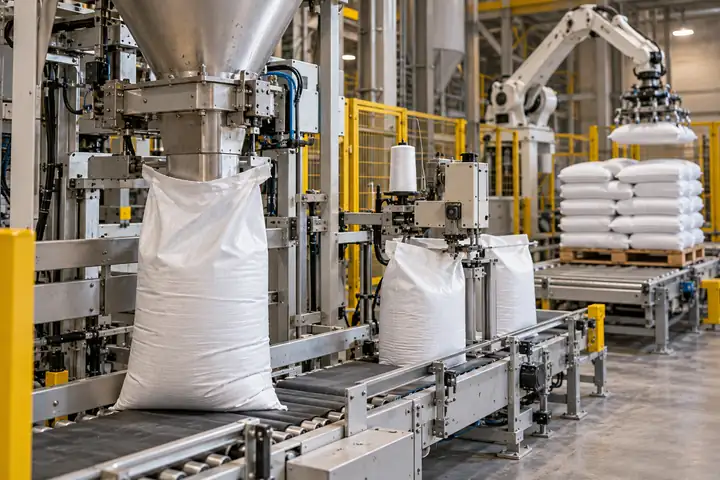
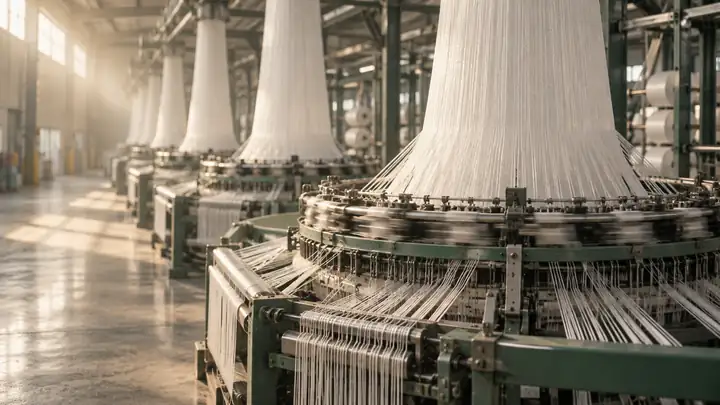
On a circular loom, used for most PP sacks and bulk bag bodies, several shuttles carry the weft around a circle of warp tapes, producing a seamless tube. Flat (water-jet, rapier or air-jet) looms produce open-width fabric for rolls, ground covers and bulk bag panels.
What are the main types of weave?
| Weave | Pattern | Character | Examples |
|---|---|---|---|
| Plain weave | Over one, under one | Firm, stable, same on both faces | Calico, canvas, woven PP sacks, weed mat |
| Basket weave | Two or more yarns act as one | Looser, more flexible | Oxford cloth, some heavy tarps |
| Twill | Over two or more, stepped diagonally | Diagonal rib, drapes well, durable | Denim, gabardine |
| Satin | Long floats over four or more yarns | Smooth, lustrous, snag-prone | Satin, sateen |
| Leno | Paired warp yarns twist around the weft | Open but stable mesh | Leno mesh produce bags, some nets |
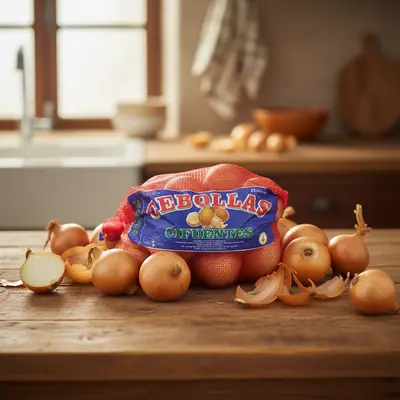
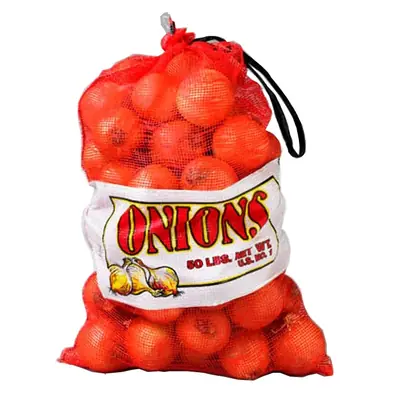
Woven PP fabric is almost always a plain weave of flat tapes. Leno weave keeps an open mesh from sliding apart, which is why it is used for onion and potato bags such as 20kg 25kg 30kg 50kg Red Mesh Bag Woven Polypropylene PP.
What is non-woven fabric?
Non-woven fabric meaning: a sheet of fibers or filaments bonded together by heat, chemical binders, needle punching or water jets, without being woven or knitted. The fibers are laid as a web, then bonded.
Main non-woven processes
- Spunbond: continuous filaments are extruded, laid as a web and thermally bonded. Strong for its weight; common in PP.
- Melt-blown: very fine fibers blown from the melt, giving high filtration efficiency but low strength.
- SMS: spunbond-melt-blown-spunbond layers combined for strength plus filtration.
- Needle-punched: a fiber web entangled mechanically by barbed needles; thick, felt-like, used in geotextiles.
- Spunlace (hydroentangled): fibers entangled by high-pressure water jets; soft, cloth-like.
Non-woven fabric examples
Shopping and promotional "non-woven bags", face masks and medical gowns, disposable wipes, nappy and hygiene layers, filter media, crop covers (frost fleece), geotextile filter fabric, carpet backing and furniture linings are all non-woven textiles.
Woven vs non-woven: what is the difference?
| Feature | Woven fabric | Non-woven fabric |
|---|---|---|
| How it is made | Interlacing warp and weft | Bonding a fiber web |
| Structure | Regular grid | Random fiber network |
| Tensile strength for weight | High, especially along warp and weft | Lower to moderate |
| Elongation at break (PP, typical) | Low, about 15–30% | Higher, often 40–100%+ |
| Dimensional stability | Very good | Moderate |
| Edge fraying when cut | Yes, unless heat-cut or hemmed | No |
| Water / air flow | Through gaps between tapes; varies with mesh | Uniform, through fiber network |
| Filtration | Poor to moderate | Good to excellent |
| Typical uses | Sacks, bulk bags, tarps, weed mat, stabilization geotextile | Shopping bags, hygiene, filters, drainage geotextile, crop covers |
In short, choose woven fabric when strength and load-bearing matter, and non-woven when filtration, softness or low cost matter. For woven vs non-woven bags: woven PP sacks carry 25–50 kg loads repeatedly, while non-woven bags are usually light-duty carriers.
What is PP woven material?
PP woven material is fabric woven from flat polypropylene tapes, each typically 2–3 mm wide and about 30–60 microns thick, made by extruding a film, slitting it and stretching it to orient the polymer. The polypropylene weave is a simple plain weave, but its performance is set by three numbers.
Mesh (weave count)
Mesh is the number of tapes per inch (or per 10 cm) in each direction, written warp × weft. Common counts are 10×10, 12×12 and 14×14 per inch (about 39×39, 47×47 and 55×55 per 10 cm). Higher mesh gives a tighter, smoother fabric with smaller gaps.
Denier
Denier is the mass in grams of 9,000 meters of tape. Typical sack tapes are about 700–1,000 denier; bulk bag body fabric often uses heavier tapes of around 1,400–2,000 denier. Higher denier means a heavier, stronger tape.
GSM
GSM (grams per square meter) is the fabric weight. It can be estimated from mesh and denier:
GSM ≈ (warp tapes per inch + weft tapes per inch) × denier ÷ 228.6
The 228.6 comes from converting tapes per inch to tapes per meter (×39.37) and denier to grams per meter (÷9,000). Real fabric is a few percent heavier because of crimp.
| Mesh (per inch) | Denier | Estimated GSM | Typical use |
|---|---|---|---|
| 10×10 | 900 | ≈ 79 g/m² | 50 kg grain or feed sack |
| 12×12 | 700 | ≈ 73 g/m² | 25 kg sack with good print surface |
| 12×12 | 900 | ≈ 94 g/m² | Heavy-duty sack, weed mat |
| 12×12 | 1,000 | ≈ 105 g/m² | Ground cover, heavy weed control |
| 14×14 | 1,600 | ≈ 196 g/m² | Bulk bag body fabric |
Worked example: a 12×12 fabric with 900 denier tapes = (12 + 12) × 900 ÷ 228.6 = 21,600 ÷ 228.6 ≈ 94.5 g/m².
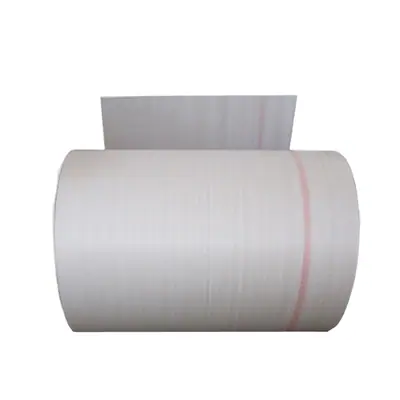
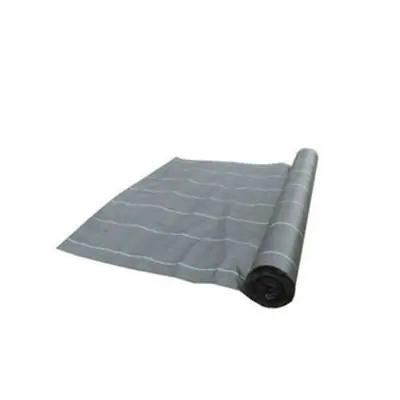
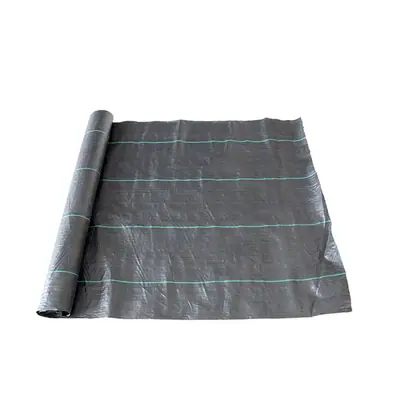
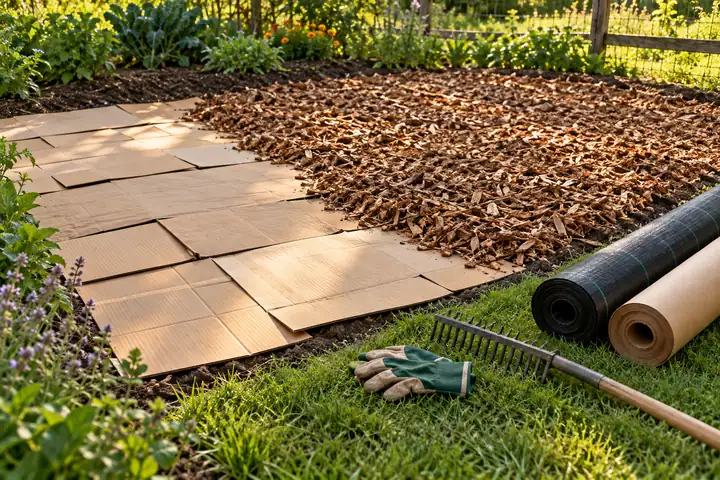
GSM and weave also apply outside packaging. Weed control fabric is commonly 70–130 g/m², explained in our weed control fabric GSM and UV guide. Examples: Breathable PP Woven Roll with Offset Printing and Heavy Weight PP Weed Control Fabric with Enhanced, with more in Woven Rolls & Weed Mat.
Why is woven polypropylene so widely used?
- Strength-to-weight: oriented tapes give high tensile strength from very little resin; a 50 kg sack weighs only about 80–120 g.
- Water resistance: PP does not rot, though plain woven fabric is not waterproof unless coated or laminated.
- Breathability on demand: uncoated fabric lets moisture escape; coated fabric blocks it.
- Low cost and recyclability: a single polymer (code 5), easy to recycle when kept mono-material.
The resin behind it is covered in polypropylene homopolymer vs copolymer.
Sourcing woven fabric and bags
EGP weaves polypropylene tape into sacks, rolls, ground covers and mesh bags in Yantai, China, with mesh, denier, GSM, coating and printing made to order. Browse PP Woven Sacks or request a quote with your specification.
Frequently asked questions
What is woven cloth?
Woven cloth is any fabric made on a loom by interlacing warp yarns (lengthwise) and weft yarns (crosswise). Most everyday fabrics, from cotton shirting to denim and canvas, are woven cloth, as are polypropylene sacks and tarpaulins.
What is non woven cloth made of?
Non-woven cloth is usually made of polypropylene, polyester or viscose fibers, bonded by heat, needles, water jets or binders. Polypropylene spunbond is the most common type for bags, hygiene products and crop covers.
Is woven or non woven fabric stronger?
For the same weight, woven fabric is usually stronger and stretches less, especially in the warp and weft directions. Non-woven fabric is better at filtration and drainage, which is why both types are used in geotextiles for different jobs.
What does 10×10 or 12×12 mean on woven PP fabric?
It is the weave count, or mesh: the number of tapes per inch in the warp and weft. A 12×12 fabric has 12 tapes per inch each way and is tighter and smoother than a 10×10 fabric made with the same tapes.
How do you calculate GSM of woven PP fabric?
Add the warp and weft tapes per inch, multiply by the tape denier and divide by 228.6. For example, 10×10 mesh with 900 denier tapes gives about 79 g/m², before a small allowance for crimp.
Are non woven bags the same as woven bags?
No. Non-woven bags are made from bonded spunbond fabric and are mostly light-duty carriers, while woven PP bags are made from interlaced tapes and carry heavy loads such as 25–50 kg of grain, feed or sand.