Key takeaways
- Woven PP fabric is made by interlacing flat drawn tapes on looms; it is very strong for its weight and is used for sacks, bulk bags, ground cover and tarps.
- Non-woven PP (usually spunbond) is made by bonding a web of continuous filaments; it is soft, cheap and breathable but weaker.
- At the same weight, woven PP typically has several times the tensile strength of spunbond.
- Polyester fabric resists UV and heat better but is heavier and costlier; PVC-coated polyester mesh is used for screens and banners.
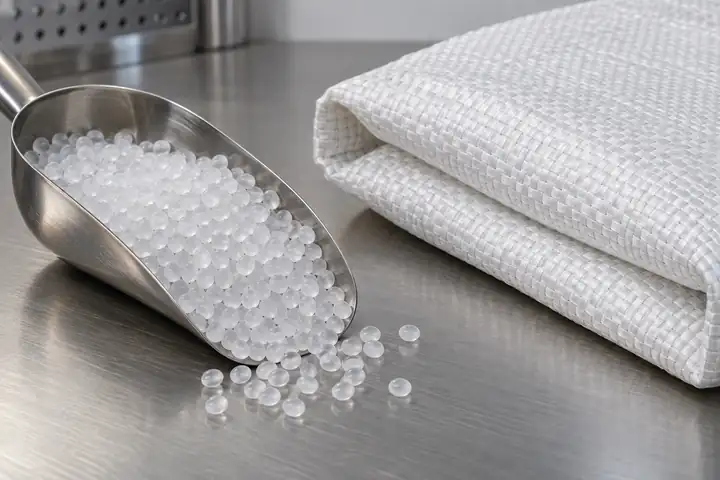
Polypropylene fabric (PP fabric) comes in two fundamentally different forms. Woven polypropylene fabric is made by interlacing flat, stretched PP tapes on looms, producing a strong, stiff cloth used for sacks, bulk bags, ground cover and tarps. Non-woven polypropylene, usually spunbond, is made by laying down and heat-bonding continuous filaments into a soft sheet, producing a cheaper, softer, more breathable but much weaker fabric used for shopping bags, crop covers and hygiene products.
Both are made from the same polymer (see what is polypropylene), but they behave very differently. This guide explains how each is made, how to compare them and how to specify a PP fabric roll.
What is woven polypropylene fabric?
Woven PP fabric, also called PP cloth or raffia fabric, is produced in three steps:
- Tape extrusion. PP resin, often with UV stabilizer and color masterbatch, is extruded as a thin film, slit into narrow strips and stretched (drawn) to about 5–7 times their length. Drawing aligns the polymer chains and multiplies tensile strength.
- Weaving. The tapes, typically 2–3 mm wide, are woven on circular looms (producing tubular fabric for sacks) or flat looms (producing flat fabric for rolls and panels).
- Finishing. The fabric may be coated or laminated, printed, cut and sewn.
Weave density is expressed as tapes per inch or per 10 cm in each direction, such as 10 × 10 or 12 × 12 per inch. Fabric weight is given in grams per square meter (GSM).
| Woven PP fabric weight | Typical uses |
|---|---|
| 50–70 g/m² | Light sacks (10–25 kg), lightweight ground cover |
| 70–100 g/m² | 25–50 kg sacks for grain, feed, sugar, fertilizer; sandbags |
| 100–130 g/m² | Heavy-duty weed control fabric, construction sacks |
| 140–220 g/m² | FIBC bulk bag body fabric, heavy ground cover, geotextiles |
For how GSM affects weed fabric life, see our weed control fabric GSM and UV guide.
What is non-woven polypropylene fabric?
Non woven fabric is any fabric made by bonding fibers rather than weaving or knitting them. PP non woven fabric is mostly made by the spunbond process:
- Molten PP is extruded through spinnerets into thousands of continuous filaments.
- The filaments are drawn by air and laid randomly onto a moving belt as a web.
- The web is bonded, usually by passing through heated, patterned rollers (thermal point bonding), which gives the familiar small dot or diamond pattern.
Related processes include meltblown (very fine fibers used for filtration media) and SMS (spunbond-meltblown-spunbond laminates). For nonwoven polypropylene, typical weights run from about 10 g/m² (hygiene products) to 150 g/m² (heavy bags and landscape use).
| Spunbond non woven fabric weight | Typical uses |
|---|---|
| 10–25 g/m² | Hygiene products, frost cloth/crop cover (17–30 g/m²) |
| 30–60 g/m² | Agricultural row covers, disposable covers, packaging |
| 60–100 g/m² | Reusable shopping bags, promotional bags |
| 100–150 g/m² | Landscape fabric, furniture lining, heavy covers |
Woven vs non-woven PP fabric compared
| Property | Woven PP fabric | Spunbond non-woven PP |
|---|---|---|
| Structure | Interlaced drawn tapes | Bonded random filaments |
| Tensile strength at same GSM | High; typically 3–5× spunbond | Moderate |
| Stretch before break | Low (about 15–25%) | Higher, uneven |
| Tear behavior | Can run along tapes once cut | Resists tear propagation but punctures more easily |
| Breathability | Moderate (higher when uncoated) | High |
| Water | Passes through unless coated | Passes through unless laminated |
| Feel | Crisp, slightly slippery | Soft, cloth-like |
| Printing | Flexo direct, or BOPP lamination for photo quality | Screen and flexo; softer images |
| Edges | Fray when cut unless heat-cut or hemmed | Do not fray |
| Typical cost per m² | Low | Lowest |
The short version: choose woven when strength matters, non-woven when softness, breathability or low cost matter more.
Non woven bags vs woven bags
The comparison buyers make most often is between bags:
- Non-woven bags (60–100 g/m² spunbond) are soft, light and good for reusable retail and promotional bags carrying a few kilograms. They are sewn or ultrasonically welded and screen printed.
- Woven bags (70–100 g/m² woven PP, often BOPP laminated) are much stronger and are used for 10–50 kg industrial and agricultural products, and for heavy-duty reusable shopping bags.
For industrial packing of grain, feed, sugar, fertilizer, sand or chemicals, non-woven fabric is not strong enough. Woven PP is the standard; see the woven polypropylene bags guide for sack types and sizes.
Woven polyester vs woven polypropylene
Polyester (PET) is the other common synthetic fabric. Compared with PP:
| Property | Woven polypropylene | Woven polyester |
|---|---|---|
| Density | 0.91 g/cm³ (floats) | ~1.38 g/cm³ |
| Melting point | ~160–165 °C | ~250–260 °C |
| UV resistance | Needs stabilizer | Inherently better |
| Moisture absorption | Near zero | Very low (~0.4%) |
| Creep under sustained load | Higher | Lower |
| Cost | Lower | Higher |
Woven polyester is used where long-term load, heat or UV resistance justify the cost: high-strength geotextiles, conveyor belts, webbing and lifting slings. Polyester mesh fabric, usually PVC-coated, is used for privacy screens, banners, truck tarps and outdoor furniture. For packaging and agricultural fabric, woven polypropylene's low cost and light weight usually win.
Buying a PP fabric roll
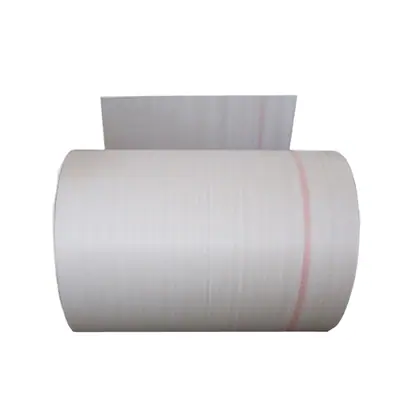
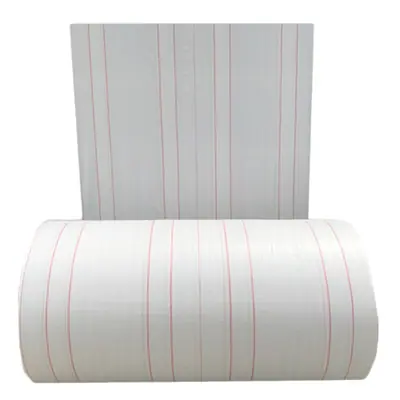
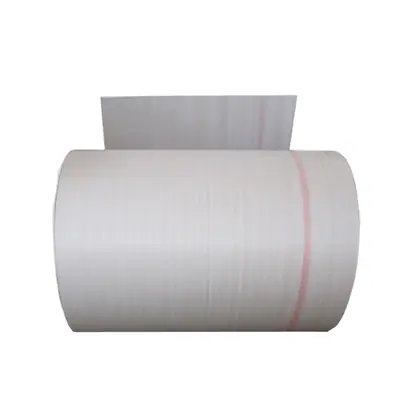
Woven polypropylene roll stock is used to make sacks, wrap goods, cover ground and line trucks. When ordering a woven polypropylene roll, specify:
- Width: flat fabric is commonly 0.5–4 m wide; tubular fabric is specified as flat width (e.g. 50 cm tube for a 50 cm wide sack).
- GSM and weave density (e.g. 90 g/m², 10 × 10 per inch).
- Coating or lamination: uncoated (breathable), PP/PE coated (moisture-resistant), BOPP laminated (printable).
- UV stabilization for outdoor use.
- Color and printing: our Custom Offset Printed PP Woven Roll Food Grade Moisture and Breathable PP Woven Roll with Offset Printing are examples of printed rolls.
- Roll length, core size and packing.
Worked example: fabric weight per roll
A roll 1.5 m wide, 500 m long, at 90 g/m²:
- Area = 1.5 × 500 = 750 m²
- Weight = 750 × 0.090 kg = 67.5 kg (about 149 lb) of fabric, plus the core.
This calculation helps compare quotes on a price-per-kilogram versus price-per-square-meter basis, and plan container loading.
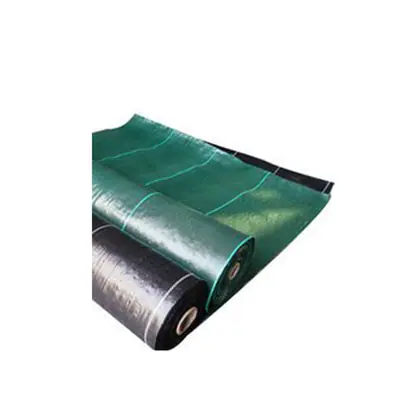
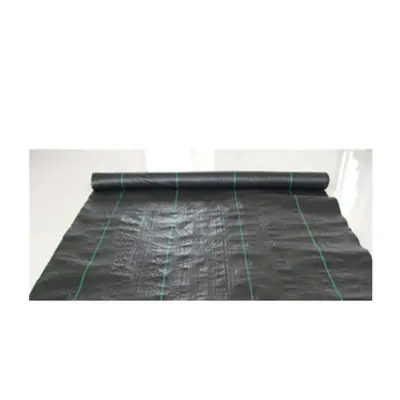
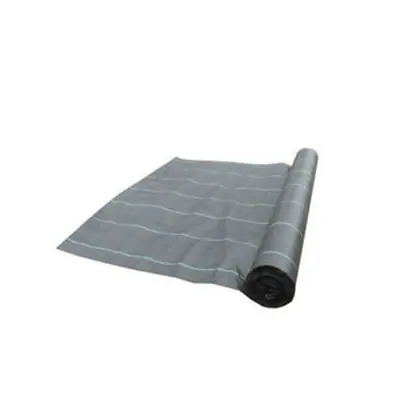
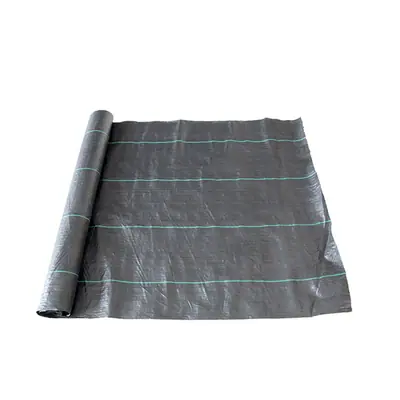
For moisture-resistant packaging rolls, see PP Woven Roll Eco-Friendly Moisture Proof Packaging; for ground cover, a heavier UV-stabilized fabric such as Heavy Weight PP Weed Control Fabric with Enhanced from our Woven Rolls & Weed Mat range.
Woven vs non-woven for landscape use
Both types are sold as landscape fabric:
- Woven PP (typically 90–130 g/m²) is stronger and better under gravel, pavers and heavy traffic, and lasts longer under UV when stabilized.
- Non-woven PP (typically 50–150 g/m²) drains and filters more evenly and suits drainage, filtration and planting beds.
The same split applies to geotextiles; see geotextile fabric: woven vs non-woven.
Sourcing PP fabric
EGP weaves polypropylene fabric at our facility in Yantai, China, and supplies it as rolls, cut panels and finished bags for importers and converters. Browse PP Woven Sacks or request a quote with your width, GSM, coating and quantity.
Frequently asked questions
What is PP fabric?
PP fabric is fabric made from polypropylene. It is either woven, made from interlaced flat tapes and used for sacks, bulk bags and ground cover, or non-woven, made from bonded filaments and used for shopping bags, crop covers and hygiene products.
Is woven or non-woven polypropylene stronger?
Woven polypropylene is considerably stronger. At the same weight per square meter, woven PP fabric typically has several times the tensile strength of spunbond non-woven, which is why industrial sacks and bulk bags are always woven.
Is non-woven polypropylene fabric waterproof?
No. Spunbond non-woven PP is porous and lets water and air through; that is why it is used as frost cloth and in breathable bags. It becomes waterproof only when laminated with a film.
What is the difference between non-woven bags and woven bags?
Non-woven bags are made from soft, bonded spunbond fabric and are suited to light retail and promotional use. Woven bags are made from interlaced PP tapes, are much stronger, and are used for heavy industrial and agricultural products from 10 to 50 kg.
Is polyester fabric better than polypropylene?
Polyester has better UV and heat resistance and less creep under long-term load, but it is heavier and more expensive. Polypropylene is lighter, cheaper and fully adequate for most packaging and agricultural fabrics when UV-stabilized.
Can I buy woven polypropylene fabric by the roll?
Yes. Manufacturers supply woven PP fabric in rolls, either flat or tubular, in a range of widths and weights, coated or uncoated, plain or printed. Specify width, GSM, coating, UV stabilization and roll length when requesting a quote.