Key takeaways
- For a 10 x 10 ft pop-up canopy, a widely used guideline is at least 40 lb (18 kg) per leg; many markets set a 25 lb minimum. Take canopies down in high winds whatever the ballast.
- Keep sand out of pool water: use water tubes or sealed, double-bagged weights on the deck, and the step maker's own ballast method.
- In a pickup, place sandbags between the wheel wells, over or just ahead of the rear axle, and strap them down.
- Waterproof sand bags keep sand dry and free-flowing; handles and outer covers make ballast bags easier to move and reuse.
Sandbags for tents, pool covers and truck beds are all ballast jobs: the goal is enough weight, in the right place, in a bag that survives the conditions. For a typical 10 x 10 ft canopy tent, plan on at least 40 lb (18 kg) on each leg; for truck beds, put the bags between the wheel wells over or just ahead of the rear axle and tie them down; and around pools, keep sand out of the water by using sealed bags on the deck or water-filled tubes. Woven polypropylene bags with a liner or laminate are the most practical waterproof option.
This guide is about ballast. For flood use see how to stack sandbags for flooding, and for weight-to-volume figures see how many sandbags do I need.
How much weight do you need? Quick reference
| Use | Typical ballast | Bag type | Notes |
|---|---|---|---|
| 10 x 10 ft (3 x 3 m) pop-up canopy | 40 lb (18 kg) per leg, 160 lb total | Leg wrap bags or 20–25 lb bags, two per leg | Many events require 25–40 lb per leg minimum |
| 10 x 20 ft (3 x 6 m) canopy | 40 lb+ per leg, 6–8 legs | As above | More area, more wind load |
| Banner, sign or umbrella base | 10–50 lb (5–23 kg) | Mini sandbags or base bags | Follow the stand maker's guidance |
| Pool winter cover edge | Per cover maker's spacing | Water tubes, or sealed double bags on deck | Keep sand out of the water |
| Above-ground pool steps | Per step maker | Built-in ballast chambers or approved weights | Do not submerge woven sandbags |
| Rear-wheel-drive pickup in winter | Often 300–500 lb (135–225 kg) for light-duty trucks | 40–60 lb bags or tube bags | Never exceed payload rating |
All figures are typical starting points. Check the instructions for your tent, pool or vehicle, and weigh your bags rather than guessing — see the weight table in our sandbag calculator guide.
Sandbags for canopy tents
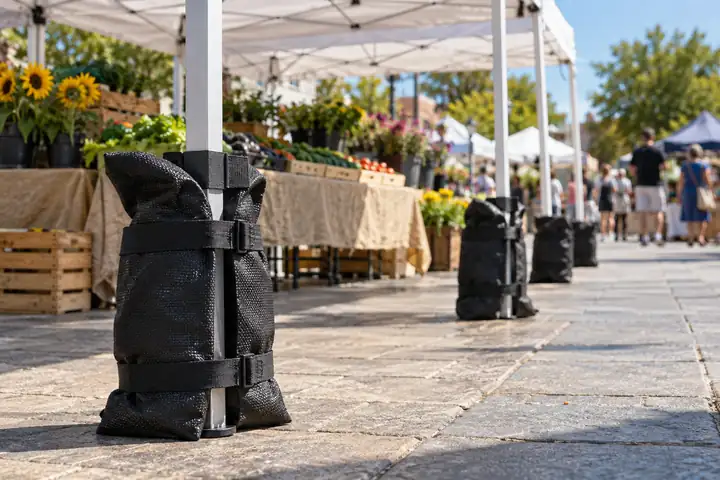
Pop-up canopies act like sails. A gust can lift an unweighted 10 x 10 ft canopy and throw it across a market, injuring people. Sandbags for canopy tents are the most practical weights because they are cheap, flexible and can be emptied for transport.
How much weight per leg?
- 40 lb (18 kg) per leg is a widely used guideline for a 10 x 10 ft canopy.
- Many farmers' markets and event organizers set a minimum of 25–40 lb per leg — check your event rules, which override any general advice.
- Bigger canopies, sidewalls and exposed sites (beaches, hilltops, open parking lots) need more.
Sidewalls dramatically increase wind load. In strong or gusty winds, take the canopy down; no reasonable amount of ballast makes a pop-up safe in a storm.
Tent sand bags: how to attach them
- Weight low and tight. Wrap-around leg bags that sit on the foot plate are best. Hanging bags from the top of the frame lets them swing.
- Strap to the frame. Use hook-and-loop or buckle straps so the bag cannot slide off when the leg lifts.
- Stake when you can. On grass or soil, stakes plus guy lines, plus weights, beat weights alone.
- Split the load. Two 20–25 lb bags per leg are easier to carry than one 40–50 lb bag.
Tent sand bags usually have two parts: an inner fill bag holding the sand, and an outer sand bag cover with straps and branding. The cover takes the abrasion and looks tidy; the inner bag can be replaced if it leaks.
Pool sand bags and pool cover sandbags
Holding down a pool cover
Winter covers for in-ground pools are commonly held with water-filled tubes laid around the edge on the deck. They do not scratch, they cannot spill sand into the water, and they can be drained for storage.
If you use pool cover sandbags instead: - Use waterproof sand bags or double-bag the sand in sealed liners, so a split does not dump sand into the pool or filter. - Keep bags on the deck, on the cover's edge, not floating on the cover. - Check them after storms and freezes; UV and ice cracking weaken plastic over a winter.
Sand that gets into a pool clogs filters and can scratch vinyl liners, which is why many pool professionals discourage loose-fill sandbags on covers.
Sandbags for pool steps
Some above-ground pool steps and ladders need ballast so they do not float or shift. Most are designed with their own ballast chambers that you fill with sand, or specify a particular weight.
- Follow the step manufacturer's ballast instructions first.
- Do not put ordinary woven sandbags in the pool. Chlorinated water and constant immersion degrade the bag, and sand will leak into the water.
- If an external weight is approved, use a fully sealed, waterproof container designed for underwater use.
Sandbags for truck bed traction
Rear-wheel-drive pickups carry little weight over the driven wheels when empty, so they spin and slide on snow and ice. Sandbags for truck bed ballast add traction — and the sand doubles as grit if you get stuck.
Where to place sandbags in truck bed
- Between the wheel wells, over or slightly ahead of the rear axle. This puts weight on the rear tires without lightening the front.
- Not at the tailgate. Weight behind the axle levers weight off the front wheels and reduces steering grip.
- Secure the load. Use a wooden frame, bed tie-down points and ratchet straps. In a crash or hard stop, a loose 50 lb bag becomes a projectile.
How much weight?
Light-duty pickups are commonly ballasted with about 300–500 lb (135–225 kg) — for example eight to ten 40–50 lb bags. Heavier trucks may use more. Check the payload rating on the door-jamb label and the owner's manual, which may give its own winter-ballast guidance. Four-wheel-drive trucks benefit less but still gain some rear grip.
Keep the sand dry
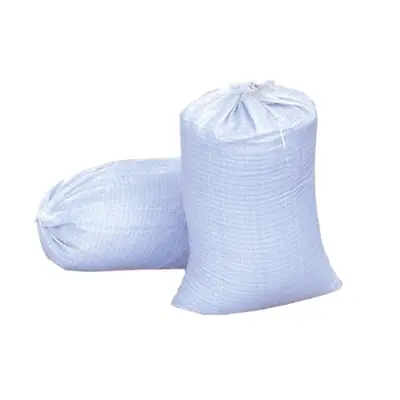
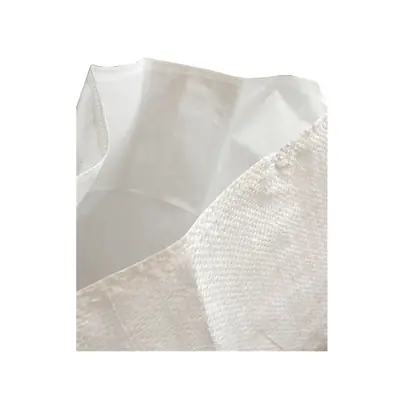
Wet sand freezes into a solid block and is useless for traction. Use laminated or lined bags — such as our Waterproof Lined PP Woven Bag with Bottom Gusset — or bags with a PE liner, and store them off the bed floor if water pools there.
Waterproof sand bags: what they are
"Waterproof" in sand bags usually means one of these:
| Construction | How it keeps water out | Best for |
|---|---|---|
| Woven PP with PE inner liner | Sealed liner inside a strong woven outer | Truck ballast, storage, pool decks |
| Laminated (coated) woven PP | Film bonded to the fabric | Outdoor ballast, sand that must stay dry |
| Vinyl or PVC-coated fabric | Fully coated heavy fabric | Premium tent weights, film/stage weights |
| Plain woven PP | Not waterproof — water passes through | Flood walls, erosion control |
Plain woven sandbags are deliberately not waterproof, which is fine for flood walls. For ballast that must stay dry, a lined or laminated bag such as our Weatherproof PP Woven Bag with UV Stabilization is a better fit. Our polypropylene vs polyethylene bags article explains how the two plastics combine in lined bags.
Mini sandbags
Mini sandbags, around 8 x 12 in (20 x 30 cm) and 5–10 lb (2–5 kg), are useful for:
- Weighting banner stands, light stands and signs
- Holding down tarps, row covers and ground sheets
- Blocking small gaps at the foot of doors or drains
- Weighting the hem of pool covers at specific points
Fill them only half to two-thirds so they drape and grip rather than roll.
Sand bags with handles
For ballast that is moved every day — event tents, construction signs, road barriers — sand bags with handles save backs and hands. Look for:
- Webbing handles sewn through the body or bottom, not just the hem
- Reinforced stitching at stress points; our Heavy Duty Moisture Proof PP Woven Bag with Reinforced is built along these lines
- A filled weight one person can carry safely — 25–40 lb (11–18 kg) is practical for frequent handling
- UV stabilization for bags living outdoors; see our sand bags buying guide for UV ratings
Buying ballast bags in quantity
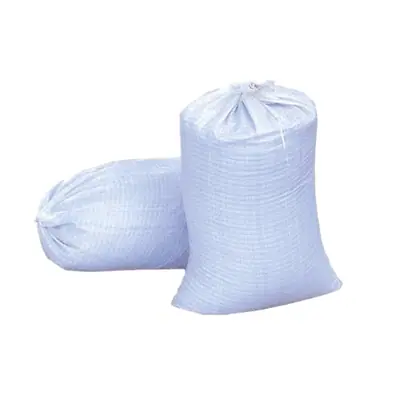
Event rental firms, sign and traffic-control companies, pool-supply distributors and auto-accessory retailers often buy ballast bags in bulk, with custom sizes, handles, colors and printing. EGP manufactures woven polypropylene bags — plain, lined and laminated — in Yantai, China, including our UV Stabilized PP Woven Bag with Top Drawstring for Sand for general sand use. Browse our PP Woven Sacks range or request a quote with your size, fill weight and quantity.
Frequently asked questions
How many pounds of sandbags do I need for a 10x10 canopy?
A widely used guideline is at least 40 lb per leg, or 160 lb total, for a 10 x 10 ft pop-up canopy. Check your event's rules, add more for sidewalls or exposed sites, and take the canopy down in strong winds.
Where should sandbags go in a truck bed?
Place them between the wheel wells, directly over or just ahead of the rear axle, and strap them down. Avoid putting weight at the tailgate, which reduces front-wheel grip.
Can I use sandbags to hold down a pool cover?
You can, but use sealed or double-bagged waterproof sand bags kept on the deck so sand cannot get into the pool. Many owners prefer water-filled tubes, which cannot spill sand.
Are sandbags waterproof?
Standard woven sandbags are not waterproof; water passes through the weave. Bags with a polyethylene liner, a laminated coating or a vinyl coating keep the sand dry.
How heavy should tent sand bags be?
Two 20–25 lb bags per leg, or one 40 lb leg-wrap bag, is a common setup for a 10 x 10 ft canopy. Splitting the weight makes the bags easier to carry and attach.