Key takeaways
- Row covers are lightweight fabrics or nets laid over crops, usually on hoops, to protect against frost, insects, sun or hail.
- Frost cloth (nonwoven fabric) traps heat and gives roughly 2–8 °F (1–4 °C) of protection depending on weight.
- Insect netting gives almost no frost protection but excludes pests while passing 75–90% of light and plenty of air.
- Shade cloth cools in summer; plastic film warms but must be vented. EGP makes insect, shade and hail nets, not frost cloth.
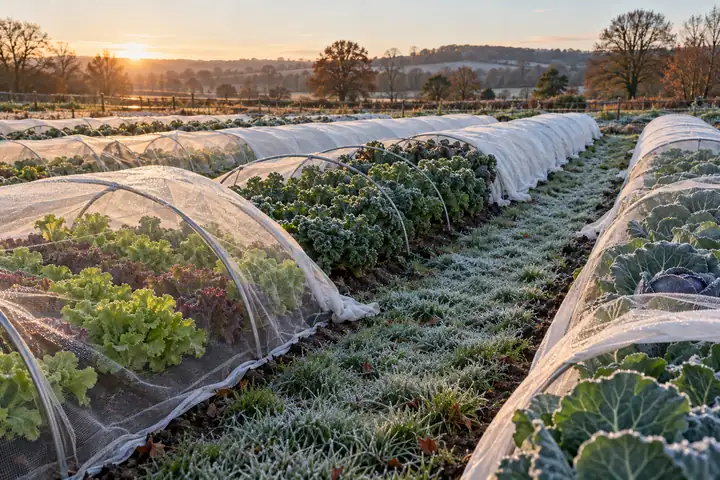
Row covers are lightweight fabrics or nets laid over crops, usually on low hoops, to protect plants from frost, insects, sun or hail; the right one depends on which of those threats you face. Frost cloth (a nonwoven fabric) holds heat and gives a few degrees of freeze protection; insect netting excludes pests with excellent airflow but almost no frost protection; shade cloth cools crops in summer. Many growers use more than one on the same hoops through the year.
A quick definition: a row cover is any permeable material used to cover a crop row or bed, either floating directly on plants or supported on hoops as a low tunnel. This guide compares the main types, explains how to set them up, and is honest about what EGP makes: we manufacture insect, shade and hail nets, not frost cloth.
What are the different types of row covers?
| Cover | Material | Light transmission | Frost protection* | Airflow | Insect exclusion | Main season |
|---|---|---|---|---|---|---|
| Light frost cloth / row cover fabric, ~17–20 g/m² (0.5–0.6 oz/yd²) | Nonwoven PP or polyester | ~85–90% | ~2–4 °F (1–2 °C) | Moderate | Good if sealed | Spring, autumn, pest barrier |
| Medium frost cloth, ~30 g/m² (0.9 oz/yd²) | Nonwoven PP | ~70% | ~4–6 °F (2–3 °C) | Lower | Good if sealed | Early spring, late autumn |
| Heavy frost blanket, 50–70 g/m² (1.5–2 oz/yd²) | Nonwoven PP | ~30–50% | ~6–8 °F (3–4 °C) | Low | Good if sealed | Short freezes, winter |
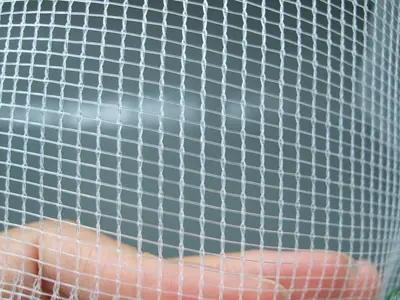
| Insect netting | Knitted or woven HDPE | ~75–90% | ~0–2 °F (0–1 °C) | High | Excellent (mesh-dependent) | Spring to autumn |
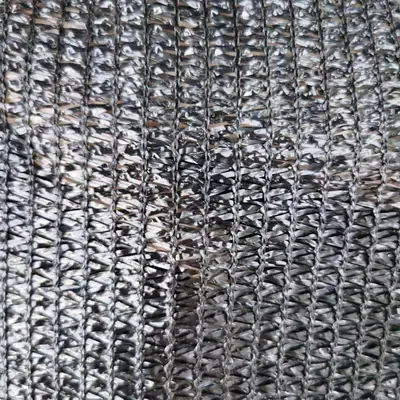
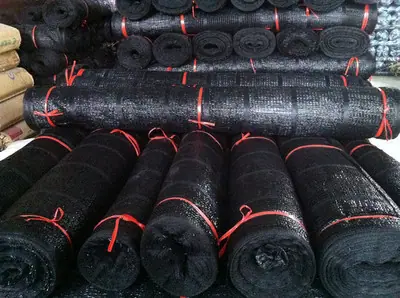
| Shade cloth, 30–50% | Knitted HDPE | ~50–70% | None | High | None (unless fine) | Summer heat |
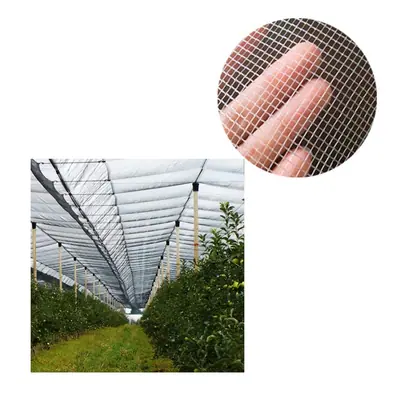
| Hail net | Knitted HDPE | ~80–90% (white) | None | High | Birds, large insects | Hail season |
| Clear plastic film tunnel | PE film | ~85–90% | Several °F, more on sunny days | None unless vented | Excellent when closed | Early spring, winter |
*Frost protection figures are typical published ranges for still, clear nights; wind, soil moisture and how well edges are sealed change the result. Treat them as rough guides, not guarantees.
Frost cloth: what it is and when to use it
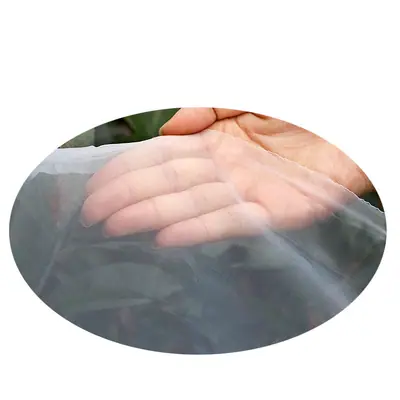
Frost cloth (also sold as a frost blanket for plants or floating row cover) is a nonwoven fabric of spun-bonded fibers. It does not generate heat; it slows the loss of heat the soil stored during the day. That is why frost cloth for plants works best when it reaches the ground and is sealed at the edges, and why it helps most on calm, clear nights. Heavier weights protect more but let less light through, so heavy blankets should come off once the cold snap passes.
Insect netting as a row cover
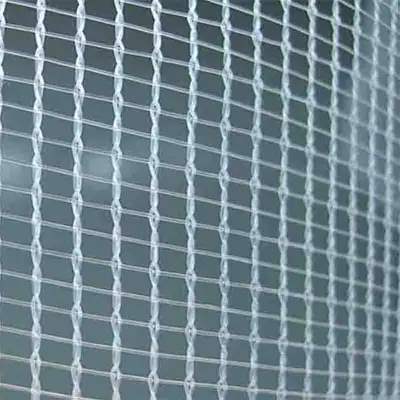
Insect netting is a knitted mesh with holes from about 1.3 mm down to 0.27 mm. It lets rain, air and most light through, so it can stay on for weeks without overheating crops. It excludes cabbage white butterflies, flea beetles, carrot fly, leafminers and, with fine grades, aphids and whitefly. It is also tougher and longer-lasting than light nonwoven fabric. See the insect netting guide for mesh sizes by pest.
Shade cloth and hail net
Shade cloth on hoops is a summer cover for leafy greens, seedlings and fruiting crops in heat waves; see shade cloth for tomatoes and vegetables. Hail net, raised on a taller frame, protects beds from hail and birds; see hail netting for gardens and greenhouses.
Which row cover protects plants from freezing?
For plant cover freeze protection, choose frost cloth or a vented plastic tunnel, not netting.
- Light frost (around 28–32 °F / -2 to 0 °C): light or medium frost cloth is usually enough for hardy and half-hardy vegetables.
- Hard frost (below about 28 °F / -2 °C): use a heavy frost blanket, or a double layer of light cloth, ideally with a plastic film over the top for the coldest nights. Remove the plastic in the morning.
- Tender crops (tomatoes, peppers, basil, squash) suffer below about 50 °F (10 °C) even without frost, so covers buy time but do not replace waiting for warm weather.
Plant covers for winter in mild climates are often a combination: a low tunnel of hoops with frost cloth inside and film outside. For fruit trees, frost cloth can be draped over small trees, but it must reach the ground to trap soil heat.
How do you cover garden beds and raised beds?
Low tunnel setup
A low tunnel (hoop row cover) is the most versatile system for covering garden beds:
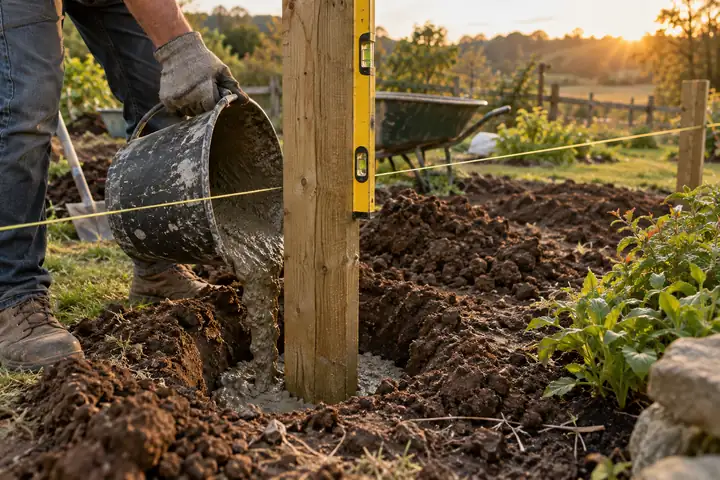
- Hoops: 9-gauge galvanized wire, 1/2 in (12–13 mm) PVC conduit or flexible fiberglass rods, spaced every 1.2–1.5 m (4–5 ft).
- Height: 45–60 cm (18–24 in) for greens and brassicas; taller for peppers and tomatoes.
- Width: allow the cover to drape to the ground on both sides plus 20–30 cm (8–12 in) to bury or weigh down. A 1.2 m (4 ft) wide bed with 60 cm hoops typically needs cover about 2.5–3 m (8–10 ft) wide.
- Edges: bury them, or use sandbags, bricks or long pins. Gaps at the edges let pests in and heat out.
- Ends: gather and tie each end around a stake.
Cover for raised bed frames
A cover for raised bed gardens can attach directly to the bed: screw pipe clamps or short conduit sleeves inside the frame and drop hoops in. Many gardeners build hinged raised garden covers from timber and insect mesh, which open like a lid. Because raised beds dry quickly, insect mesh covers that let rain through are often easier to manage than solid covers.
Floating row covers
Light nonwoven fabric can lie directly on the crop as a floating row cover, as long as you leave slack for growth. Do not float insect netting or shade cloth on plants; they are heavier and better supported on hoops.
Insect netting vs row cover fabric: which should you choose?
Many gardeners buy nonwoven row cover fabric to stop insects. It works, but insect netting is usually better for pest control:
| Factor | Nonwoven row cover | Insect netting |
|---|---|---|
| Typical life | 1–2 seasons | Several seasons |
| Heat build-up in summer | Can overheat crops | Minimal |
| Watering through | Yes, partly | Yes, easily |
| Tear resistance | Low; tears on hoops and pins | High; knitted HDPE |
| Frost protection | Some | Very little |
The practical answer: use frost cloth for cold periods and insect netting for pest periods. An insect net canopy on hoops can stay in place from transplanting to harvest for brassicas, carrots, radishes and leeks.
Vegetable garden covers through the year
| Season | Typical cover | Purpose |
|---|---|---|
| Early spring | Frost cloth or vented film tunnel | Warm soil, protect from frost |
| Late spring | Insect netting | Exclude flea beetles, cabbage moths, carrot fly |
| Summer | Insect netting or 30–50% shade cloth | Pests and heat |
| Storm season | Hail net on a taller frame | Hail, birds |
| Autumn | Frost cloth over existing hoops | Extend harvest |
Using the same hoops all year makes vegetable garden covers much easier to manage: only the fabric changes.
What EGP supplies for garden bed covers
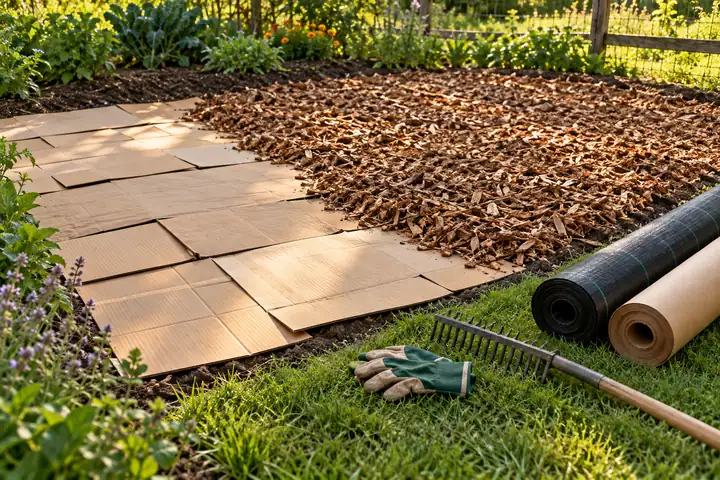
EGP manufactures agricultural nets in Yantai, China, for distributors, garden centers and farms. We make 100% Virgin Plastic Anti-Hail Mesh Net for Greenhouse for insect and fine-mesh covers, Agricultural Sun Shade PP Polypropylene Black UV for summer shade, and HDPE White Large Hail protection Net Anti Hail for apple for hail. We do not make nonwoven frost cloth or plastic film, so if you need those, source them from a nonwoven or film specialist. For weed suppression under beds, see weed barrier for raised beds. Browse the Hail, Shade & Insect Nets range or request a quote with widths and roll lengths.
Frequently asked questions
What is the difference between frost cloth and row cover?
Frost cloth is a type of row cover. "Row cover" means any permeable material laid over a crop row, including light nonwoven fabric, heavier frost blankets and insect netting. Frost cloth specifically refers to nonwoven fabric used for cold protection.
How many degrees does frost cloth protect plants?
Typical figures are about 2–4 °F (1–2 °C) for light frost cloth, 4–6 °F for medium and 6–8 °F for heavy blankets, on calm, clear nights with edges sealed. Wind and gaps reduce the protection. Two layers, or a plastic sheet over the cloth, add more.
Can insect netting protect plants from frost?
Only slightly. Insect netting may add 0–2 °F of protection by reducing wind and radiant heat loss, which helps in a very light frost. For anything colder, use frost cloth or a plastic tunnel.
Should row covers touch the plants?
Light nonwoven fabric can rest on plants as a floating cover. Insect netting, shade cloth and heavy frost blankets should be supported on hoops, because they are heavier and can damage leaves or let insects lay eggs through the mesh where it touches.
When should I remove row covers?
Remove or open covers when crops that need pollination (squash, cucumbers, melons, strawberries) start flowering, unless you hand-pollinate. Remove heavy frost cloth and plastic film on warm, sunny days to avoid overheating. Insect netting can usually stay on until harvest for crops that do not need pollinators.