Key takeaways
- Produce packaging must let fresh fruit and vegetables breathe, protect them in transit and carry branding; the main formats are mesh bags, boxes, vented film bags and bulk bins.
- Mesh bags suit firm, robust crops (onions, potatoes, citrus, garlic, cabbages) and are the lightest and cheapest per kilogram.
- Boxes suit soft or stackable produce (berries, tomatoes, stone fruit) that needs crush protection.
- Typical leno sacks run 10–50 kg; retail nets 0.5–5 kg (1–10 lb).
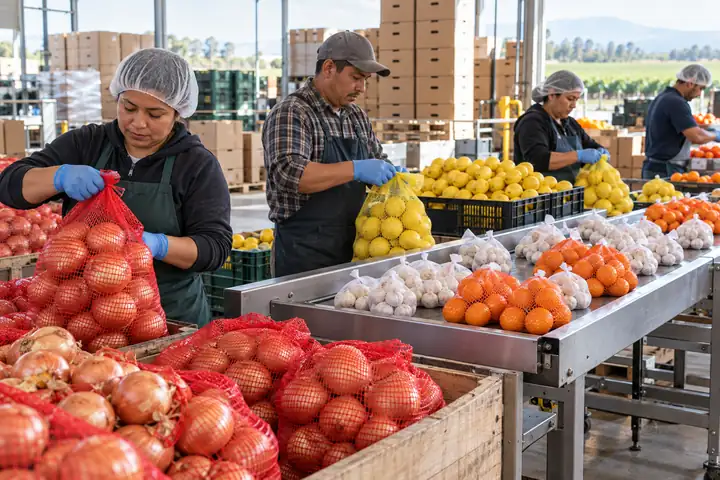
Produce packaging is any bag, box or container used to move fresh fruit and vegetables from the field to the shelf while letting them breathe, protecting them from damage and identifying the product. For firm, robust crops such as onions, potatoes, citrus, garlic and cabbages, woven leno mesh bags are usually the lightest and most economical choice; for soft or easily bruised produce such as berries, tomatoes and stone fruit, boxes or clamshells are better. Most packhouses use both.
This guide is for packers, growers, importers and distributors choosing fresh produce packaging. For mesh bag construction (leno vs raschel), see the mesh bags guide; for sack sizing for onions and potatoes, see leno mesh bags for onions and potatoes.
What packaging is used for fresh produce?
| Format | Typical capacity | Ventilation | Crush protection | Branding | Best for |
|---|---|---|---|---|---|
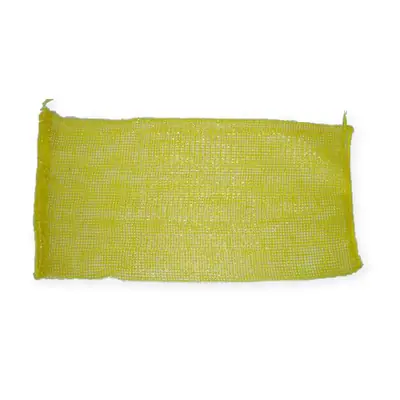
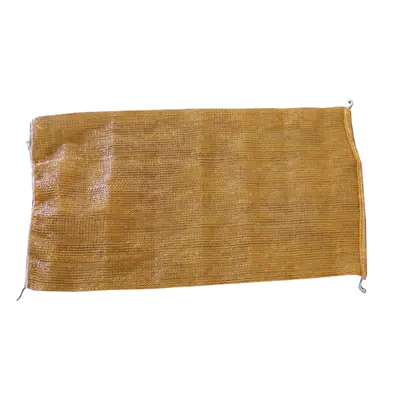
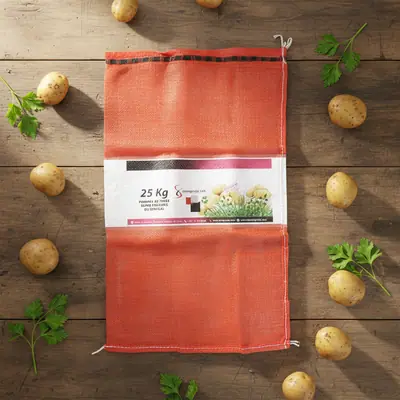
| Woven leno mesh sack | 10–50 kg (22–110 lb) | Excellent | Low | Label strip or printed tag | Onions, potatoes, cabbages, carrots, citrus, coconuts |
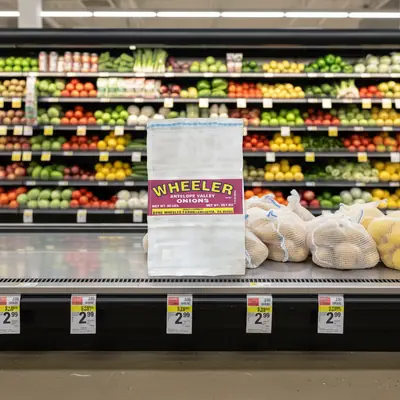
| Small mesh bags / net bags | 0.5–5 kg (1–10 lb) | Excellent | Low | Header card, label band | Retail onions, citrus, garlic, small potatoes |
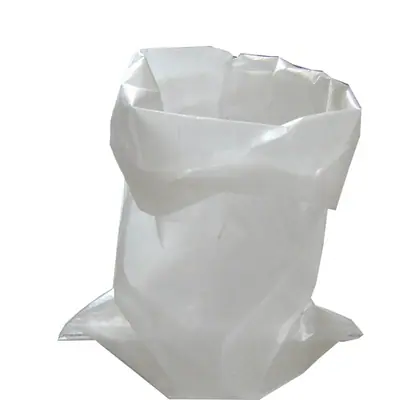
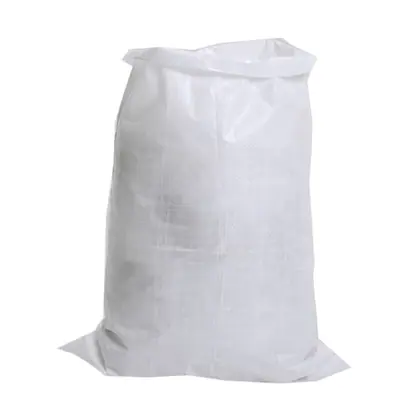
| Woven PP sack (solid or micro-perforated) | 25–50 kg | Low to moderate | Low | Full print | Dried beans, grain, roots stored dark |
| Vented / perforated film bag | 0.5–10 kg | Moderate | Low | Full print | Salad, carrots, retail potatoes, apples |
| Corrugated produce box | 5–20 kg | Moderate (vent holes) | High | Full print | Tomatoes, stone fruit, berries (in punnets), peppers |
| Reusable plastic crate | 10–25 kg | Good | High | Labels | Closed-loop retail supply chains |
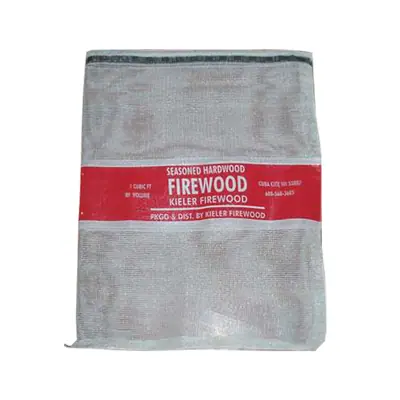
| Bulk bin or ventilated bulk bag | 300–1,000 kg | Good | Moderate | Labels | Potatoes and onions to processors, firewood |
Choice depends on four factors: how firm the produce is, how long it travels, how much it needs to breathe, and how it will be sold.
Mesh bags vs produce boxes: which should you use?
The produce boxes vs mesh bags decision is mostly about the produce itself.
Choose mesh bags when:
- The crop is firm and self-supporting: onions, potatoes, sweet potatoes, citrus, cabbages, garlic, carrots, corn cobs.
- The produce needs strong airflow to avoid condensation and rot, especially in storage or long sea freight.
- Cost and freight matter. A 25 kg leno bag typically weighs around 30–45 g, while a 20 kg corrugated box can weigh 0.8–1.5 kg.
- Empty packaging must be compact. Thousands of folded bags fit in one bale.
Choose boxes when:
- The produce bruises or crushes easily: tomatoes, peaches, berries, avocados, grapes, mushrooms.
- Pallets will be stacked high and the pack must carry the load rather than the produce.
- The retailer expects a display-ready carton.
Many packhouses use mesh for bulk and wholesale lines and boxes for premium retail, or mesh bags packed inside a master carton.
What size mesh bag for fruit and vegetables?
| Produce | Common pack sizes | Typical bag size (W × L) | Common colors |
|---|---|---|---|
| Onions | 5, 10, 20, 25 kg; 50 lb | 45 × 75 cm to 55 × 85 cm for 20–25 kg | Red, orange, purple |
| Potatoes | 10, 20, 25 kg; 50 lb | 50 × 80 cm for 25 kg | Yellow, red, white |
| Citrus | 1, 2, 3, 15, 20 kg | 30 × 45 cm for 2–3 kg; 45 × 75 cm for 15–20 kg | Orange, red, yellow |
| Garlic | 0.25–1 kg retail; 5–10 kg | 20 × 30 cm retail; 40 × 60 cm for 10 kg | White, purple, red |
| Cabbage | 20–30 kg | 55 × 85 cm | Green, red |
| Carrots | 10–25 kg | 40 × 60 to 50 × 80 cm | Orange, red |
| Coconuts, corn cobs | 20–50 kg | 55 × 90 to 65 × 100 cm | Varies |
Sizes are typical starting points; bag size depends on the produce's bulk density, so a 25 kg bag of cabbages is larger than a 25 kg bag of potatoes. Always test-fill samples before ordering a full container.
Small mesh bags and small net bags
Small mesh bags of 0.5–5 kg (1–10 lb) are sold at retail. Packers use three main types:
- Small leno bags with a drawstring or sewn top.
- Knitted raschel net bags, soft and stretchy, often with a label band.
- Extruded tubular net cut and clipped on an automatic clipping machine; common for 1–3 lb garlic, lemons and limes.
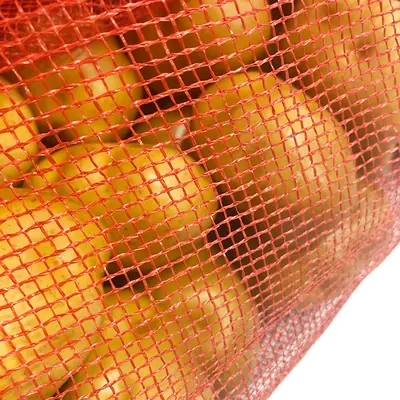
A fruit net bag for citrus is usually red or orange to make the fruit look brighter. Small net bags for garlic and shallots are typically white or purple. EGP's production focuses on woven leno bags; we can make small leno formats in custom sizes subject to MOQ, while very small clipped tubular nets are a different product.
Bulk mesh bags and mesh sacks
Bulk mesh bags and mesh sacks of 20–50 kg are the backbone of onion and potato trade. Key specs to state are size, weight per bag (g), color, closure (drawstring, open top for sewing), label (woven-in strip or printed tag), and UV stabilization if bags will sit outdoors. A net bag for firewood follows the same rules; see the firewood bags guide.
Are mesh bags good for garlic storage?
Yes. Mesh bags for garlic storage work because garlic needs dry, well-ventilated conditions, typically around 60–65% relative humidity, and the open weave stops moisture building up between bulbs. Cure garlic fully before bagging, fill bags loosely, and hang or stack them where air can move. For long-term onion and garlic storage, see mesh bags to store onions and garlic.
What about plastic produce bags on a roll?
Plastic produce bags on a roll, the thin HDPE film bags shoppers tear off in supermarkets, are a store supply rather than a packing format. A typical produce bags roll holds a few hundred bags around 30 × 45 cm (12 × 18 in) or 30 × 50 cm (12 × 20 in), made from film roughly 10–15 microns thick. EGP does not manufacture film roll bags; our range is woven and mesh packaging for packers and distributors.
What is the most sustainable produce packaging?
Sustainable produce packaging is about using less material, reusing it, and making it recyclable. Practical points:
- Material weight: a leno mesh bag uses very little plastic per kilogram of produce, often less than 2 g per kg.
- Mono-material: an all-PP bag, including the label strip and drawstring, is easier to recycle where PP collection exists than a mixed-material pack. See is polypropylene recyclable?.
- Reuse: heavy duty mesh sacks are often reused on farms for harvest and storage.
- Food waste: packaging that keeps produce ventilated and undamaged prevents spoilage, which usually has a larger environmental footprint than the packaging itself.
Paper and cardboard are widely recycled but heavier, and they lose strength when wet. Compostable nets exist but cost more and suit short supply chains.
Choosing produce packaging supplies: a checklist
- Produce and pack weight, including target fill tolerance.
- Market: retail, wholesale, export or processor.
- Storage and transport: cold store, ambient, sea freight, outdoor.
- Ventilation needs: open mesh, micro-perforated or solid.
- Branding: label strip, printed tag, header card or full print.
- Filling method: manual, semi-automatic or automatic weigher and closer.
- Quantities and delivery schedule across the season.
Buying mesh bags wholesale from EGP
EGP manufactures leno mesh bags in Yantai, China, for packers, importers and distributors buying mesh bags wholesale. The range includes 20kg 25kg 30kg 50kg Red/Custom Color Mesh Woven, Durable 25kg Breathable PP Plastic Mesh Bag for Fruit and 20-50kg Yellow Woven PP Leno Mesh Bags for Agriculture, plus Ventilated Moisture Proof PP Woven Bag where produce needs printing and some airflow. Browse the Mesh & Leno Bags range and request a quote with bag sizes, colors and quantities; we usually reply within 8 hours.
Frequently asked questions
What is the best packaging for fresh vegetables?
It depends on the vegetable. Firm crops such as onions, potatoes, cabbages and carrots pack best in mesh bags, which are light and well ventilated. Soft produce such as tomatoes, peppers and mushrooms needs boxes or trays for crush protection, and leafy greens often go into vented film bags or clamshells.
Why are onions and citrus sold in mesh bags?
Mesh lets air circulate, which reduces condensation and rot, and it lets buyers see the produce. Colored mesh also enhances appearance: red mesh makes onions and oranges look brighter. Mesh is also light and inexpensive compared with boxes.
What size are small mesh bags for produce?
Retail mesh bags typically hold 0.5–5 kg (1–10 lb). Common flat sizes are around 20 × 30 cm (8 × 12 in) for garlic and limes and 30 × 45 cm (12 × 18 in) for 2–3 kg of citrus or onions. Test-fill samples, because bulk density varies by crop.
Are mesh produce bags recyclable?
Polypropylene mesh bags are technically recyclable where PP collection exists, and mono-material bags (bag, label and drawstring all PP) are easiest to process. Many farms also reuse heavy duty mesh sacks for harvest and storage before disposal.
What is the difference between a mesh sack and a woven sack?
A mesh sack has open spaces between the tapes so air passes freely, which suits fresh produce and firewood. A woven sack has a tight, closed weave, often laminated or lined, which suits grain, flour, feed and other dry goods that must be kept clean and dry.