Key takeaways
- A mesh bag is an open-structure bag that lets air and moisture through: used for produce, firewood, shellfish, toys and laundry.
- Leno bags are woven PP tapes — stiff, strong, economical for 10–50 kg. Raschel bags are knitted PE — stretchy, soft, common for 1–25 kg retail and firewood.
- Small mesh bags (1–5 kg) sell at retail; large mesh bags (20–50 kg and up) move bulk produce.
- Vented and perforated film bags are the alternative when you need print coverage and some airflow.
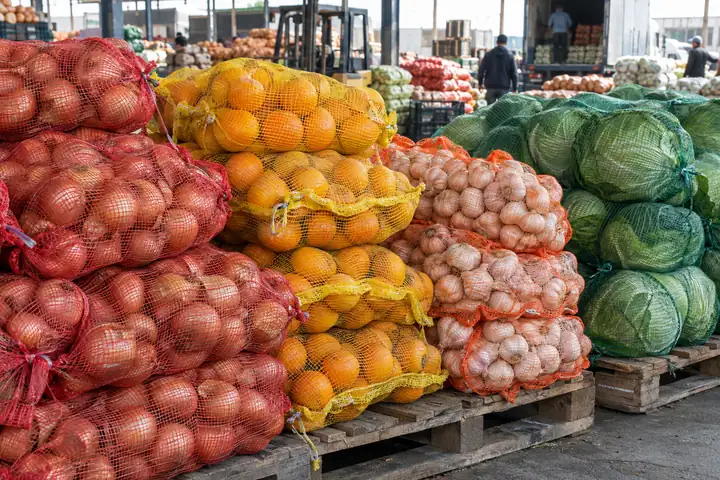
A mesh bag is a bag made from an open net structure, so air, light and water pass straight through. In agriculture and trade, almost all plastic mesh bags are made from polypropylene or polyethylene in one of two ways: woven leno (stiff, strong and economical for 10–50 kg produce sacks) or knitted raschel (stretchy and soft, common for retail packs and firewood). Size, color, mesh opening and closure are then chosen to match the product.
This is our overview of mesh bag types and sizes. For detailed sizing of onion and potato sacks, see leno mesh bags for onions and potatoes; for specific uses, see the linked guides throughout.
Types of mesh bags
| Type | How it is made | Feel | Typical capacity | Main uses |
|---|---|---|---|---|
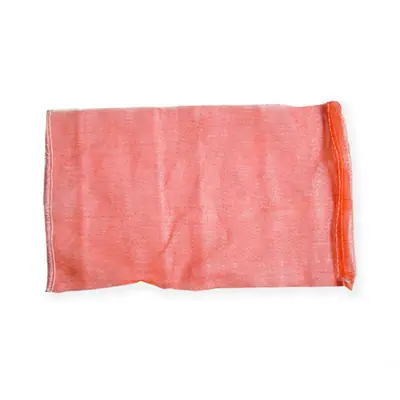
| Leno woven PP mesh | Flat PP tapes woven on circular or flat looms, warp tapes twisted around weft | Stiff, flat, dimensionally stable | 5–50 kg | Onions, potatoes, cabbages, citrus, corn cobs, firewood |
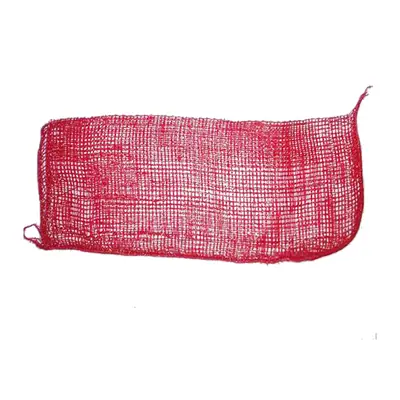
| Raschel knitted mesh | PE or PP monofilament/tape warp-knitted on raschel machines | Soft, stretchy, conforms to the load | 1–25 kg, plus large firewood sacks | Retail citrus, shellfish, firewood, nuts, toys |
| Extruded tubular netting | Plastic extruded directly into a net tube, clipped at both ends | Rigid diamond mesh | 0.5–3 kg | Retail garlic, lemons, small potatoes, toys |
| Perforated / vented film bags | PE or PP film with punched holes or slots | Smooth, fully printable | 0.5–10 kg | Supermarket produce, salad, bread |
| Reusable mesh produce bags | Knitted polyester or cotton net, sewn with drawstring | Soft textile | 1–3 kg | Shoppers' reusable grocery bags |
The first three are commercial packaging; the last is a consumer product. Searches for mesh produce bags often mean reusable shopping bags, which are a different, washable textile item. For commercial packers, "mesh produce bags" means leno, raschel or extruded net bags filled on a packing line.
Raschel vs leno: which mesh bag should you choose?
The raschel vs leno question comes up constantly, and the short answer is: leno for strength per gram in larger sacks, raschel for stretch and retail appeal.
| Factor | Leno (woven) | Raschel (knitted) |
|---|---|---|
| Structure | Woven; warp pairs twist around weft so it cannot slip | Knitted loops; continuous chains |
| Stretch | Low — holds shape and printed label position | High — molds around irregular loads |
| Strength-to-weight | Very high for bulk sacks | Good; heavier per bag for the same load |
| Feel and look | Flat tapes, more industrial | Softer, rounder, "premium" retail look |
| Labels | Woven label strip or sewn tag | Knitted-in label band or header card |
| Cost per bag (same capacity) | Usually lower | Usually higher |
| Typical use | 10–50 kg onions, potatoes, cabbages | 1–5 kg citrus, firewood, shellfish |
Leno bags dominate wholesale onion and potato trade, especially for export; a polypropylene woven mesh bag of 25 kg typically weighs only around 30–45 g. Raschel is common for retail citrus nets, firewood and shellfish because it stretches around logs and shells without tearing. EGP manufactures woven leno mesh bags; our Mesh & Leno Bags range covers 5–50 kg leno formats.
Mesh bag sizes: small to large
Mesh bag sizes are given as width × length of the flat bag. The table gives common starting points:
| Category | Size (W × L) | Size (in) | Typical fill | Examples |
|---|---|---|---|---|
| Small mesh bags | 20 × 30 cm | 8 × 12 in | 0.5–1 kg | Garlic, shallots, limes |
| 30 × 45 cm | 12 × 18 in | 2–5 kg | Citrus, retail onions | |
| Medium | 40 × 60 cm | 16 × 24 in | 10 kg | Onions, carrots, kindling |
| 45 × 75 cm | 18 × 30 in | 15–20 kg | Onions, sweet potatoes | |
| Large mesh bags | 50 × 80 cm | 20 × 32 in | 25 kg / 50 lb | Potatoes, onions |
| 55 × 85 cm | 22 × 34 in | 30 kg | Cabbages, potatoes | |
| 60 × 90 to 65 × 100 cm | 24 × 36 to 26 × 39 in | 50 kg | Bulk onions, potatoes, corn cobs | |
| Jumbo | Bulk bag with mesh panels | e.g., 90 × 90 × 120 cm | 0.5–1 m³ | Firewood, wood chips, bulk vegetables |
Sizes for specific crops are covered in leno mesh bags for onions and potatoes, and firewood formats in our firewood bags guide.
Bag weight and mesh opening
Two other numbers define a mesh sack:
- Bag weight (grams per bag) — the clearest indicator of strength. Typical ranges: 15–25 g for 10 kg bags, 30–45 g for 25 kg, 50–70 g for 50 kg. Heavier bags tolerate rougher handling and longer transport.
- Mesh opening — the gap between tapes, often 3–8 mm. Smaller openings hold small produce (garlic cloves, small potatoes) and are stronger; larger openings ventilate better and use less material.
Colors: red, yellow, green, white and more
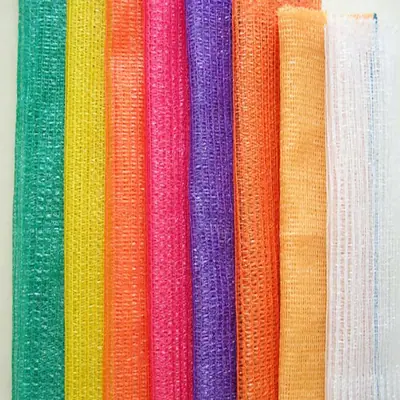
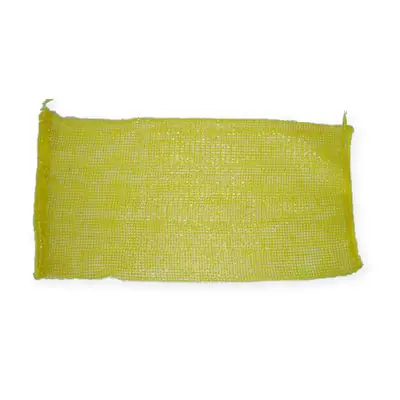
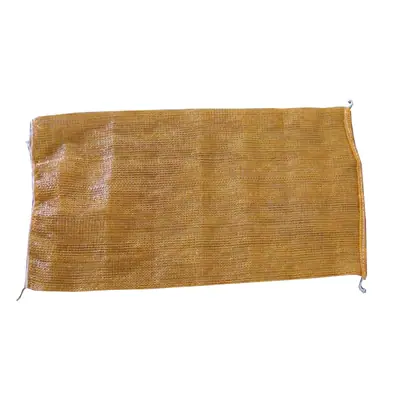
Color on a mesh bag is marketing and logistics at the same time. Red mesh makes onions look rich, orange flatters citrus, yellow and brown suit potatoes, and green suits cabbages and limes. A white mesh bag is a neutral choice used for garlic, shellfish, white onions, laundry and industrial parts, and it shows dirt — useful when cleanliness must be visible. Many packers color-code grade or origin with bag color. Our 20kg 25kg 30kg 50kg Red/Custom Color Mesh Woven is available in custom colors.
Vented produce bags vs perforated produce bags
When a packer needs full printed graphics plus some airflow, film bags replace mesh:
- Perforated produce bags are printed PE or PP film with many small punched or laser holes. They allow gas exchange while retaining humidity, which suits leafy and moisture-loving produce. Micro-perforated films can be tuned to a crop's respiration rate.
- Vented produce bags use larger slots, die-cut vents or a mesh window panel. They release more moisture and heat, suiting potatoes, onions and citrus, and give strong branding area.
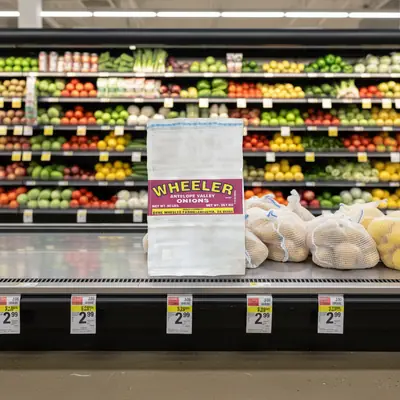
- Combination bags have a printed film or paper header and a mesh body — a popular retail format for onions, citrus and potatoes.
For woven sacks with venting rather than film, see our Ventilated Moisture Proof PP Woven Bag.
Mesh sack closures and labelling
- Drawstring: a cord threaded through the hem; fast to close in the field and reusable at market.
- Hemmed open top: tied, clipped or sewn on packing lines.
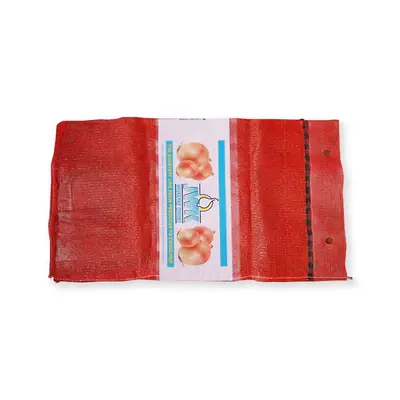
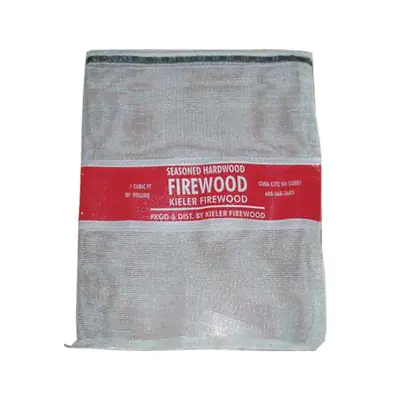
- Label strip: a solid woven band in the mesh, printed with brand, weight and origin.
- Sewn tag or header: separately printed label attached on closing.
The circular-woven Heavy Duty PP Mesh Bag for Onion Potato Vegetable has no side seam, which removes a common failure point on heavy sacks.
Polypropylene mesh bags vs polyethylene
Most leno bags are polypropylene mesh bags: PP is stiffer, lighter and slightly stronger per gram. Raschel and some leno bags use PE or PP/PE blends, which are softer and better in freezing conditions. Both are recyclable where PP or PE collection exists; our Recyclable Heavy Duty PP/PE Mesh Bag for Onion Potato uses a PP/PE blend. UV stabiliser is important for any mesh bag used in the field or stored outdoors. For a deeper comparison, see polypropylene vs polyethylene bags.
Buying mesh bags for sale: a specification checklist
To compare quotes on mesh bags for sale like-for-like, specify:
- Type: leno woven or raschel knitted
- Size: width × length (flat) in cm or inches
- Bag weight in grams, or tape denier and mesh count
- Color and any label strip color
- Closure: drawstring, hem, or open
- Label printing: colors and content
- UV stabilisation if bags will see sun
- Packing: bags per bale, bales per container
- Quantity per size and color, and annual volume
EGP is a leno mesh bag manufacturer in Yantai, Shandong, with 24 years as an Alibaba.com supplier and responses typically within 8 hours. Explore Mesh & Leno Bags or send your specification via our contact page. If you ship produce in a particular market, our West Africa leno bag project shows a typical label-strip setup.
Frequently asked questions
What is the difference between leno and raschel mesh bags?
Leno bags are woven from flat polypropylene tapes with twisted warp pairs, which makes them stiff, strong and economical for 10–50 kg produce. Raschel bags are knitted, usually from polyethylene, and stretch to fit irregular loads like citrus, shellfish and firewood.
What are plastic mesh bags made of?
Most plastic mesh bags are made of polypropylene, polyethylene or a blend of the two. Leno bags are usually polypropylene tapes, while raschel and extruded netting bags are often polyethylene.
What size mesh bag do I need for 25 kg?
A mesh bag of about 50 × 80 cm (20 × 32 in) is the usual starting point for 25 kg of potatoes or onions. Lighter or bulkier produce such as cabbages may need 55 × 85 cm.
Are mesh produce bags for supermarkets reusable?
Commercial leno and raschel produce bags are designed mainly as one-way packaging, although heavier bags are often reused on farms. Reusable mesh produce bags sold to shoppers are a separate product made from washable polyester or cotton net.
Are white mesh bags food safe?
White mesh bags made from virgin polypropylene or polyethylene are widely used for fresh produce and shellfish. Ask your supplier for virgin resin and food-contact compliance for your market if the bag directly touches food.
Are mesh bags good as reusable produce bags?
Lightweight polyester or cotton mesh bags are sold to shoppers as reusable produce bags. The PP leno and raschel bags described here are packing bags for growers and packhouses — strong enough for 5–50 kg loads and often reused on farms.