Key takeaways
- An intermediate bulk container (IBC) is any reusable or single-use container for roughly 0.5–3 m³ of product, between drums or sacks and tankers.
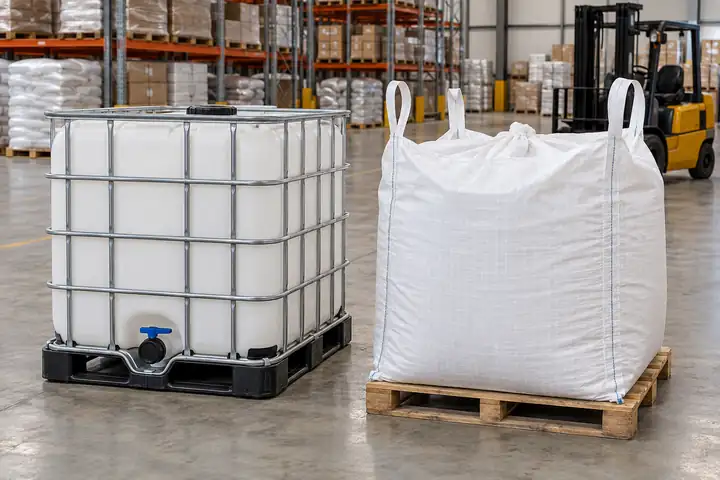
- Rigid IBC totes (typically 275 or 330 gal on a 48 × 40 in / 1,200 × 1,000 mm footprint) are mainly for liquids.
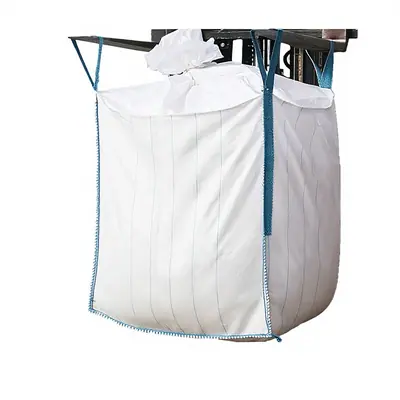
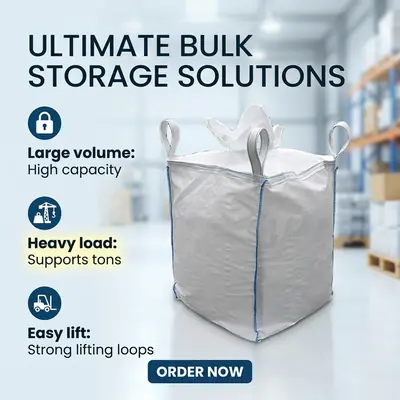
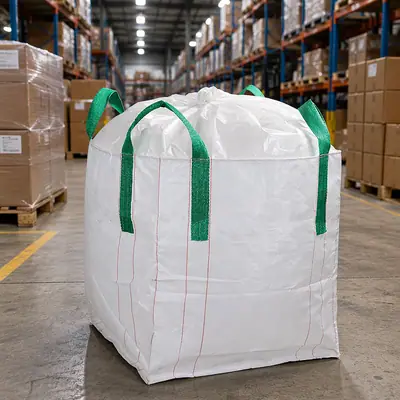
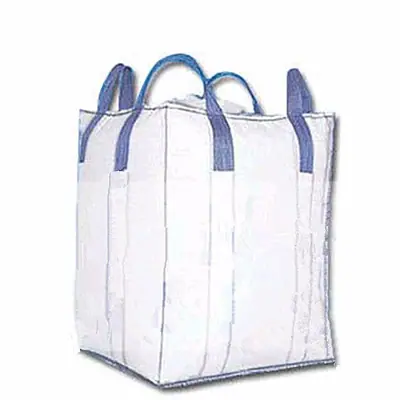
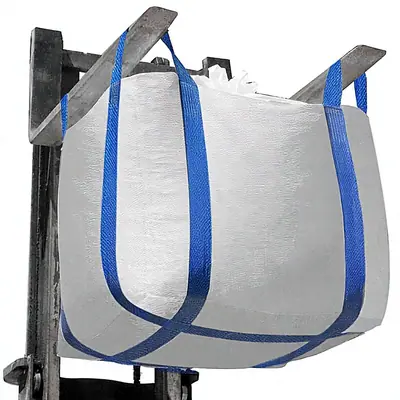
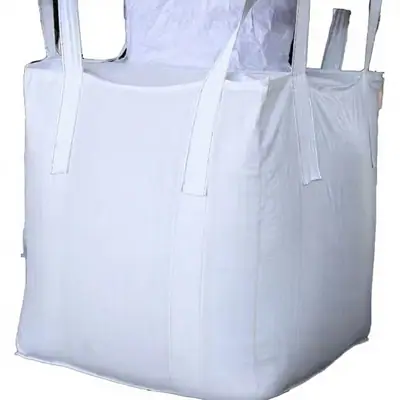
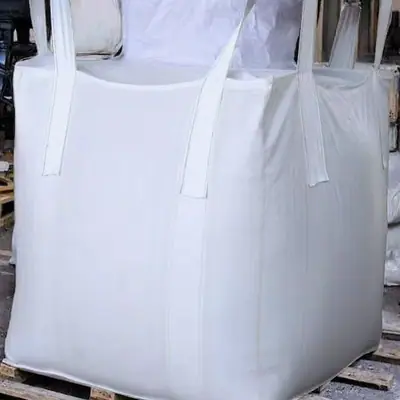
- FIBCs (flexible intermediate bulk containers, or bulk bags) are woven polypropylene sacks for 500–2,000 kg of dry solids that fold flat when empty.
- Choose by product state, trips per container, return logistics and storage space; UN codes 31HA1 (composite IBC) and 13H1–13H5 (woven FIBC) apply to dangerous goods.
An intermediate bulk container (IBC) is a large, palletized container for roughly 500 to 3,000 liters (about 130–800 gal) of product, sized between drums or sacks and tanker loads. There are two families: rigid IBCs, usually a plastic bottle in a steel cage, used mainly for liquids, and flexible intermediate bulk containers (FIBCs), woven polypropylene bulk bags used for dry powders and granules. Choose a rigid IBC tote for liquids and many return trips, and an FIBC for dry solids, one-way export and minimal empty storage.
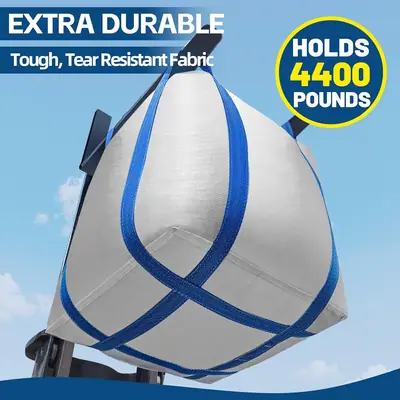
Definition: An FIBC (flexible intermediate bulk container) is a collapsible woven polypropylene container with lifting loops, designed to carry typically 500–2,000 kg (1,100–4,400 lb) of dry, flowable product and tested for strength under standards such as ISO 21898.
What is an intermediate bulk container?
"Intermediate" means in between: bigger than a 25 kg sack or a 55 gal drum, smaller than a silo truck or ISO tank. The term is used in transport regulations (the UN Recommendations on the Transport of Dangerous Goods) and in everyday trade, where people say "IBC tote," "tote tank" or "ibc bulk container" for the caged plastic tank, and "bulk bag," "super sack" or "jumbo bag" for the FIBC.
Both are designed to be moved by forklift or crane, both hold roughly a tonne, and both replace dozens of small packages. What separates them is what goes inside and what happens to the container afterward.
What is an FIBC? Full form and how it works
The FIBC full form is flexible intermediate bulk container. An FIBC container is a sewn bag of woven polypropylene fabric with four loops (or one or two lifting loops), a filling top and a flat or spouted bottom. Empty, a 1-tonne bag weighs only a few kilograms and folds flat. Full, it holds its load because the fabric and loops are engineered to a safety factor: 5:1 for single trip, 6:1 for reusable bags (see our safety factor guide).
FIBC packaging is used for sand, cement, minerals, fertilizer, grain, feed, plastics, chemicals and food ingredients. Anti-static versions (Types B, C and D) are covered in our FIBC types guide.
Rigid IBC vs FIBC: quick comparison
| Feature | Rigid IBC tote (composite) | FIBC bulk bag |
|---|---|---|
| Main contents | Liquids, pastes; some granular solids | Dry powders, granules, flakes, aggregates |
| Typical capacity | 275 gal (about 1,040 L) or 330 gal (about 1,250 L) | 0.5–2 m³ (about 18–70 ft³), 500–2,000 kg SWL |
| Typical footprint | 48 × 40 in (about 1,220 × 1,020 mm, close to 1,200 × 1,000 mm) | Commonly 90 × 90 cm to 100 × 100 cm (35–39 in square) |
| Typical height | about 46 in (1,170 mm) for 275 gal; about 53 in (1,350 mm) for 330 gal | Set by volume needed, often 90–200 cm (35–79 in) |
| Empty weight | roughly 130–150 lb (60–70 kg) | commonly about 2–4 kg (4–9 lb) for a 1 t bag |
| Empty storage | Same space as when full | Folds flat; dozens fit in the space of one empty tote |
| Filling | Top cap or valve | Open top, duffle or filling spout |
| Discharge | Bottom valve (often 2 in) | Discharge spout or cut bottom |
| Reuse | Many trips, with cleaning or reconditioning | Single trip (5:1) or limited reuse (6:1) |
| UN code family (dangerous goods) | e.g. 31HA1 for liquids | 13H1–13H5 for woven plastic |
All dimensions are typical; sizes vary by maker, so check the actual drawing before planning racks or trucks.
IBC container dimensions in more detail
Most rigid IBC totes in North America sit on a 48 × 40 in pallet base with forklift entry on all four sides. The 275 gal version is roughly 46 in high and the 330 gal roughly 53 in. A full 275 gal tote of water weighs about 1,040 kg (2,300 lb) plus the container; denser liquids weigh proportionally more, which is why maximum fill and stacking limits are printed on the label. In Europe, 1,000 L totes on a 1,200 × 1,000 mm base are the norm.
Liquids vs dry solids: which container fits?
Use a rigid IBC tote when: - the product is a liquid, slurry or paste (chemicals, oils, syrups, coatings, water treatment products); - you control a closed loop and the container comes back to be refilled; - you need a tap valve for controlled dispensing on site.
Use an FIBC when: - the product is a dry, flowable solid; - the shipment is one-way, especially export, where returning empties is uneconomic; - warehouse and container space for empties is tight; - the product benefits from gravity discharge through a spout into a hopper.
Liquids in flexible bulk bags are a niche: they need special form-fit liners and bag designs and are not a substitute for a tote unless the system has been engineered for it. Conversely, some rigid IBCs are built for solids, but for powders and granules the FIBC is far more common.
IBC liners vs FIBC liners
- IBC liners are usually bag-in-tote liners: a PE or multilayer film bag that sits inside a rigid IBC or a folding tote so the bottle stays clean and can be reused without washing. Aseptic liners serve food liquids.
- FIBC liners sit inside a woven bulk bag to stop fine powders sifting through the fabric and to keep out moisture. Styles include loose, tabbed, form-fit, baffle and aluminum foil barrier liners, typically in PE around 50–150 µm. Our bulk bag liners guide explains each.
In both cases the liner touches the product, so it governs food-contact and cleanliness requirements.
UN 31HA1 vs UN 13H codes
For dangerous goods, both container types must carry a UN specification mark showing they passed design tests. Generic examples:
- 31HA1 – composite IBC with a rigid plastic inner receptacle and a steel outer frame, for liquids. The leading "3" indicates liquids; codes starting 11 and 21 cover solids discharged by gravity or under pressure.
- 13H1 to 13H5 – flexible IBCs of woven plastic: 13H1 without coating or liner, 13H2 coated, 13H3 with liner, 13H4 coated and with liner, 13H5 plastic film.
Whether you need a UN-marked container, and which packing group applies, depends on the product's classification; check the regulations that apply to your mode of transport.
Which costs less per trip?
Purchase price alone is misleading. Compare cost per trip, which includes:
- the container's purchase cost divided by the number of trips it realistically makes;
- cleaning, inspection and reconditioning between trips (rigid totes);
- return freight for empties and the warehouse space they occupy;
- disposal or recycling at the end of life (see our FIBC recycling guide);
- product losses from residue left in the container.
A rigid IBC usually wins in a short, closed-loop route with liquids. An FIBC usually wins for one-way shipments of dry solids, because the bag is light, needs no return trip and stores flat. For what drives FIBC pricing, see our bulk bag price guide.
Choosing flexible intermediate bulk container bags
If an FIBC is the right fit, the specification decides how well it performs:
- Fill weight and bulk density set the safe working load and size; our how to choose an FIBC guide has the formula.
- Choose top and bottom: spouts for automated lines, open top and flat bottom for coarse materials.
- Decide on coating, liner and anti-static type.
- Choose baffles if you want a square bag that uses pallet and container space more like a tote; the FIBC Virgin PP Breathable Tubular Jumbo Bulk Baffle is an example.
Typical starting points from our range include the Industrial Grade PP FIBC Jumbo Bags 500-2000kg Durable for general industrial loads, the FIBC Bulk Bags Holds 4400 Lbs Heavy Duty 210-Gallon Woven for heavy, high-volume fills, and the Durable Polypropylene Flat Bottom Food Grade Jumbo Bags for food ingredients. Browse all FIBC Bulk Bags.
Yantai Evergreen Packaging is an FIBC manufacturer in Yantai, Shandong, with 24 years as an Alibaba.com supplier. Send us your product, fill weight and handling method through our contact page and we will propose a bag specification.
Frequently asked questions
What is the difference between an IBC and an FIBC?
An IBC is any intermediate bulk container; in everyday use it means a rigid plastic tote in a steel cage for liquids. An FIBC is a flexible intermediate bulk container, a woven polypropylene bulk bag for dry solids that folds flat when empty.
What are standard IBC tote dimensions?
The most common rigid IBC totes hold 275 gal (about 1,040 L) or 330 gal (about 1,250 L) on a 48 × 40 in base, with heights of roughly 46 in and 53 in. In Europe, 1,000 L totes on a 1,200 × 1,000 mm base are typical. Always confirm with the maker's drawing.
Can an FIBC carry liquids?
Standard FIBCs are designed for dry, flowable solids, not liquids. Specialized liquid bulk bag systems with form-fit liners exist, but they are engineered packages. For most liquids, a rigid IBC tote or drum is the right container.
What does FIBC stand for?
FIBC stands for flexible intermediate bulk container. They are also called bulk bags, super sacks, jumbo bags, ton bags or big bags, and typically carry 500–2,000 kg of product.
Are IBC totes or bulk bags better for export?
For dry solids shipped one way, bulk bags are usually better: they are light, need no return trip and pack flat before filling. For liquids, rigid totes or flexitanks are used, and the cost of returning or disposing of the empty tote should be part of the comparison.