Key takeaways
- Water (rain splash and runoff) is the number one cause of soil erosion; removing vegetation is what usually lets it happen.
- Erosion control methods work by covering soil, slowing water or trapping sediment; good plans combine all three.
- Gentle slopes: seed plus mulch or straw blankets. Steeper than 3:1: coir or synthetic erosion control matting, wattles, terraces.
- Channels, shorelines and outlets: riprap or filled bags over geotextile.
- Permanent vegetation is the end goal; most products are a temporary bridge.
The most effective erosion control methods keep soil covered and slow down water: establish vegetation, cover bare soil with mulch or erosion control matting, break long slopes with wattles or terraces, armor channels with riprap, and trap what still moves with silt fence or sediment barriers. On construction sites, the core erosion control measures are minimizing and phasing disturbance, stabilizing exposed soil quickly, controlling runoff, and installing perimeter sediment control. The right mix depends on slope steepness, soil type and how much water flows over the area.
Definition: erosion control is the set of practices that prevent soil particles from being detached and carried away by water or wind, as distinct from sediment control, which captures particles that have already moved.
This is our hub guide. For product detail see erosion control fabric, blankets and bags, for planting see erosion control plants for slopes, and for perimeter barriers see the silt fence guide.
What causes soil erosion?
Soil erosion happens when a force detaches soil particles and another force transports them. The main causes of soil erosion are:
- Water erosion: raindrop splash, sheet flow, rills and gullies, streambank and shoreline scour.
- Wind erosion: dry, loose, bare soil on open ground.
- Loss of vegetation: clearing, grading, overgrazing and wildfire remove the roots and cover that hold soil.
- Slope length and steepness: longer and steeper slopes let runoff gain speed and carrying power.
- Soil type: silts and fine sands erode easily; clays resist detachment but stay suspended once loosened.
- Concentrated flow: roof downspouts, culvert outlets and road ditches focus water on small areas.
What is the number one cause of soil erosion?
Water is the number one cause of soil erosion worldwide, mainly rainfall and the runoff it produces. Human activity that strips vegetation, such as land clearing, construction and poor farming practice, is the main reason water erosion accelerates. That is why most erosion control techniques aim to protect bare soil from rain and slow runoff.
Types of water erosion
- Splash erosion: raindrops hit bare soil and throw particles into the air.
- Sheet erosion: a thin layer of soil is removed evenly over a slope.
- Rill erosion: small channels, a few inches deep, form as runoff concentrates.
- Gully erosion: rills grow into deep channels that cannot be smoothed out by normal tillage or raking.
- Channel and bank erosion: flowing water undercuts streambanks, ditches and shorelines.
Stopping erosion early, at the splash and sheet stage, is far cheaper than repairing gullies.
Erosion control methods compared
The values below are typical ranges from manufacturer literature and agency design manuals. Check the product data and your local design standard before relying on any number.
| Method | Works by | Typical slope range | Typical service life | Best for |
|---|---|---|---|---|
| Seeding + straw mulch | Cover | Flatter than 3:1 (33%) | Until grass establishes, a season | Large gentle areas; mulch at about 1.5–2 tons/acre (3.4–4.5 t/ha) |
| Hydroseeding / hydromulch | Cover | Up to about 2:1 with tackifier | Weeks to months | Large or hard-to-reach slopes |
| Straw erosion control blanket | Cover | Up to about 2:1 | About 10–12 months | Seeded slopes, swales with low flow |
| Jute netting | Cover (open mesh) | Up to about 2:1 over mulch | About 1–2 years | Holding mulch and seed; plantable |
| Coir blanket / coir netting | Cover | 1.5:1 to 1:1 | About 3–5 years | Steep slopes, streambanks |
| Synthetic turf reinforcement mat | Cover + reinforce roots | 1:1 and channels | Permanent | High-flow channels, very steep slopes |
| Straw wattles / fiber rolls | Slow water | Any; rows across slope | About 1–2 years | Breaking up slope length |
| Silt fence | Trap sediment | Toe of slope / perimeter | A season or more | Perimeter control |
| Check dams (rock or bags) | Slow water | Ditches and swales | Temporary to permanent | Concentrated flow |
| Riprap | Armor | Channels, banks, outlets | Permanent | High velocity water |
| Filled bags / geocells | Armor + retain | Steep banks, toes | Months to years | Slips, toe protection, repairs |
| Terracing / retaining walls | Reduce slope length | Steep ground | Permanent | Gardens, roads, farmland |
How to stop erosion on a slope
The steeper and longer the slope, the more layers of protection you need.
Gentle slopes (flatter than 3:1)
- Roughen the surface across the slope (track-walking up and down leaves cleat marks that run across the slope).
- Seed with a fast-establishing nurse crop plus permanent species.
- Cover with straw mulch, crimped or tackified so it does not blow away.
Moderate slopes (3:1 to 2:1)
- Use erosion control matting: straw or straw-coconut blankets stapled at the top in a trench and pinned down the slope.
- Add erosion control wattles across the slope every 10–25 ft (3–8 m) of slope length, closer on steeper ground.
- Divert water away from the top of the slope with a berm or swale.
Steep slopes (steeper than 2:1)
- Use long-lasting coir blankets or permanent synthetic mats.
- Consider terraces, geocells, filled bags or engineered retaining walls. Slopes steeper than about 1.5:1, or any slope with signs of movement, need a geotechnical engineer, not just a blanket.
- Plant deep-rooted shrubs and groundcovers; see erosion control plants for slopes.
How to stop erosion on a sloped yard (DIY)
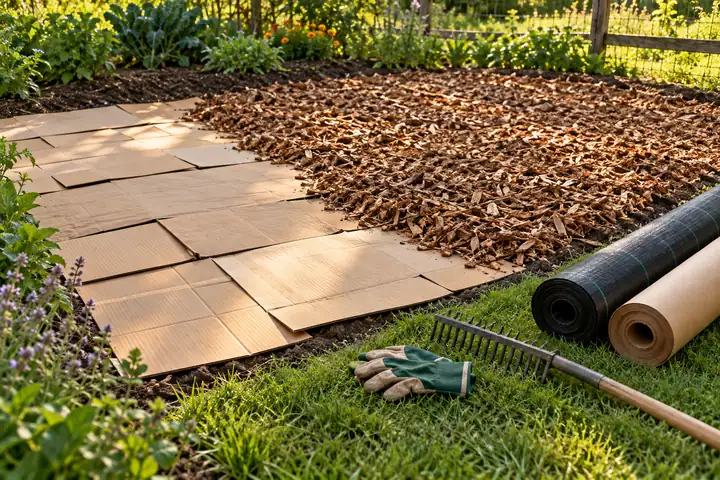
For homeowners, the simplest effective sequence is: fix the water source (downspouts, neighboring runoff), cover bare soil with mulch or a jute or coir blanket, lay wattles or logs across the slope, and plant. Avoid leaving bare soil over the rainy season.
Erosion control wattles and straw wattles
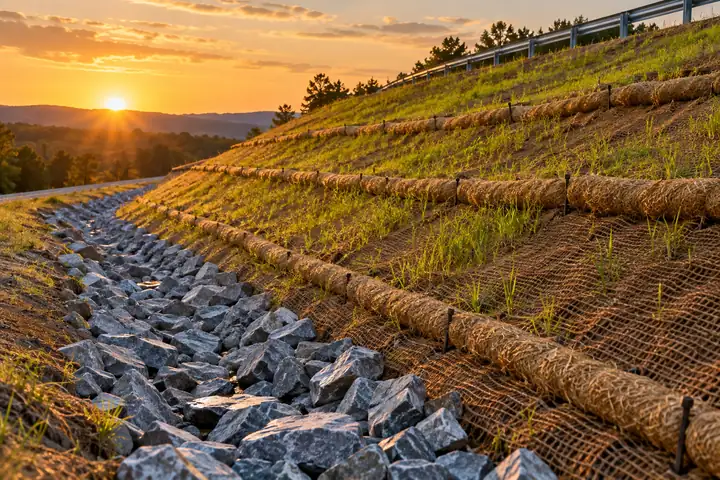
Straw wattles are netting tubes, usually 9–12 in (23–30 cm) diameter, filled with straw, coir or wood fiber. Set them in a shallow trench (2–3 in), stake about every 4 ft (1.2 m), and butt or overlap the ends tightly. They slow sheet flow, catch sediment and give seed a sheltered strip to grow in. They are not designed for concentrated flow in channels.
Jute netting, coir and erosion control matting
- Jute netting is an open-weave natural fiber mesh laid over seeded and mulched soil. It holds mulch in place and biodegrades within about one to two years.
- Coir (coconut fiber) blankets and nets are denser and last longer, typically several years, making them the usual natural choice for steep slopes and streambanks.
- Erosion control matting is the umbrella term: biodegradable blankets, coir mats, and permanent synthetic turf reinforcement mats that remain in the soil and reinforce the root zone.
On all of them, success depends on good soil contact: no tenting over clods, a top anchor trench, and staples at the spacing the manufacturer specifies (often about 1–4 per square yard depending on slope, more at seams).
Riprap and rocks for erosion control
Riprap is a layer of angular rock placed on banks, channels, shorelines and pipe outlets where water is too fast for vegetation alone. Typical design rules:
- Stone size is chosen from water velocity; a median size (D50) of roughly 6–24 in (15–60 cm) is common for small to medium channels and outlets.
- Layer thickness is usually at least 1.5–2 times D50.
- A geotextile or graded gravel filter goes underneath so water does not wash soil out between the stones.
- Angular rock interlocks; rounded river rock rolls and is a poor substitute on slopes.
Decorative "rocks for erosion control" in gardens, such as dry creek beds, work on the same principles at smaller scale. Large riprap projects in waterways usually need permits.
Bags, geotextiles and other erosion control measures
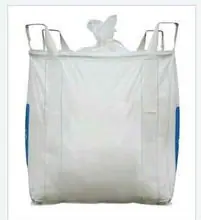
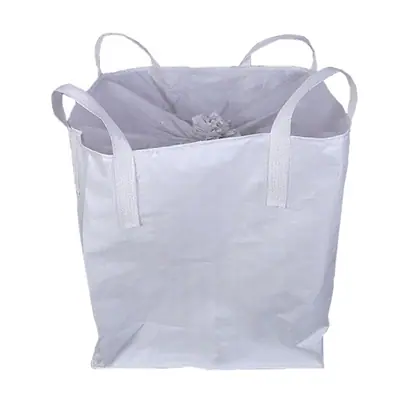
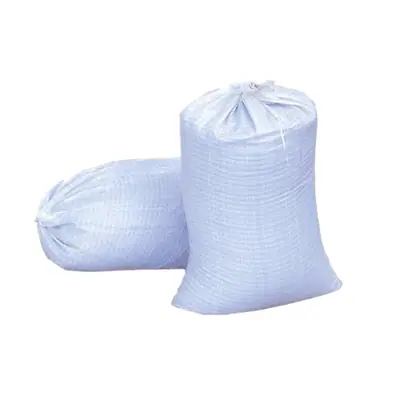
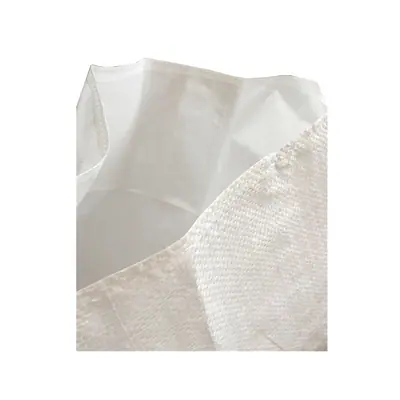
Filled woven bags are versatile for repairs, toe protection, check dams and inlet protection. UV-stabilized woven polypropylene bags such as our UV Stabilized PP Woven Bag with Top Drawstring for Sand or the Commercial PP Woven Bag for Slope Stabilization hold soil, sand or gravel and can be stacked like blocks. For larger repairs, contractors place sand- or gravel-filled bulk bags by machine, for example the Outdoor UV Stabilized FIBC Bag Weather Resistant.
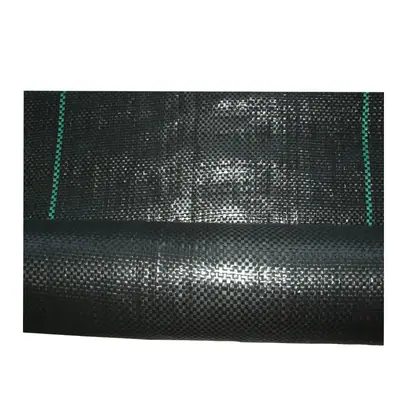
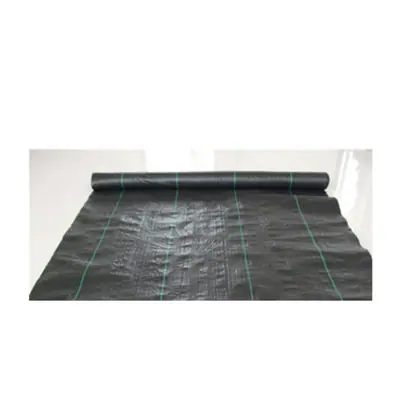
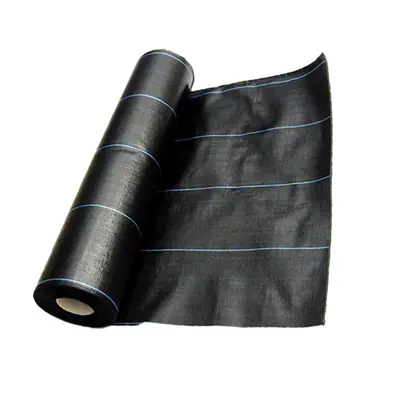
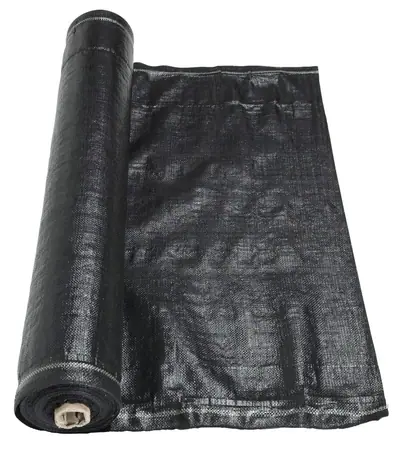
Woven geotextile, like our Industrial PP Weed Control Mat with Permeable, separates soil from stone under riprap, gravel paths and construction entrances. See the Woven Rolls & Weed Mat range and our woven vs non-woven geotextile guide.
How to prevent soil erosion on a construction site
Construction sites are among the most intense sources of sediment. Typical erosion control measures, usually laid out in an erosion control plan or SWPPP, include:
- Minimize and phase disturbance. Clear only what you need, when you need it, and keep existing vegetation buffers.
- Stabilize quickly. Many permits require stabilization to start soon after work stops on an area, often within 7–14 days; check your permit.
- Control runoff. Divert clean water around disturbed areas; slow water with check dams and wattles.
- Protect slopes with mulch, blankets or matting.
- Install perimeter sediment control: silt fence, fiber rolls, sediment basins.
- Protect inlets with filter bags, gravel bags or inlet inserts.
- Stabilized construction entrance: typically a pad of 2–3 in (50–75 mm) stone, at least 6 in (15 cm) thick and about 50 ft (15 m) long, over geotextile, to keep mud off roads.
- Inspect and maintain after storms and on the schedule in the plan.
What goes in an erosion control plan?
A typical plan shows existing and proposed contours, drainage patterns, limits of disturbance, the location and type of each control, standard details, the construction sequence, inspection schedules and the final stabilization method. Local agencies and state DOTs publish standard details and design manuals; use those rather than generic numbers.
Which erosion control techniques should you choose?
- Bare garden bed or yard: mulch and plant; jute netting on slopes.
- New lawn on a gentle slope: seed plus straw mulch or a straw blanket.
- Road cut or steep embankment: coir or synthetic matting, wattles, and engineered support if unstable.
- Ditch or swale: check dams, turf reinforcement mat, riprap where velocity is high.
- Construction site perimeter: silt fence or fiber rolls, plus inlet protection.
- Streambank or shoreline: riprap, coir logs, filled bags; permits usually needed.
EGP manufactures woven polypropylene bags, bulk bags and woven fabric in Yantai, China, for distributors, contractors and municipalities, with custom sizes and UV stabilization. Request a quote for your project.
Frequently asked questions
What are the five ways to prevent soil erosion?
Five widely used ways are keeping vegetation cover, mulching bare soil, using erosion control blankets or matting on slopes, breaking long slopes with wattles or terraces, and armoring channels with riprap. Adding silt fence or other sediment barriers captures the soil that still moves.
What is the best erosion control for a steep slope?
Steep slopes usually need long-lasting coir or synthetic erosion control matting, wattles across the slope and deep-rooted plants. Slopes steeper than about 1.5:1, or showing cracks or slumps, should be assessed by a geotechnical engineer.
Does riprap stop erosion?
Riprap protects banks, channels and outlets from fast-moving water when it is sized correctly and placed over a geotextile or gravel filter. Undersized or rounded stone, or rock placed directly on soil, can wash out or let soil escape between the stones.
How long do straw wattles last?
Straw wattles typically last about one to two years before they break down, which is usually enough time for vegetation to establish. Wattles filled with coir or wood fiber can last longer.
Is jute netting or coir better for erosion control?
Jute netting is lighter, cheaper and breaks down within about one to two years, suiting gentle to moderate slopes. Coir is denser and lasts several years, making it the better natural choice for steep slopes and streambanks.