Key takeaways
- A silt fence is a temporary sediment barrier of woven geotextile on stakes that ponds runoff so soil settles out before it leaves a site.
- Typical detail: fabric about 24–36 in (60–90 cm) high, bottom buried in a 6 × 6 in (15 × 15 cm) trench, stakes every 6–8 ft (1.8–2.4 m).
- It is usually required as perimeter control under a construction stormwater permit and SWPPP, not by a single universal rule.
- Silt fence traps sediment; it does not stop erosion on the slope above it.
- Always follow the state DOT or local standard detail named in your plans.
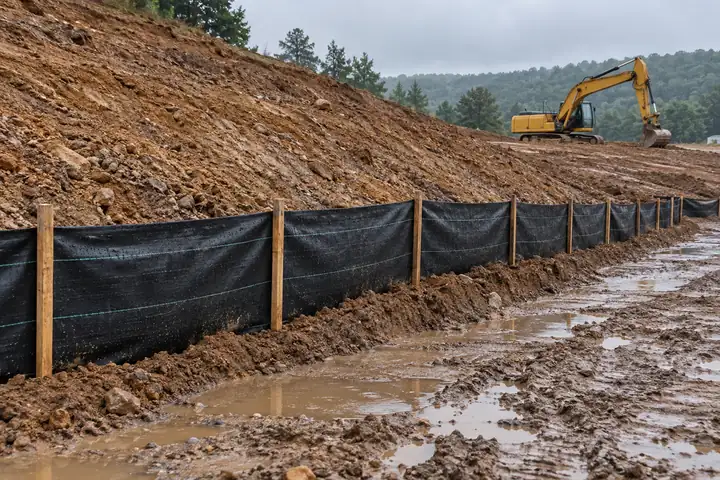
A silt fence is a temporary barrier of woven or non-woven geotextile fabric, attached to stakes and buried along its bottom edge, that slows sheet runoff from disturbed soil so sediment settles out before the water leaves a site. Its purpose is sediment control at the perimeter of construction sites, stockpiles and graded slopes. It is typically 24–36 in (60–90 cm) tall, trenched about 6 in (15 cm) deep, with stakes every 6–8 ft (1.8–2.4 m).
Definition: a silt fence is a staked, trenched fabric sediment barrier that ponds runoff long enough for suspended soil to drop out.
This guide covers what silt fence does, when it is required, how to specify silt fence fabric, and how to install it. For a wider comparison of blankets, wattles and bags see erosion control fabric, blankets and bags, and for the full menu of techniques see erosion control methods.
What is a silt fence used for?
The purpose of silt fence is to keep sediment on site. When rain falls on bare, graded soil, runoff picks up fine particles and carries them toward streets, storm drains and streams. Silt fence, also called sediment fencing, a silt barrier or a sediment barrier, does three things:
- Slows the water. The fabric is permeable but restrictive, so runoff ponds behind it.
- Lets soil settle. In the ponded water, sand and silt particles drop out against the fence.
- Filters a little. The fabric holds back some fines, but most of the work is settling, not filtering.
Typical uses on a construction site:
- Perimeter control along the downhill edge of a disturbed area.
- Around soil stockpiles.
- At the toe of graded slopes, a short distance from the bottom.
- Along the edge of wetlands or buffers that must not receive sediment.
What silt fence is not for: it is not a check dam in a ditch or channel, it should not be placed across concentrated flow, and it does not protect the slope itself from rill and gully erosion. Slopes need cover such as mulch, blankets or vegetation; silt fence catches what still gets past.
When is a silt fence required?
There is no single national rule that says "install silt fence here." In practice, it is required because a stormwater permit or local ordinance requires erosion and sediment control measures, and silt fence is the most common way to meet the perimeter-control requirement.
Typical triggers in the United States:
- Construction stormwater permits. Sites that disturb 1 acre or more (or are part of a larger common plan) generally need permit coverage and a Stormwater Pollution Prevention Plan (SWPPP), which shows where perimeter controls go.
- Local grading and building permits. Many municipalities require an erosion and sediment control plan for smaller lots too, sometimes for any lot that drains to a street.
- Utility, road and pipeline work under state DOT specifications.
Other countries have equivalent requirements under environmental or water-quality law. The SWPPP, your permit and the state DOT or municipal standard detail decide where silt fence goes, what fabric is used and how it is maintained, so check those documents before ordering.
Silt fence detail: typical dimensions at a glance
The figures below are common in state and municipal standard details. They vary, so treat them as typical and follow the detail referenced in your plans.
| Item | Typical value (imperial) | Typical value (metric) | Notes |
|---|---|---|---|
| Fabric width (roll) | 36 in (also 24, 30, 42 in) | 90 cm (60–105 cm) | Includes the buried part |
| Height above ground | 18–30 in | 45–75 cm | Many details cap at about 36 in |
| Trench | 6 in deep × 6 in wide | 15 × 15 cm | Some details use 4 × 6 in or a slicing method |
| Fabric buried in trench | 6–8 in | 15–20 cm | Toed upslope, backfilled and compacted |
| Stake spacing | 6–8 ft max | 1.8–2.4 m | Closer (e.g. 4–6 ft) for high loads; wire-backed fence sometimes allows up to 10 ft |
| Wood stakes | 2 × 2 in nominal, 36–48 in long | 50 × 50 mm, 0.9–1.2 m | Hardwood common; steel T-posts also used |
| Stake embedment | 12–18 in min | 30–45 cm | Deeper in soft soils |
| Roll length | 100 ft common | about 30 m | Longer rolls for highway work |
| Distance from slope toe | 5–10 ft | 1.5–3 m | Gives room for ponding |
| Sediment removal | at 1/3–1/2 of fence height | same | Remove before the fence overtops |
| Drainage area | about 1/4 acre per 100 ft of fence | about 0.1 ha per 30 m | Sheet flow only, not channel flow |
What is silt fence fabric made of?
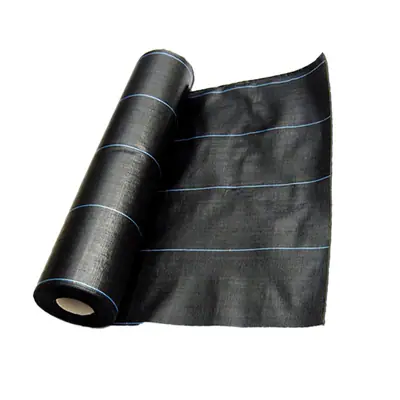
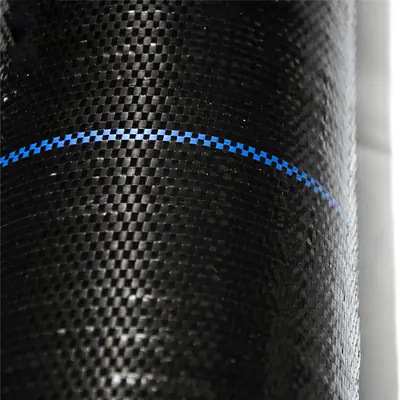
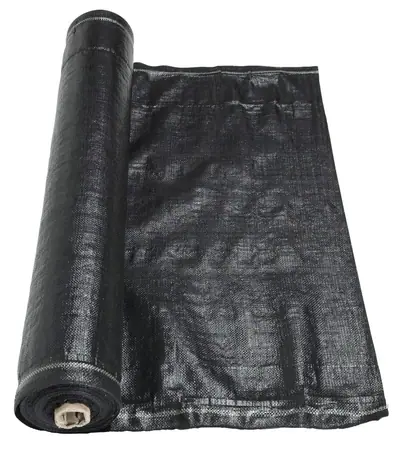
Most silt fence fabric is woven polypropylene: flat PP tapes woven into a fabric, usually black and UV-stabilized. Non-woven geotextile is also used in some regions. Woven silt fence fabric is popular because it is strong for its weight, cheap to produce, and comes on long rolls that one person can handle.
Silt fence geotextile properties to specify
Project specifications (in the US, often referencing ASTM D6461 or a state DOT material spec) typically list:
- Grab tensile strength in machine and cross directions, so the fabric does not tear under ponded water.
- Elongation, which affects how much the fence sags between stakes.
- Apparent opening size (AOS), the effective pore size, which controls how fast water passes and how much fine material is held back.
- Permittivity or flow rate, which must be low enough to pond water but not so low that the fence is overtopped.
- UV resistance, usually expressed as strength retained after a set number of hours of accelerated weathering. Fence that stays up for a whole season needs a good UV package.
Ask your supplier for test data against the exact properties your spec lists. Do not assume a generic woven landscape fabric meets a silt fence specification just because it looks similar.
Silt fence material options
- Standard woven PP silt fence: the default for perimeter control.
- Wire-backed (reinforced) silt fence: fabric supported by welded wire mesh between posts, for higher loads, longer slopes or longer service.
- Pre-assembled silt fence with stakes: fabric already stapled or pocketed onto wood stakes at fixed spacing. Faster to install, popular for residential lots.
- Silt fence rolls without stakes: cheaper per foot when stakes are bought locally, and the usual form for large sites.
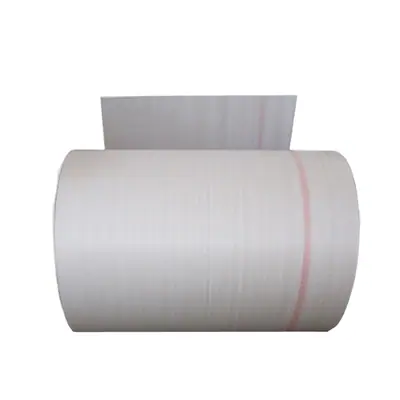
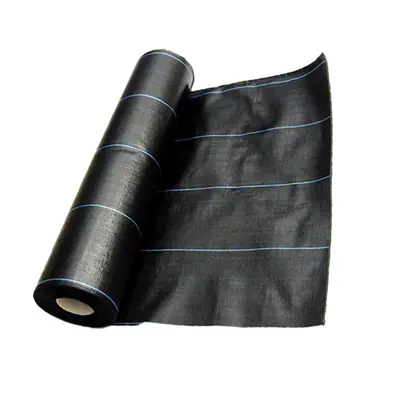
Woven PP rolls like our Industrial PP Weed Control Mat with Permeable and UV-stabilized fabric such as the UV Stabilized PP Weed Mat Offset Printing Extended are made on the same type of circular looms as silt fence fabric. We can cut rolls to silt fence widths; your engineer or inspector must confirm the fabric meets the project's specification. See the wider range in Woven Rolls & Weed Mat.
How to install silt fence step by step
- Lay out the line. Run the fence along the contour (level across the slope), at least 5–10 ft from the toe of the slope. A fence that runs downhill channels water along its face and fails.
- Dig the trench. About 6 in deep and 6 in wide on the upslope side of where the stakes will go. Some details allow a slicing machine that inserts the fabric without an open trench; it gives better compaction when done correctly.
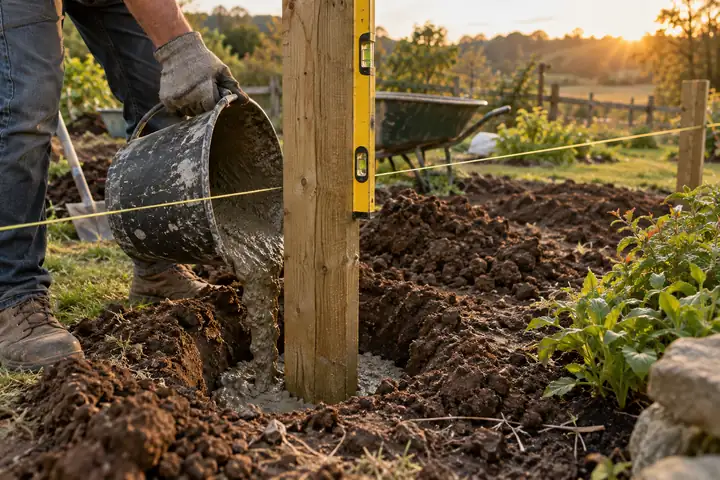
- Set the stakes. Drive stakes on the downhill side of the trench, at the spacing on your detail (6–8 ft is typical), at least 12–18 in into the ground.
- Attach the fabric. Fasten the fabric to the upslope face of the stakes with staples, ties or nails through a reinforcing strip, so ponded water pushes the fabric against the stakes, not away from them.
- Bury the toe. Lay the bottom 6–8 in of fabric in the trench, turned toward the upslope side, then backfill and compact firmly. Most silt fence failures start with water running underneath an unburied or poorly compacted toe.
- Finish the ends and joints. Turn each end uphill in a "J-hook" so water cannot run around it. Join rolls by wrapping the ends of both pieces around a shared stake, or overlapping them by at least one stake spacing, per the detail.
- Inspect and maintain. Check after each significant rain and on the schedule in your SWPPP (often weekly). Repair sags, tears and undermining, and remove sediment when it reaches one-third to one-half of the fence height.
Keep the fence in place until the area above it is permanently stabilized with established vegetation or paving, then remove it, spread the trapped sediment and seed the disturbed strip.
Silt fence vs straw wattles: which should you use?
Straw wattles (fiber rolls, sediment control logs) are tubes of straw, coir or wood fiber in netting, typically 9–12 in (23–30 cm) in diameter.
| Feature | Silt fence | Straw wattles / fiber rolls |
|---|---|---|
| Main job | Perimeter sediment barrier | Breaking up slope length, slowing sheet flow |
| Typical height | 18–30 in (45–75 cm) | 6–9 in (15–23 cm) after install |
| Installation | Trenched 6 in, staked 6–8 ft | Set in a 2–3 in (5–8 cm) trench, staked about every 4 ft (1.2 m) |
| On slopes | At the toe or perimeter | In rows across the face of the slope |
| On pavement / where you cannot trench | Poor | Good, weighted versions or sediment bags |
| Lifespan | One or more seasons with UV-stabilized fabric | Often about 1–2 years, biodegradable |
| Removal | Must be removed | Can often be left to decompose |
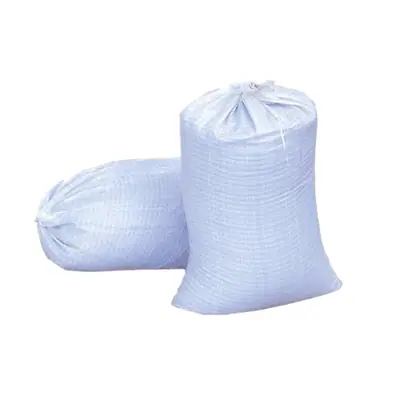
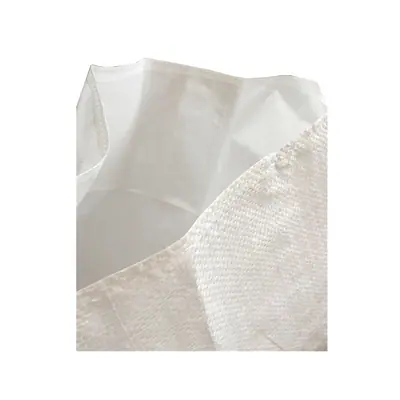
Many sites use both: wattles on the slope to slow water, silt fence at the bottom as the last line. Around curb inlets and on paved areas, filled sediment control bags or gravel bags often replace both, which is where a sturdy woven sandbag such as our UV Stabilized PP Woven Bag with Top Drawstring for Sand fits.
Why does silt fence fail?
- No trench or poor backfill, so water flows underneath.
- Placed across a ditch or channel, where flow overtops or blows it out.
- Too large a drainage area for the length of fence.
- Stakes on the wrong side or spaced too far apart, so the fence sags and collapses.
- Sediment not removed, so the fence overtops and the fabric tears.
- UV degradation on long projects where the fabric was not stabilized.
Buying silt fence rolls in bulk
Contractors usually buy silt fence from erosion control suppliers or building supply yards, and distributors source rolls from fabric manufacturers. When requesting a quote, state the roll width and length, color, fabric weight, the required tensile, AOS and UV values, and whether you need stakes attached. If you are building a wider erosion package, our Breathable PP Woven Roll with Offset Printing and other woven products show the type of fabric we produce.
EGP is a woven polypropylene manufacturer in Yantai, China, supplying distributors and contractors factory-direct with custom widths, roll lengths, colors and UV packages. Request a quote with your specification sheet.
Frequently asked questions
What is the purpose of a silt fence?
A silt fence keeps sediment from leaving a disturbed site. It ponds sheet runoff so that soil particles settle out behind the fabric instead of washing into streets, storm drains and waterways.
How deep should a silt fence trench be?
Most standard details call for a trench about 6 in (15 cm) deep and 6 in wide, with 6–8 in of fabric buried and the backfill compacted. Always follow the detail in your SWPPP or the state DOT or municipal standard.
How far apart should silt fence stakes be?
Stake spacing is typically 6–8 ft (1.8–2.4 m) maximum, with closer spacing where loads are high. Wire-backed silt fence sometimes allows wider spacing. Your project's standard detail sets the exact value.
What is the difference between silt fence fabric and landscape fabric?
Both are often woven polypropylene, but silt fence fabric is specified for tensile strength, opening size, flow rate and UV resistance to hold back ponded runoff. Landscape fabric is designed to block weeds while passing water and air, so it may not meet a silt fence specification.
Is silt fence better than straw wattles?
Neither is better in all cases. Silt fence is the usual perimeter barrier, while straw wattles are better for breaking up long slopes and for places where you cannot dig a trench. Many sites use both together.
How long does silt fence last?
A properly installed UV-stabilized woven fence typically lasts one construction season or longer, depending on sunlight, sediment load and maintenance. Inspect it after storms and replace torn or degraded sections.