Key takeaways
- Modern potato sacks are mostly polypropylene leno mesh or woven poly; paper bags with windows and jute burlap are the alternatives.
- Common retail sizes are 5, 10 and 15 lb; trade sizes are 50 lb, 25 kg and 50 kg.
- Potatoes need dark, cool and humid storage — mesh is for transport and sale, paper or burlap in a dark place is better for keeping at home.
- Woven PP sacks double as grow bags and sack race bags.
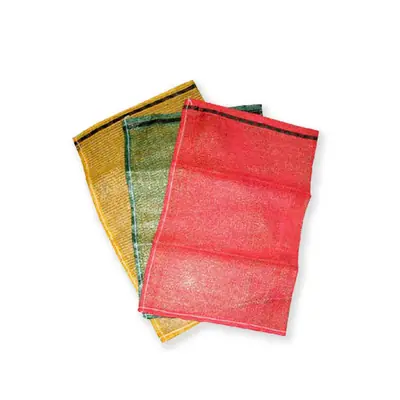
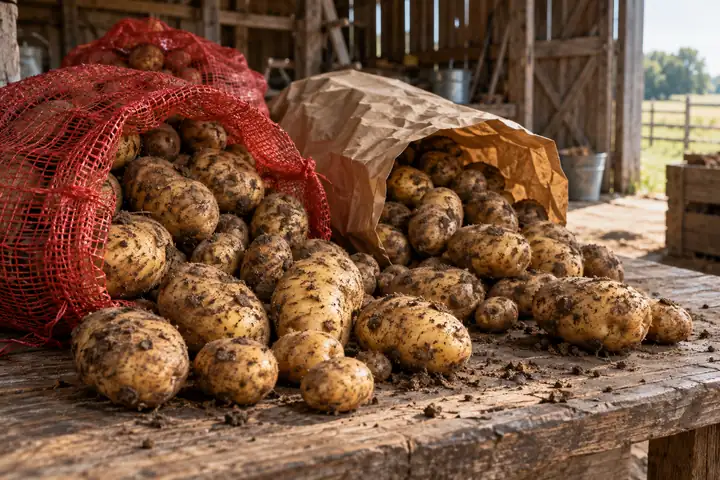
A potato sack today is usually a polypropylene bag — either an open leno mesh sack or a tightly woven poly sack — holding anything from 5 lb at retail to 50 kg in the wholesale trade. Older potato sacks were jute burlap, and supermarkets still sell potatoes in paper bags with a window or in perforated film. Which one is "right" depends on whether you are shipping potatoes, selling them, storing them or, for that matter, racing in them.
This guide covers the potato sack across all those uses. If you pack onions and potatoes commercially and need detailed leno bag sizing and colors, read leno mesh bags for onions and potatoes alongside it.
What are potato sacks made of?
| Potato sack material | How it is made | Pros | Cons | Typical use |
|---|---|---|---|---|
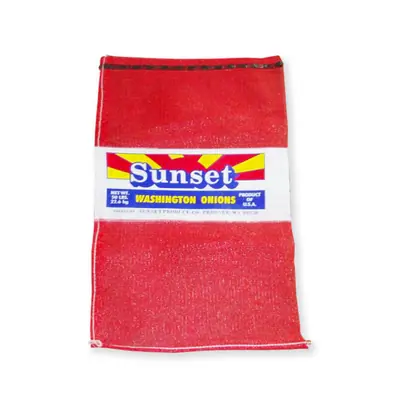
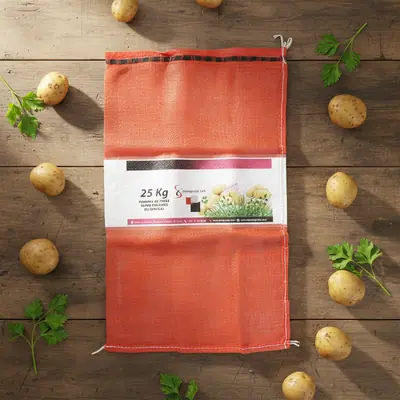
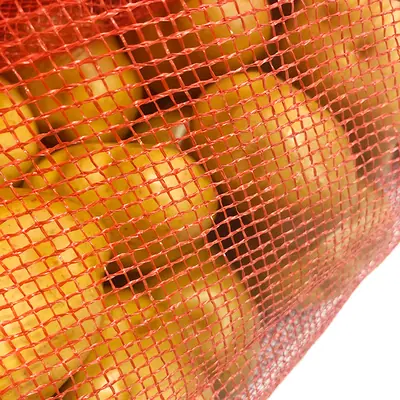
| PP leno mesh | Woven polypropylene tapes in an open, locked leno weave | Light, breathable, cheap, see-through | Lets light in; not ideal for long storage | Farm-to-market and wholesale, 10–50 kg |
| Woven poly (tight weave) | Plain-woven PP tapes, sometimes coated | Strong, blocks most light, printable | Less airflow than mesh | Bulk potato bags, seed potatoes, export |
| Paper | 1–2 ply kraft, often with a film window and vent holes | Dark, breathable, good shelf print | Weak when wet | 5–10 lb retail packs |
| Perforated PE film | Printed polyethylene film with vent holes | Cheap, good print, shows product | Condensation risk, light exposure | 2–10 lb supermarket packs |
| Jute burlap | Woven jute fiber | Natural, breathable, blocks some light | Heavy, sheds fibers, rots if wet, costly | Specialty retail, decor, home storage |
Polypropylene is now the dominant potato sack material worldwide because it is rot-proof, strong for its weight and inexpensive. Burlap remains popular where a rustic look matters. For more on the polymer, see what is polypropylene.
Standard potato sack sizes
Potato bags are sold by weight. Potatoes have a bulk density of roughly 0.65–0.70 kg/L, so:
| Pack | Weight | Approx. volume | Typical bag type | Typical bag size |
|---|---|---|---|---|
| 5 lb potato bags | 2.3 kg | 3.5 L | Paper with window, or film | about 8 × 4 × 16 in (20 × 10 × 40 cm) gusseted |
| 10 lb | 4.5 kg | 7 L | Paper, film or small mesh | about 12 × 5 × 20 in (30 × 13 × 50 cm) |
| 15–20 lb | 7–9 kg | 11–14 L | Small mesh or woven | about 14 × 24 in (35 × 60 cm) |
| 50 lb | 22.7 kg | 32–35 L | Leno mesh or woven poly | about 20 × 32 in (50 × 80 cm) |
| 25 kg | 25 kg | 36–38 L | Leno mesh or woven poly | about 20 × 32 in (50 × 80 cm) |
| 50 kg | 50 kg | 71–77 L | Heavy leno or woven poly | about 24–26 × 36–39 in (60–65 × 90–100 cm) |
Large tubers pack less densely than small ones, so add length for bakers and size A grades. Always fill-test with your own potatoes before ordering bulk potato bags.
Paper potato bags vs mesh
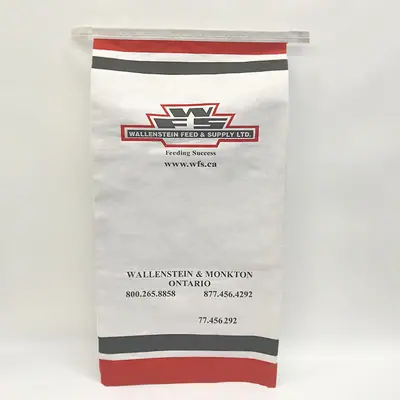
Paper potato bags — typically the 5 lb and 10 lb sizes — keep tubers in the dark on the shelf, which slows greening, and the printed face sells the brand or variety. A clear window shows the skin quality. Mesh bags are cheaper and show the whole product, but expose potatoes to store lighting. Many packers use paper or paper-poly for premium retail lines and mesh for value lines. Our White Kraft Paper PP Side Gusset Bags with Transparent is a paper-faced option with a window and woven strength for heavier packs.
Woven poly potato bags
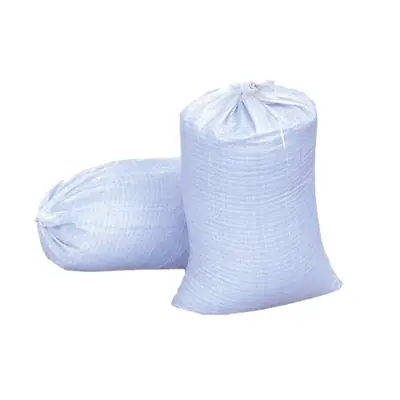
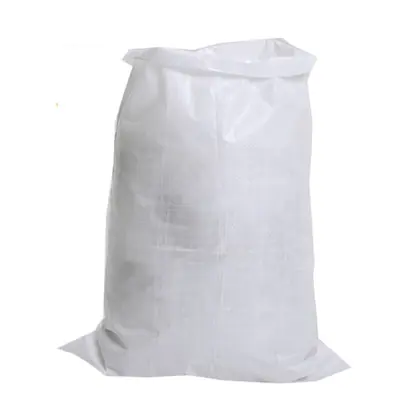
Woven poly potato bags are tightly woven PP sacks rather than open mesh. They block more light, protect skins from abrasion and carry bold printing — useful for seed potatoes, export loads and potatoes sold to processors. Our Recyclable PP Woven Bag with Easy Tie Closure for Potato includes a tie closure for quick packing.
Which potato storage bag keeps potatoes longest?
Potatoes keep best in conditions that are dark, cool and humid with some airflow:
- Temperature: commercial table-stock storage is commonly held around 45–50°F (7–10°C). Colder than about 40°F (4°C) converts starch to sugar, giving sweet taste and dark frying color.
- Humidity: high, around 90–95% relative humidity in commercial stores, to prevent shrivelling.
- Darkness: light turns skins green as chlorophyll forms, which goes along with a build-up of solanine. Green parts should be cut away or the potato discarded.
- Airflow: tubers respire; trapped moisture leads to rot.
So the best potato storage bag for home or small-farm use is one that blocks light but breathes: a paper sack, a woven poly sack or burlap bags for potato storage, kept in a cool, dark cellar or garage that does not freeze. Mesh bags breathe well but let light in — fine for transport and sale, but if you store in mesh, keep the bags in a dark room or cover them.
Two common mistakes:
- Storing potatoes with onions. Onions prefer dry air and potatoes humid air; stored together, both tend to spoil faster. We cover onion storage in mesh bags to store onions and garlic.
- Sealed plastic bags. Without airflow, condensation forms and potatoes rot.
Growing potatoes in sacks
Growing potatoes in sacks is a popular small-space method, and woven PP sacks — including reused feed or rice sacks — work well. The approach:
- Use a strong woven sack of about 50–75 L (roughly a 25–50 kg sack). Punch or cut 6–10 drainage holes in the base.
- Roll the sides down so the sack stands about 12 in (30 cm) high.
- Add 4–6 in (10–15 cm) of potting mix and compost, then place 2–4 chitted seed potatoes on top.
- Cover with another 4 in (10 cm) of mix and water.
- As shoots reach 6–8 in (15–20 cm), unroll the sides and add more mix, leaving the top few leaves showing. Repeat until the sack is full.
- Water regularly — sacks dry out faster than beds — and harvest by tipping the sack out once the foliage dies back.
Woven PP sacks used outdoors should be UV-stabilised, or they will become brittle within a season. For more ways to reuse old woven sacks, see feed sack fabric and reuse ideas.
Potato sack race bags (racing sacks)
The classic sack race once used real burlap potato sacks. Today, most potato sack race bags are woven polypropylene racing sacks: smoother on skin than jute, lighter, washable and available in bright colors with printed logos for schools, fairs and corporate events.
| Racer | Typical sack size |
|---|---|
| Young children (about 3–7 years) | about 18 × 28 in (45 × 70 cm) |
| Older children | about 22 × 36 in (55 × 90 cm) |
| Teens and adults | about 24–28 × 40–44 in (60–70 × 100–110 cm) |
Look for handles sewn at the top so racers can hold the sack up, reinforced bottom seams and soft, burr-free edges. Race organizers ordering for events, rental companies and toy distributors can order printed racing sacks in quantity; a standard woven sack of the right size works too.
Where to buy potato sacks
The answer depends on how many you need:
- A few sacks for home storage, crafts or a picnic: farm and garden stores, feed stores, hardware stores and general online marketplaces carry small packs. Local farms and grocers sometimes give away or sell used sacks.
- Hundreds of bags for a farm stand or packer: agricultural packaging distributors stock standard potato bags for sale in 10, 25 and 50 lb sizes.
- Container quantities, custom sizes, colors or printing: buy factory-direct. A manufacturer can match size, mesh, color, label strip and drawstring to your line.
EGP manufactures leno mesh and woven poly potato sacks in Yantai, Shandong, with 24 years as an Alibaba.com supplier. Popular builds include the Custom Logo Potato Onion Bags 20kg 25kg PP Woven Mesh and 20-50kg Yellow Woven PP Leno Mesh Bags for Agriculture. Browse our Mesh & Leno Bags range, read the mesh bags guide for mesh types, or send your quantities through our contact page.
Frequently asked questions
What are potato sacks made of today?
Most potato sacks are made of polypropylene, either as open leno mesh or as tightly woven poly fabric. Paper bags with windows, perforated plastic film and traditional jute burlap are also used, mainly for retail packs or specialty markets.
Are burlap bags good for potato storage?
Yes. Burlap breathes and blocks some light, so it works well for home storage in a cool, dark place. Keep the bags off damp floors, because jute can rot and potatoes need airflow underneath.
What size bag holds 50 lb of potatoes?
A mesh or woven sack of about 20 × 32 inches (50 × 80 cm) typically holds 50 lb of medium potatoes with room to tie the top. Very large tubers may need a slightly longer bag.
Can I grow potatoes in a woven feed or rice sack?
Yes. Cut drainage holes in the base, roll the sides down, plant seed potatoes in a few inches of mix and add more mix as the shoots grow. Use a UV-stabilised sack if it will sit in full sun for the whole season.
What size sacks are used for sack races?
Children typically use sacks around 18 × 28 to 22 × 36 inches, and adults around 24–28 × 40–44 inches. Woven polypropylene racing sacks with handles are lighter and gentler on skin than burlap.