Key takeaways
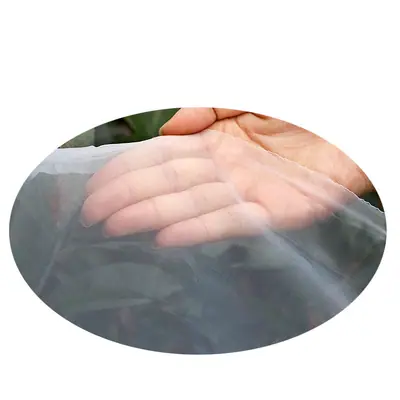
- Fruit tree netting is a UV-stabilized polyethylene mesh draped over or framed around trees and bushes to keep birds off ripening fruit.
- Mesh of 15–20 mm (about 3/4 in) stops most fruit-eating birds; finer mesh of 5 mm or less is safer for wildlife and also blocks some larger insects.
- Put nets on as fruit starts to color, tension them, and close them at the base; loose, draped nets with big holes trap birds.
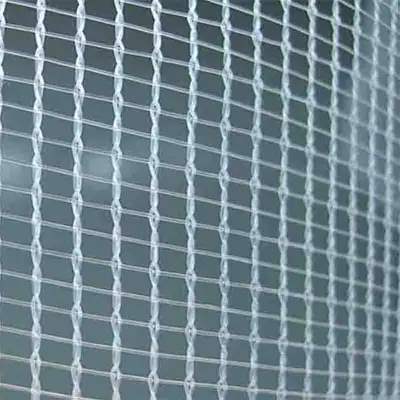
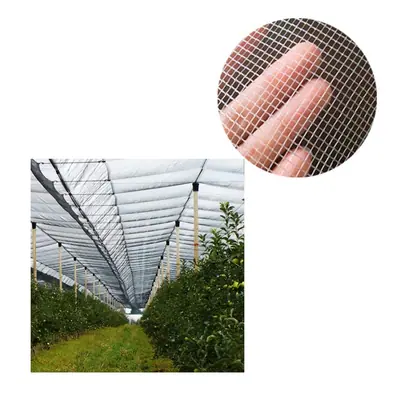
- A white anti-hail net (roughly 3–7 mm openings) works as a heavy duty bird net and adds hail protection in one installation.
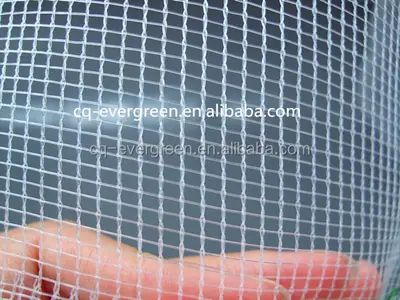
Fruit tree netting is a lightweight, UV-stabilized mesh, usually knitted or extruded polyethylene, that is draped over or framed around fruit trees and bushes so birds cannot reach the crop. For most gardens and orchards, a net with openings of about 15–20 mm (3/4 in) or smaller, fully enclosing the tree and closed at the base, is enough to stop starlings, blackbirds, robins and pigeons. Finer nets of 5 mm or less are kinder to wildlife, and orchard-grade anti-hail net can do the same job while also protecting fruit from hail.
This guide covers mesh sizes, netting for trees, blueberries, cherries and strawberries, how to install bird netting so it actually works, and how bird nets compare with hail and insect netting.
What is the best bird netting for fruit trees?
The best bird netting for fruit trees has three qualities: a mesh small enough to exclude the birds in your area, enough UV stabilization to last several seasons, and enough strength to survive being pulled over branches every year.
| Netting type | Typical opening | Typical weight | What it stops | Best use |
|---|---|---|---|---|
| Light extruded garden bird mesh | 15–25 mm | 8–15 g/m² | Medium and large birds | Single small trees, one season |
| Knitted polyethylene bird netting | 15–20 mm | 15–30 g/m² | Most fruit-eating birds | Fruit trees, berries, garden beds |
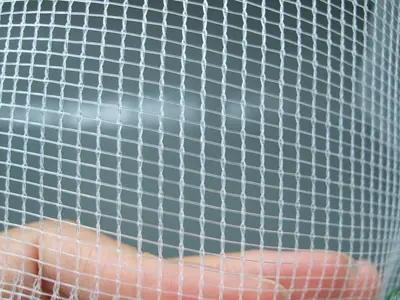
| Fine knitted net (wildlife-safe) | ≤ 5 mm | 30–60 g/m² | Birds, bats, fruit-piercing moths, some wasps | Backyard trees, regions with netting rules |
| Anti-hail net used as a bird net | ~3 × 7 mm to 4 × 8 mm | 35–60 g/m² | Birds and hail | Commercial orchards, high-value cherries |
| Insect netting | 0.25–1.3 mm | 50–130 g/m² | Birds, butterflies, moths, beetles, aphids (finest grades) | Vegetables, greenhouse vents |
The weights are typical industry ranges; always compare thread thickness and weight on the specification sheet, not just the hole size.
Light vs heavy duty bird netting
Cheap extruded bird netting is stiff, snags on twigs and often fails within a season or two. Heavy duty bird netting is knitted from monofilament with locked stitches, so a cut does not run, and it is UV-stabilized for multiple seasons. For anything you plan to reuse, choose knitted polyethylene bird netting (HDPE). It sheds water, does not absorb moisture, and stays flexible in cold weather.
What mesh size stops birds vs insects vs hail?
- Birds: 15–20 mm openings exclude most fruit-eating birds. Small birds such as sparrows and finches can squeeze through larger openings, so go no bigger than about 19 mm (3/4 in).
- Hail: anti-hail nets have openings of roughly 3–8 mm. The netting slows and deflects hailstones before they hit fruit, as covered in our anti-hail net buying guide.
- Insects: you need 1.0–1.3 mm to stop cabbage white butterflies and moths, about 0.8 mm for flea beetles and leafminers, and 0.27 mm or finer for whitefly and aphids. See the insect netting guide for crop-by-crop mesh.
The useful takeaway: the finer the mesh, the more pests it excludes, but the heavier, more expensive and more shading it becomes.
Is fine mesh safer for wildlife?
Yes. Loosely draped netting with large holes is the main reason birds, bats, lizards and snakes get entangled. Wildlife groups commonly recommend netting you cannot push a finger through, roughly 5 × 5 mm or smaller, and since 1 September 2021 the state of Victoria, Australia, has required household fruit netting to have a mesh of 5 × 5 mm or smaller when fully stretched. Even where it is not a rule, it is good practice:
- Choose fine, white or light-colored mesh, which birds see more easily than black.
- Keep the net taut over a frame instead of letting it sag onto the canopy.
- Check nets daily during the season, and seal the bottom so animals cannot get underneath and become trapped.
How do you net fruit trees properly?
Netting a single fruit tree
- Time it right. Net when the fruit starts to change color, not at blossom. Netting during flowering blocks pollinators and is unnecessary.
- Size the net. Measure canopy height and spread, then take the spread plus twice the height and add about 0.5 m (1.5 ft) for overlap. For a tree 2.5 m tall and 2.5 m wide, a net of about 8 × 8 m drapes to the ground on all sides.
- Protect the shape. Lift the net over the tree with two people or two poles, ideally over a light frame or stakes so branches do not poke through.
- Close the base. Gather the net around the trunk with a tie, or pin it to the ground with pegs. Gaps at the bottom are where birds get in and get stuck.
- Remove after harvest. Take nets off promptly, dry them and store them in a dark bag. UV exposure is what ages them most.
Tree nets for fruit trees in orchards
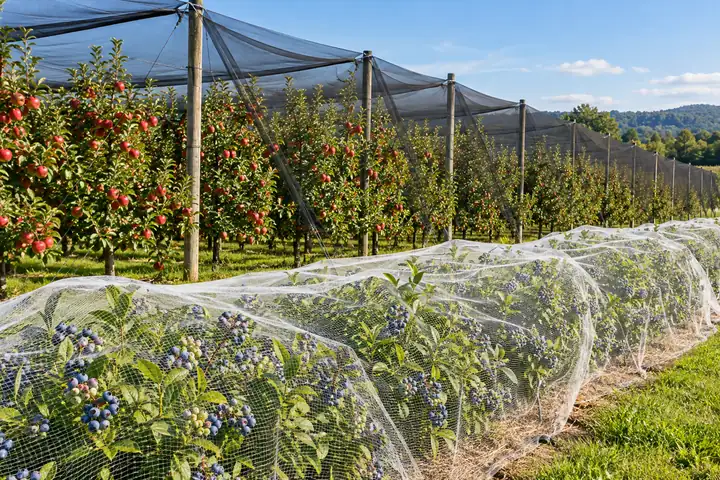
In a commercial orchard, individual tree nets are labor-intensive. Orchard netting is normally installed as a continuous canopy over posts and cables, or as row-by-row drape nets that are rolled down when fruit ripens. Many growers use the same canopy for both hail and birds. A white HDPE canopy such as our HDPE White Large Hail protection Net Anti Hail for apple reduces light only modestly and has openings small enough to stop birds, so one structure protects against two risks. Fully enclosing the block (side curtains as well as roof) matters; birds quickly find open row ends.
Bird netting for cherry trees
Cherries are often the first crop birds strip, and losses can be total on small trees. Bird netting for cherry trees should be fine-meshed (15 mm or less) and fully enclosing, because birds will work through any gap. Cherries are also prone to rain cracking and hail damage, so commercial cherry growers increasingly use full covers or hail-net canopies rather than single-purpose bird nets. Keeping trees small through pruning or dwarfing rootstock makes netting far easier.
Netting blueberry bushes and strawberries
Blueberry netting
Blueberries ripen over several weeks, so birds return every day. Netting blueberry bushes individually rarely works for more than a few plants; a walk-in frame is better.
- Build a frame of posts or hoops about 30–60 cm (1–2 ft) taller than the bushes, so you can reach the fruit and the net does not rest on it.
- Cover the top with bird netting for blueberries of 15–20 mm, or finer, and run side curtains to the ground.
- Use clips or a zip seam on one side for picking access.
- Fit the net when the first berries turn blue and remove it after the final pick.
Bird netting for strawberries
Strawberries sit low, so the easiest system is a low tunnel: hoops every 1–1.5 m (3–5 ft), 30–45 cm (12–18 in) high, with bird netting strawberries covered and edges pinned or weighted. Do not lay the net directly on plants; birds peck through it and fruit rots where the net holds moisture. If slugs and insects are also a problem, a fine insect mesh on hoops covers more pests at once.
Bird netting for garden beds and vegetables
Bird netting for garden use follows the same rules: a frame, tension and closed edges. Brassica seedlings, peas and newly sown beds attract pigeons and other birds, but in many gardens the bigger threat is caterpillars. In that case an insect net of about 1.3 mm solves both problems, because it is also a highly effective garden bird mesh. If hail is the bigger risk, see hail netting for gardens and greenhouses.
Can an anti-hail net be used as a bird net?
Yes, and for commercial orchards it is often the better choice. Compared with standard bird netting, anti-hail net:
- Has smaller openings (roughly 3–8 mm), so it stops small birds and many fruit-piercing moths and wasps.
- Is heavier and more durable, typically designed for many seasons of outdoor exposure.
- Adds protection against hail and some reduction in sunburn and wind damage.
The trade-offs are higher cost per square meter and the need for a proper post-and-cable structure. For a garden with two or three trees, a fine knitted bird net is simpler. For hectares of apples, cherries or stone fruit, one canopy that handles birds and hail often makes more economic sense.
Our 100% Virgin Plastic Anti-Hail Mesh Net for Greenhouse is made from virgin HDPE, and for exposed sites where a stiffer mesh is needed, hard plastic mesh for hail protection is another option.
Buying orchard and bird mesh for fruit trees in bulk
If you distribute netting, run a garden center or manage orchards, specify:
- Mesh opening (mm) and construction (knitted or extruded).
- Color: white or crystal for light transmission and visibility to birds; black for longest UV life.
- Weight (g/m²) and thread diameter.
- UV stabilization stated in years or kLy.
- Width and roll length, or pre-cut sizes such as 4 × 4 m, 6 × 6 m and 10 × 10 m for retail.
- Edge finish: raw, hemmed, or reinforced with eyelets.
EGP is a manufacturer in Yantai, Shandong, China, with 24 years as an Alibaba.com supplier. We make anti-hail, insect and shade nets that are commonly used as bird mesh for fruit trees, rather than a dedicated light bird-net line, so tell us the birds and pests you need to stop and we will suggest a mesh. Browse the Hail, Shade & Insect Nets range or request a quote with your sizes and quantities.
Frequently asked questions
What size mesh is best for bird netting on fruit trees?
Mesh of about 15–20 mm (3/4 in) keeps most fruit-eating birds out. If small birds such as sparrows are a problem, or you want to reduce wildlife entanglement, use 5–10 mm or finer. Smaller openings cost more and shade slightly more, but they are safer and more versatile.
When should I put netting on fruit trees?
Net fruit trees when the fruit begins to change color, usually two to four weeks before harvest. Do not net during flowering, because bees and other pollinators need access to the blossoms. Remove the net soon after harvest to extend its life.
How do I stop birds getting caught in fruit tree netting?
Use fine white mesh (ideally 5 mm or smaller), keep it taut over a frame, and secure the bottom edge to the trunk or ground. Most entanglements happen with loose, large-hole nets draped directly onto the canopy. Check the nets every day while they are in place.
Is polyethylene bird netting better than nylon?
For outdoor fruit netting, UV-stabilized polyethylene is the usual choice because it does not absorb water, stays light when wet and resists sun damage well. Nylon is stronger per thread but absorbs moisture and is more often used for sports or industrial netting. Either way, check the UV rating.
Can I use insect netting as bird netting?
Yes. Insect netting has much smaller openings than bird netting, so it excludes birds as well as butterflies, moths and beetles. It is heavier and reduces airflow more, so it suits vegetable beds and berries on hoops better than large fruit trees.
What is the best netting for blueberry bushes?
The best netting for blueberry bushes is a UV-stabilized knitted net with 15–20 mm or finer openings, supported on a walk-in frame with side curtains to the ground. A frame stops birds pecking through the net and lets you pick without removing it.