Key takeaways
- For most homes, the most effective flood barriers are fitted door and garage panels plus sealing other entry routes (vents, drains, cable holes).
- Water-filled and inflatable barriers form reusable perimeter lines but need flat, clean ground and can slide if overtopped.
- Water-activated bags and sandbags fill gaps fast; sandbags remain the most flexible low-cost option.
- Household barriers are typically designed for shallow flooding, often around 2–3 ft (0.6–0.9 m) or less; deeper water can damage walls.
- Follow local emergency-management advice and evacuate when told.
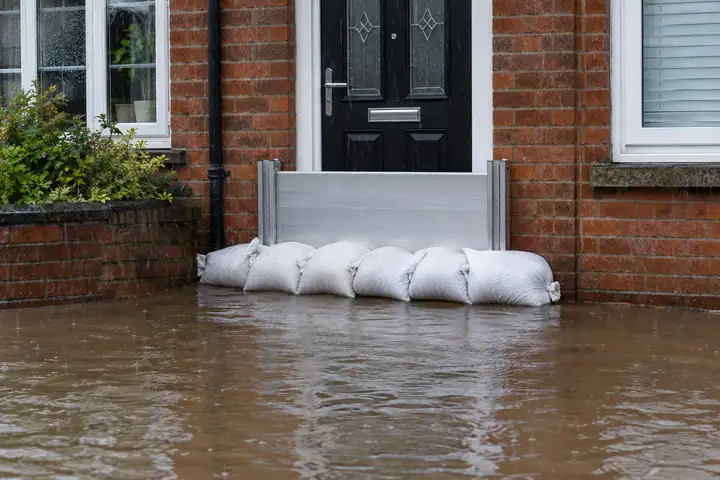
The best flood barriers for homes are usually a combination: fitted flood panels or door flood barriers on each doorway and garage door, covers for air vents and backflow valves on drains, and a stock of sandbags or water-activated bags to seal gaps. For a perimeter line around a property, water-filled or inflatable temporary flood barriers work on flat, paved ground. Most home systems are designed for shallow flooding, and none makes a house waterproof against deep or fast-moving water.
Definition: a flood barrier is any temporary or permanent structure placed in the path of floodwater to stop or reduce water entering a building or area, from a single door panel to a perimeter flood wall.
If you are deciding whether to stock sandbags at all, read alternatives to sandbags for flooding and how to fill and stack sandbags. This guide focuses on protecting a single home.
How does water get into a house during a flood?
Before choosing a water barrier for a house, map the entry routes. Doors are only part of the problem:
- Doorways and garage doors, the most obvious and usually largest openings.
- Air bricks, crawlspace vents and dryer vents near ground level.
- Drains, toilets and floor drains, as sewers surcharge and push water back up.
- Gaps around pipes and cables passing through walls.
- Through walls and floors: water seeps through porous brick, mortar joints and slabs when it stands against them for hours.
A door barrier alone will not keep a home dry if water comes up through the toilet or a floor drain. Backflow (non-return) valves and vent covers are often as important as the barrier on the front door.
Types of flood barriers for homes compared
Typical figures from product literature; check the rated height and installation conditions of any product you buy.
| Barrier type | Typical protection height | Deployment | Reusable? | Best for | Main limits |
|---|---|---|---|---|---|
| Flood panels / door flood barrier | 2–3 ft (0.6–0.9 m) | Minutes, once fitted | Yes | Front and back doors, gates | Must be measured and fitted in advance; seals need upkeep |
| Garage flood barrier (panels or strip) | 6 in–2 ft (15–60 cm) | Minutes | Yes | Garage doors, driveways | Wide spans need posts; threshold strips only for shallow water |
| Flood gates (hinged or demountable) | 2–4 ft (0.6–1.2 m) | Seconds to minutes | Yes | Driveway and garden openings in a wall | Need a solid wall to tie into |
| Water-filled flood barrier | 1–3 ft (0.3–0.9 m) | 15–60 min, needs water supply | Yes | Perimeter lines on paving | Slides on grass or slopes; puncture risk |
| Inflatable flood barrier | 1–3 ft (0.3–0.9 m) | Air plus water fill | Yes | Perimeter lines, garage doors | Same as water-filled; needs power or pump |
| Water-activated flood barrier / storm bag | 3–6 in (8–15 cm) per bag layer | 3–5 min soak | Usually no | Thresholds, toilets, small gaps | Weak in saltwater; lighter than sand |
| Sandbags | About 1 ft (30 cm) per 3 layers | Slow; needs sand and labor | Sometimes | Any shape, uneven ground, gaps | Labor, sand supply, disposal |
| Permanent flood wall | Designed height | Always in place | Permanent | High-risk properties | Cost, permits, drainage behind wall |
Door flood barriers and flood panels
A door flood barrier is a rigid panel, usually aluminum or plastic composite with a rubber seal, that clamps between the door jambs or slides into channels fixed to the frame. Flood panels for wider openings use removable posts and stacked beams.
What to check:
- Fit: measure the opening and choose a product designed for that width and frame type. Uneven brick or stone reveals may need a fixed channel.
- Sealing surface: the threshold must be sound and smooth; seal cracked steps first.
- Height: two to three feet is common for household panels. Higher is not automatically better (see wall pressure below).
- Storage: keep panels near the opening with tools and instructions, and practice fitting them once a year.
Garage flood barriers
Garage doors are wide, light and poorly sealed, so they leak early. Options include a threshold strip bonded to the garage floor (for splash and very shallow water), panel systems with removable center posts, and water-filled or inflatable tubes laid across the opening. Sandbags remain common for garage doors because they can follow an uneven driveway surface.
Water-filled, inflatable and temporary flood barriers
Water filled flood barriers use the weight of water (about 62 lb per cubic foot, 1,000 kg/m³) to stay in place. Inflatable flood barriers combine an air chamber for shape with a water chamber for ballast. Both are reusable flood barriers that store compactly and can protect a long perimeter, such as around a house and garden.
They work best on flat, clean, hard ground. On grass, gravel or a slope, water seeps underneath and the barrier can slide; if water approaches the top, it can roll or float. Use the manufacturer's rated maximum depth, which is usually below the barrier's height, and plan where pumped water from inside the line will go.
Water-activated flood barriers and storm bags
A storm bag or water activated flood barrier is a fabric bag filled with super-absorbent polymer. It weighs about a pound dry and swells to roughly 30–50 lb (14–23 kg) after a few minutes in fresh water. They are handy for thresholds, toilets and indoor leaks, and for people who cannot lift full sandbags. Absorption drops sharply in saltwater, they are mostly single-use, and a gel-filled bag is less stable in moving water than a sand-filled one.
Sandbags for flood protection
Sandbags are still the most flexible flood barrier for homes: they cost little to store, follow any shape, and seal gaps around other barriers. Typical figures:
- A standard sandbag is about 14 × 26 in (35 × 65 cm), filled half to two-thirds to about 35–40 lb (16–18 kg).
- A 1 ft (30 cm) high, 100 ft (30 m) long wall typically needs about 600 bags.
- Lay a plastic sheet on the water side and stagger the joints.
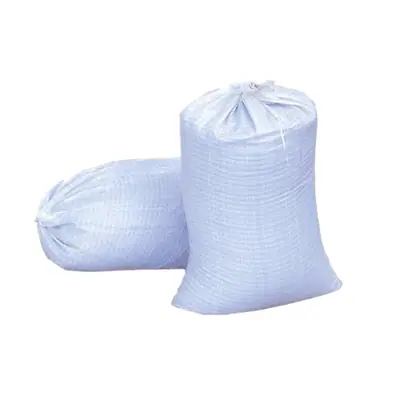
A UV-stabilized woven bag such as our UV Stabilized PP Woven Bag with Top Drawstring for Sand or Weatherproof PP Woven Bag with UV Stabilization can be stored for years and used for storms, then reused if not contaminated. For quantities, see how many sandbags do I need. Many local councils, fire stations and public works departments hand out free sandbags before forecast floods; hardware and building supply stores sell them in small quantities.
Flood walls and flood gates
A flood wall is a permanent wall designed to hold back water, often with flood gates at driveways and paths. Walls must be designed for water pressure and seepage underneath, and need a plan for rainwater and groundwater inside the protected area, usually a sump and pump. They generally require permits and professional design.
How high can a home flood barrier safely go?
Water pushes on walls and barriers with increasing force as it gets deeper. Hydrostatic pressure rises by about 62.4 lb/ft² for each foot of depth (9.8 kPa per meter):
| Water depth | Pressure at base | Horizontal force per foot of wall |
|---|---|---|
| 1 ft (0.3 m) | 62 lb/ft² | about 31 lb |
| 2 ft (0.6 m) | 125 lb/ft² | about 125 lb |
| 3 ft (0.9 m) | 187 lb/ft² | about 281 lb |
Force grows with the square of depth, and water standing outside a sealed house can also push up on floors. That is why guidance on "dry floodproofing" generally limits keeping water out of an ordinary house to about 2–3 ft, and why deeper water is often allowed in (wet floodproofing) to balance pressure. Check with your local floodplain manager or emergency-management agency, and do not assume temporary barriers count toward flood insurance or building-code requirements.
Building a flood protection plan for your home
- Know your risk: check official flood maps and how deep past floods reached.
- Seal entry routes: fit backflow valves, vent covers and sealant around pipes.
- Choose barriers for each door and the garage, sized to the expected depth.
- Stock gap fillers: 20–30 sandbags or water-activated bags for a typical house.
- Plan the pump-out: rainwater and seepage collect behind any barrier.
- Practice: fit everything once before the flood season.
- Follow evacuation orders: barriers are property protection, not life safety. Never wade or drive through floodwater, and switch off electricity if water may reach outlets, if safe to do so.
Buying sandbags and flood bags in bulk
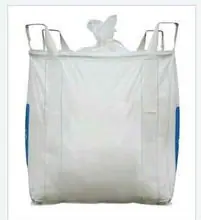
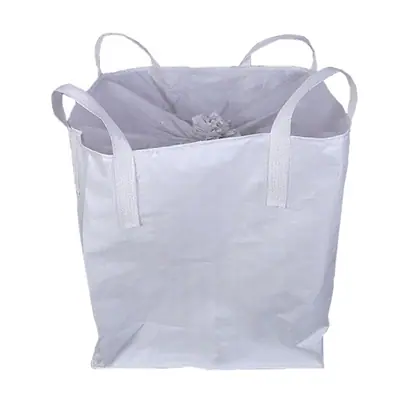
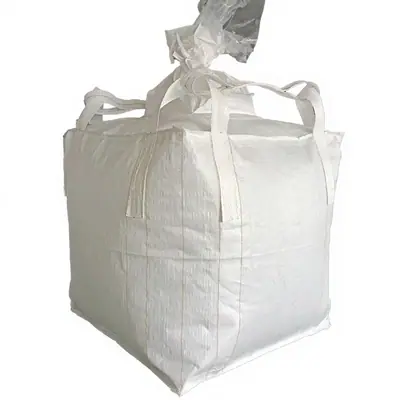
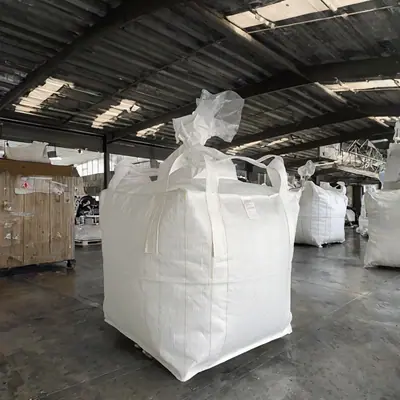
Homeowners usually buy door barriers from specialist flood-protection suppliers and sandbags from local stores. Municipalities, emergency agencies, distributors and contractors that need thousands of bags, or bulk bags such as the Outdoor UV Stabilized FIBC Bag Weather Resistant and Strong PP Fabric 1 Ton Breathable Flat Bottom FIBC Jumbo for machine-placed lines, often source directly from manufacturers.
EGP manufactures woven polypropylene sandbags and FIBC bulk bags in Yantai, China, with custom sizes, colors, UV packages and printing for municipal stockpiles. Browse PP Woven Sacks or request a quote.
Frequently asked questions
What is the best flood barrier for a front door?
A purpose-made flood panel or door flood barrier, measured to fit your door frame and fitted with a rubber seal, is usually the most effective. Back it up with a few sandbags or water-activated bags at the threshold, and seal vents and drains as well.
Do water-filled flood barriers work?
Yes, on flat, clean, hard surfaces and within their rated depth. On grass, gravel or slopes, water can seep under them and they can slide, and they may roll or float if water approaches the top.
Are water-activated flood bags better than sandbags?
They are lighter to store and faster to deploy, which suits thresholds and indoor leaks. Sandbags are heavier and more stable in moving water, work in saltwater, and are usually cheaper to stock in quantity.
How do I stop water from coming under my garage door?
For shallow water, a threshold strip bonded to the floor helps. For deeper water, use a garage flood barrier panel system, a water-filled tube across the opening, or a sandbag wall with plastic sheeting on the water side.
Can flood barriers make my house completely waterproof?
No. Water can enter through drains, walls, floors and small gaps, and deep water puts heavy pressure on walls. Barriers reduce damage in shallow flooding; follow local emergency-management guidance and evacuate when told.